Chardi Kalaਚੜ੍ਹਦੀ ਕਲਾ
The story of the Sikhs, from Guru Nanak to 2026, for young Sikhs growing up far from Punjab
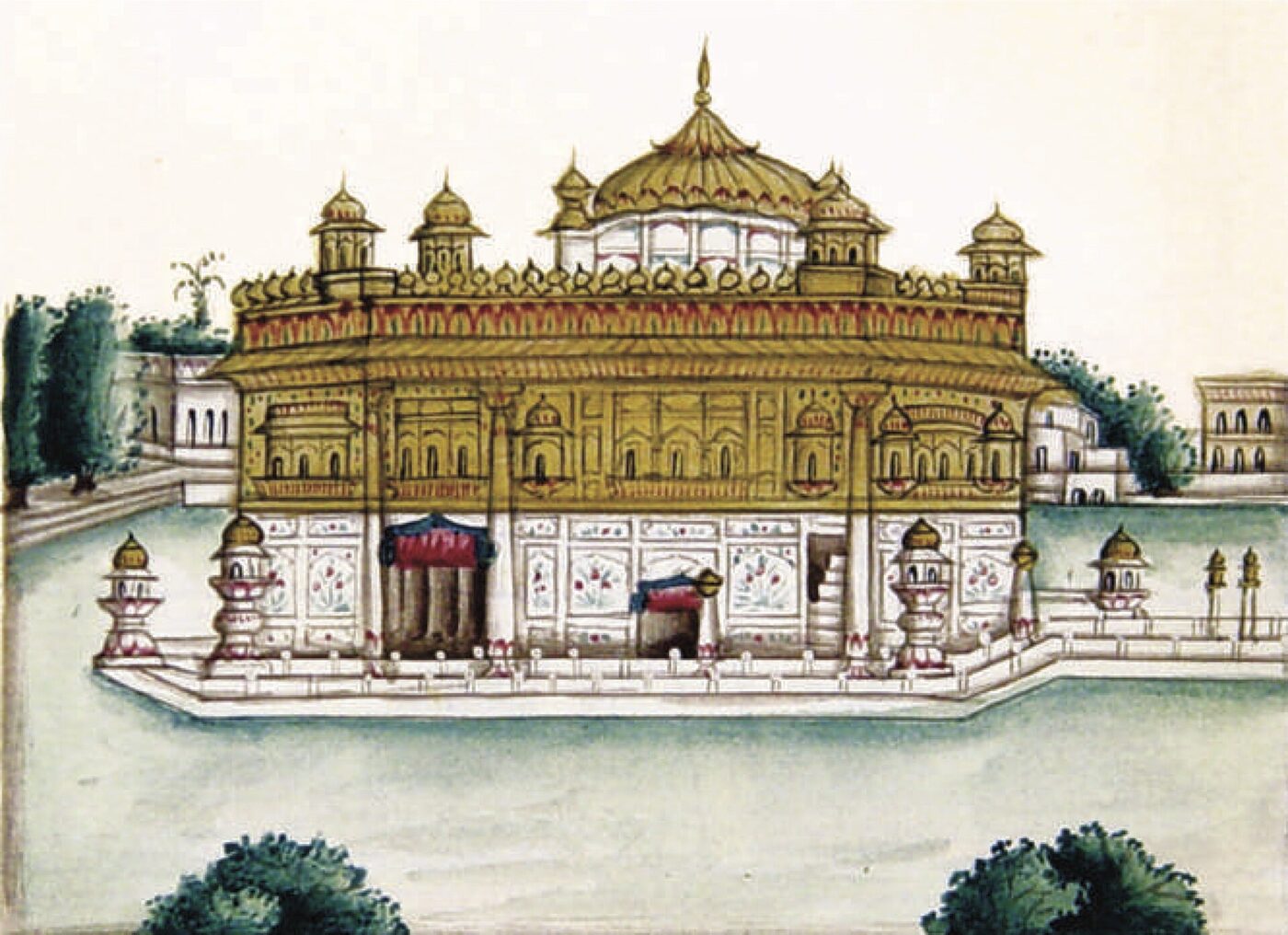
By a Sikh · researched and written with Claude (Opus 5.5), an AI model by Anthropic · more than 700 sources · every fact referenced
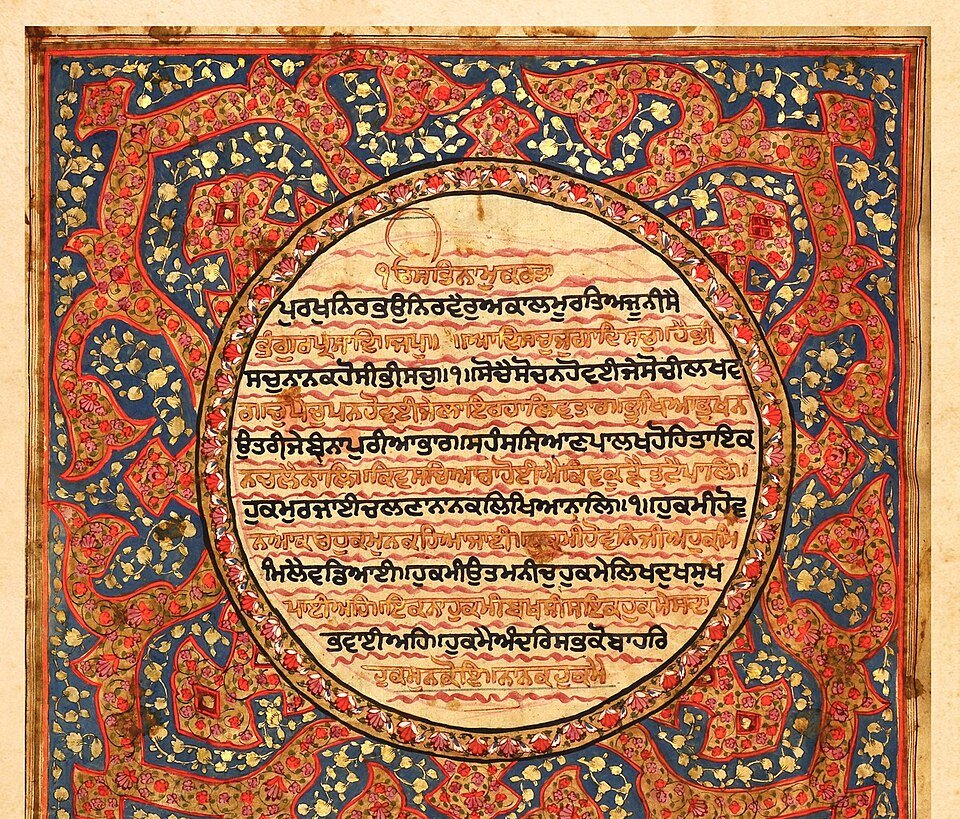
Contents
Page numbers match the printed (PDF) edition.
- ·Before You Begin5
- ·How This Book Was Made7
- Part One · The Ten Gurus
- ੧Guru Nanak, the Boy Who Asked Questions11
- ੨Letters, Langar and a New CityGuru Angad · Guru Amar Das · Guru Ram Das23
- ੩Guru Arjan Builds, Gathers, and Gives His Life34
- ੪Two Swords, Healing Herbs, and a Very Young GuruGuru Hargobind · Guru Har Rai · Guru Har Krishan41
- ੫Guru Tegh Bahadur Dies for Other People's Freedom50
- ੬Guru Gobind Singh and the Birth of the Khalsa57
- ੭Anandpur, Chamkaur, Sirhind and Muktsar64
- ੴThe Guru Granth Sahib: The Guru Forever72
- Part Two · Hunted, Never Broken (1708–1765)
- ੮Banda Singh Bahadur and the Fall of Sirhind81
- ੯The Hunted Years and the Two Massacres85
- Part Three · A Sikh Kingdom, Won and Lost (1765–1849)
- ੧੦From Bands of Riders to Maharaja Ranjit Singh93
- ੧੧The Fall of the Kingdom, a Prince Taken from His Mother, and a Princess Who Fought for the Vote102
- Part Four · Under the British, and Across the Oceans (1849–1947)
- ੧੨Soldiers, Saragarhi, and a Sikh Revival111
- ੧੩Across the Oceans to California and Canada117
- ੧੪Jallianwala Bagh, and Winning Back the Gurdwaras Without Striking Back122
- ੧੫Partition: Punjab Cut in Two133
- Part Five · Free India, and the Hardest Years
- ੧੬Building a New Punjab, and the Road to 1984140
- ੧੭Sikhs in Uniform: Two World Wars, Freedom and India's Borders145
- ੧੮June 1984: The Army Storms the Harmandir Sahib Complex154
- ੧੯November 1984: The Massacres, and the Neighbors Who Helped164
- ੨੦The Dark Decade168
- Part Six · Sikhs in Your World (1995–2026)
- ੨੧Sikhs in America: Hate, Courage and Seva177
- ੨੨The World You Are Growing Up In182
- ੨੩Your Place in the Story189
- Faith in Practice
- ·Kirtan: Why the Gurus Sang197
- ·The Ardas: A History in a Prayer203
- Reference
- ·Timeline: 1469–2026 at a Glance210
- ·Words to Know213
- ·Questions to Talk About Together216
- ·Further Reading217
- ·References218
- ·Picture Credits250
Before You Begin
This book tells the story of the Sikhs, from the birth of Guru Nanak in 1469 to the year 2026.1 It does not hide the hard parts, and it does not add made-up miracles. What really happened is strong enough on its own.
Nobody knows the whole story. Not historians, not your parents, and not this book. Many records were burned, lost or never written down. The people who wrote the ones that survive each saw things from their own side. What we can do is follow the evidence, say how sure we are, and say where the evidence runs out. You will see that all through this book.
For the grown-up reading along. Some chapters describe killings and cruelty, because they happened. Those parts begin with the words A hard chapter. or A hard part. A 13-year-old can usually read them alone and talk afterwards. For a 9-year-old, you may want to read those together or tell them in your own words.
Why tell children all this? In the author's words: "Kids are the future custodians, and if we don't tell them, then they will forget. And that's a bigger loss and pain to the men and women who died to give the future my kids live in, to have this freedom and their own faith."
Where people disagree, especially about how many died, this book gives the official number, other estimates, and who counted. Where a famous story comes from later tradition rather than records from the time, the book says so. The References are at the end of the book.
A history book, not a book of faith. This book tells the story of the Sikh people: what happened, who was there, and how we know. It also tells what Sikhs believe, and it marks those parts clearly. But it does not try to prove or disprove anyone's faith. Some questions are questions of faith, like who God is or what the Gurus' hymns mean for your own life. Those are for you to explore with your family, at the gurdwara (a Sikh place of worship), and in the Guru Granth Sahib itself. Whatever you come to believe, this history is yours.
How to read this book
- The story in short boxes, at the start of each chapter, tell the chapter simply. The facts and their sources are in the chapter itself.
- What we know means it was written down at the time, or most historians agree.
- What Sikhs remember means a story passed down in Sikh tradition. These stories carry deep meaning, but records from that time don't prove every detail.
- What many Sikhs believe marks a matter of faith. History can't prove or disprove it, and this book doesn't try.
- How sure are we? marks a place where the old sources are unsure or disagree.
- A hard chapter or A hard part means the chapter, or the part that follows, talks about violence.
- Honest history marks a part of the story that is uncomfortable, often about mistakes made by Sikhs or people we admire.
- My memories boxes are the author's own memories and opinions, in his own words. They are not the history part of the book, and other people may remember things differently.
- Talk about it questions end most chapters. There are no wrong answers.
Why there are no drawings of the Gurus. Almost every painting of the Gurus you have seen was imagined long after they lived.2 Many Sikhs also feel the Gurus should not be drawn as characters.3 So the pictures in this book show places, objects, old paintings of events (including one old mural of Zorawar Singh, a son of Guru Gobind Singh), and ordinary people instead.
Why it is called Chardi Kala. Every time Sikhs say the Ardas, their prayer, it ends with a wish: Nanak naam chardi kala, tere bhane sarbat da bhala. It means: through the Name, may our spirits always rise, and by Your will, may everyone everywhere be well.4 Chardi kala means rising spirits, even in the worst times. You will see why Sikhs needed it.
How This Book Was Made
Why this book
The idea was the author's. He wanted his daughters to know the real history of their people, but he could not find a book that did what he was looking for. In his words, he wanted:
- A story that children could read and follow, not something that requires academic rigor or targets college students or adults.
- A complete story from Guru Nanak to the current day, 2026, something that covers the contemporary US, where the kids are.
- Fact separated from tradition, history from faith.
- A balanced book that is grounded in research, good and bad.
- Hard truths told, no sugarcoating, no exaggerations either.
His rules
- Don't trust the records of the people doing the killing.
- Show no pictures of the Gurus.
- Show no pictures of dead or wounded people.
- Anyone who challenges what is widely known needs stronger proof.
Who did what
The author chose many of the stories, from the Gurus' sakhis to Multan, Saragarhi and Princess Sophia, and he wrote the "My memories" boxes. The research and writing were done with Claude (Opus 5.5), an AI model made by Anthropic.
How it was checked
The book went through agentic adversarial verification: other AI reviewers, which had not written the text, checked every chapter against its sources, over and over. The first round found 177 problems, and later rounds found fewer and fewer.
One more review checked the people behind the sources. It looked at every claim that differs from what most Sikhs remember or from the usual numbers, such as a smaller death count, a doubt about a well-loved story, or blame placed on Sikhs. It also looked for the opposite: claims that made Sikhs look better than the evidence allows.
For each one, the reviewers looked into who wrote the source: their training, who they work for, how other scholars judged their work, and whether they had a pattern of making this history smaller or bigger than it was. Of 132 claims checked, about half were fine as written. The rest got a clearer label, a better source, or the other side of the story, and some sources were dropped.
The author read every page, again and again, and caught errors the AI had missed.
Check it yourself
The book cites more than 700 sources, from Emperor Jahangir's own memoir to newspapers, court records and human rights reports. Every fact has a small number that points to its source in the References, so you can check it yourself. AI can make mistakes, just like people. That is one more reason everything can be checked.
The Ten Gurus
From Guru Nanak, born in 1469, to Guru Gobind Singh, who died in 1708, ten Gurus led the Sikhs, one after another.5 Here they are at a glance, with the years each one was Guru and the chapter where you can read his story.5
| Guru | Guru from–to | Remembered for | Chapter |
|---|---|---|---|
| Guru Nanak | Founder (lived 1469–1539) | Founding the Sikh path; One Creator; langar, the free community kitchen1 | 1 |
| Guru Angad | 1539–1552 | Shaping the Gurmukhi alphabet6 | 2 |
| Guru Amar Das | 1552–1574 | Langar before meeting the Guru; 22 preaching districts; speaking against sati, the burning of widows7 | 2 |
| Guru Ram Das | 1574–1581 | Founding the town that became Amritsar8 | 2 |
| Guru Arjan | 1581–1606 | Harmandir Sahib (the Golden Temple); the Adi Granth; martyrdom9 | 3 |
| Guru Hargobind | 1606–1644 | Miri and Piri, the two swords; the Akal Takht10 | 4 |
| Guru Har Rai | 1644–1661 | Keeping the peace; healing plants11,12 | 4 |
| Guru Har Krishan | 1661–1664 | Guru at five; caring for the sick in Delhi13 | 4 |
| Guru Tegh Bahadur | 1664–1675 | Founding Anandpur; giving his life for other people's freedom of faith14,15 | 5 |
| Guru Gobind Singh | 1675–1708 | The Khalsa (1699); making the holy book the Guru16 | 6–7 |
After Guru Gobind Singh there were no more human Gurus.5 Instead, the Guru is the Guru Granth Sahib, the holy book, together with the Khalsa Panth, the community of the Khalsa (Chapter 7).5,17 The Khalsa is the community of initiated Sikhs, those who have formally joined it in a special ceremony.
Guru Nanak, the Boy Who Asked Questions
The Sikh story begins with one person who refused to accept that some people were worth less than others. His name was Nanak, and he was born in 1469 in a village called Talwandi, in Punjab. Today it is called Nankana Sahib, and it is in Pakistan.1
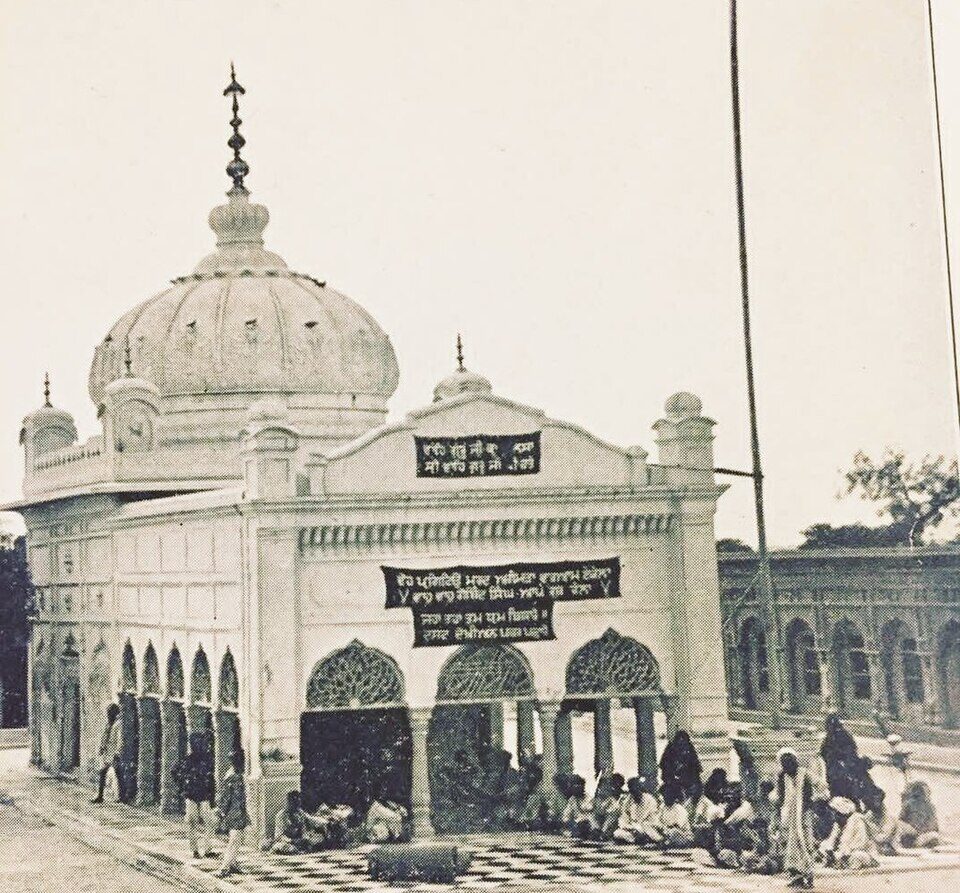
Guru Nanak (1469–1539)
His father, Mehta Kalu, kept the village accounts. His mother was Mata Tripta. His older sister, Bebe Nanaki, loved him fiercely and believed in him before almost anyone else did.18
How sure are we? Most of the old life-stories say he was born in the spring month of Baisakh, around April.18 But Sikhs celebrate his birthday, called Gurpurab, on the full moon of Kattak, in November, following a different tradition.18
The world he was born into. Punjab was ruled by the Lodi sultans, or kings, of Delhi.22 Many people were judged by their religion and their caste, the group a person is born into. Hindus were sorted into castes, and people from "low" castes were treated as unclean.23 Even their touch was thought to make others impure.23 Some teachers, like Kabir, were already asking whether that was right.24 Women were treated as lesser, and a widow was sometimes pressured, or even forced, to burn herself on her husband's funeral fire.25 This custom is called sati.
Nanak asked questions about all of it. Why should a ritual thread make one boy holier than another? Why should birth decide how you are treated?18
A new path. As a young man, Nanak worked in a government storehouse in Sultanpur Lodhi, where Bebe Nanaki lived.1,18 The storehouse belonged to the local governor, Nawab Daulat Khan Lodi.26 Nanak married Mata Sulakhni, and they had two sons.18 The sons were Sri Chand, born in 1494, and Lakhmi Das.27
What Sikhs remember: one morning in the late 1490s, Nanak went to bathe in the Vein river and did not come back for three days. When he returned, his first words were "There is no Hindu, there is no Muslim."1,18 He meant that God does not see labels, only people and how they live.
The travels. For close to twenty years Guru Nanak walked across South Asia and beyond, sharing his message through songs called shabads.18 His companion was Bhai Mardana, a Muslim musician who played the rabab, a stringed instrument.28 A Hindu-born teacher and a Muslim musician, singing together, was itself a message.
Sikh tradition says Guru Nanak went as far as Tibet, Sri Lanka, Mecca and Baghdad.18 What we know: he traveled very widely. The exact routes come from stories written down later.18
The udasis. Sikhs call these journeys udasis.18 A janamsakhi is an old Sikh life-story. The Puratan janamsakhi, thought to be the oldest life-story of the Guru, arranges the udasis as four long journeys: east, south, north and west.18,29
Bhai Gurdas, a Sikh scholar writing in the early 1600s, tells of a trip into the mountains to talk with yogis called Siddhs.30–32 He also tells of visits to Mecca, Baghdad, a fair at Achal near Batala, and Multan.30–32 How sure are we? As one encyclopedia puts it plainly: "Neither the actual route nor the places he visited can be positively identified."1
He spoke out against a conqueror. In the 1520s, Babur, who founded the Mughal Empire, invaded Punjab.33 (The Mughals were Muslim emperors who came to rule much of India.) Guru Nanak saw the destruction these invasions caused.18 Sikh stories say Guru Nanak was even taken prisoner at a town called Saidpur.34 His own hymns, which we still have, describe the suffering of ordinary people and condemn the cruelty of the invaders. They also say Punjab's own rulers, the Lodis, brought this ruin on themselves by their wrongdoing.34 Here a Guru spoke out against the powerful. It would not be the last time.
What we know: four of these hymns are in the Guru Granth Sahib, and Sikhs call them the Babarvani.34 In one, Guru Nanak even questions God: Aitee maar pee karlaane, tain kee darad na aaiaa? It means: there was so much slaughter that people cried out; did You feel no pity? (Ang 360).35 An Ang is a page of the Guru Granth Sahib, so Ang 360 is page 360.
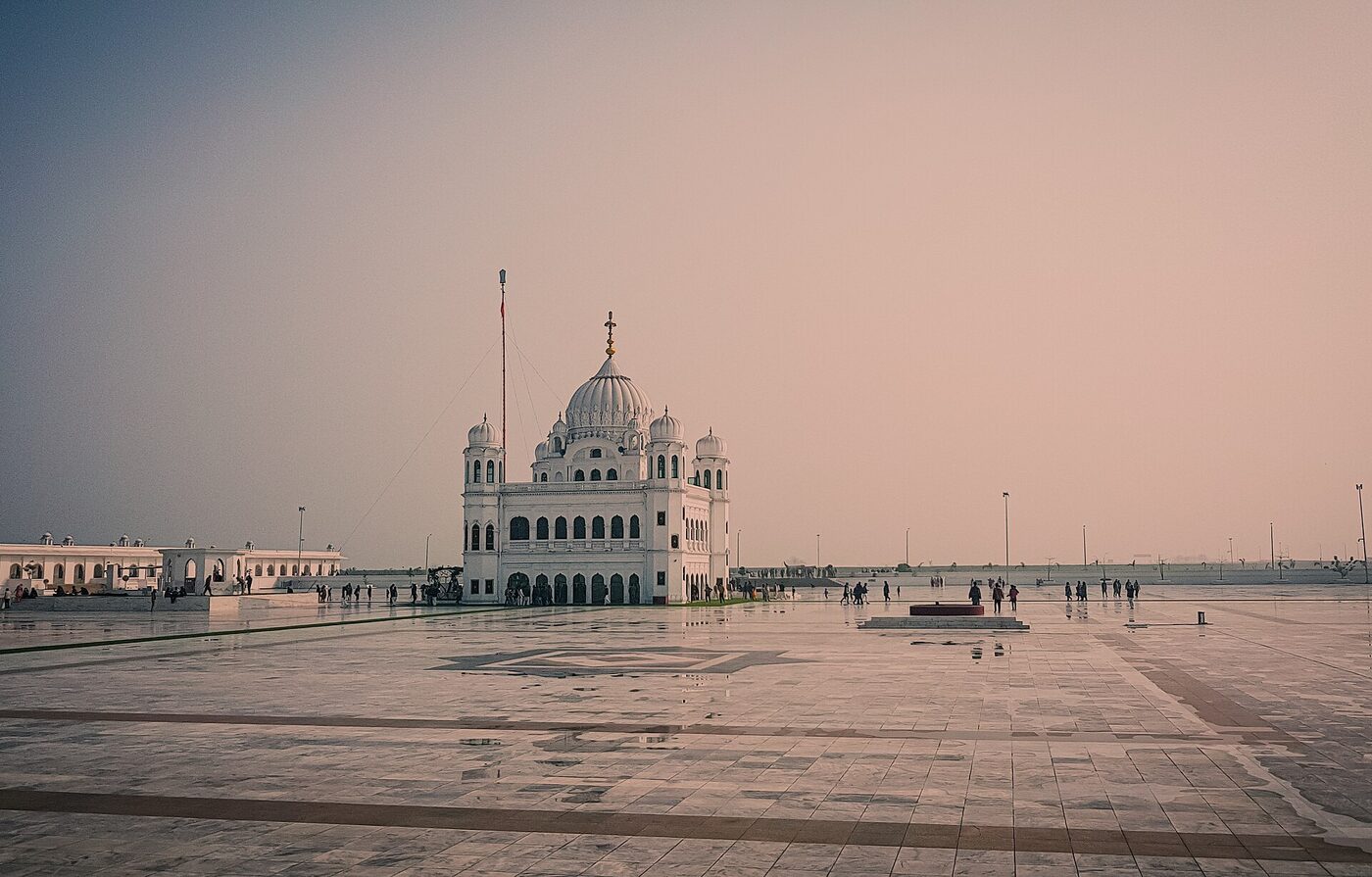
Kartarpur. In his last years, Guru Nanak settled at Kartarpur, on the Ravi river, and farmed with his own hands.36 Sikhs today sum up the way of life there in three simple rules:18
- Naam japna — remember the One Creator.
- Kirat karni — earn an honest living by your own work.
- Vand chhakna — share what you have with others.
Everyone ate together, sitting side by side, whatever their caste or religion. This shared kitchen is called langar.18,36
Life at Kartarpur. Bhai Gurdas writes that at Kartarpur, Guru Nanak took off the clothes of a wandering holy man and dressed as an ordinary householder.31 A householder is a man living at home with his family. Bhai Gurdas also describes a daily rhythm: singing the hymns called Sodar and Arti, and reciting Japji in the early morning.31 Guru Nanak lived there with his family for about the last twenty years of his life.19 Kartarpur became the main center of the Sikh faith.19 After Partition in 1947, when British India was divided into India and Pakistan, Kartarpur ended up just across the border in Pakistan (Chapter 15).19
Guru Nanak also wrote a line that people still quote: why call woman inferior, when even kings are born from her?37 In the 1500s, that was a bold thing to say.
Equal before God. Guru Nanak rejected the sorting of people into higher and lower castes, and taught that women were not impure or lower than men.18 In one hymn he says he stands with the people society calls the lowest of the low: Nanak tin kai sang saath, Nanak keeps their company (Ang 15).38
The first words of the Sikh scripture are his: ੴ (Ik Onkar) — there is One Creator, in everything and everyone.20
The Japji. Ik Onkar begins the Mool Mantar, which describes the Creator as true, the maker of all, nirbhau (without fear) and nirvair (without hatred) (Ang 1).20,39 Then comes Guru Nanak's most celebrated composition, the Japji.18,21 It has an opening salok, or short verse, then 38 verses called pauris, and a closing salok.18,21 It opens the Guru Granth Sahib and is the first prayer of the Nitnem, the prayers Sikhs say each day.21 Many Sikhs recite it every morning.40
His hymns. Guru Arjan, the fifth Guru, gathered 974 of Guru Nanak's hymns into the scripture in 1604 (Chapter 3).18 They include the Asa di Var, sung at the early-morning service in gurdwaras (Angs 462–475).41
The choice. Before he died in 1539, Guru Nanak chose who would lead after him. He did not pick either of his sons. He chose Bhai Lehna, his most devoted follower, and renamed him Angad, which means "part of my own body."18,42 Leadership went to character, not family.
Why Lehna? The Puratan janamsakhi says Lehna was a priest of the goddess Durga at Khadur.43 What Sikhs remember: he heard a Sikh singing one of Guru Nanak's hymns, went to meet the Guru, and stayed.43 At Kartarpur he washed dishes and swung the fan.43 Once he carried a wet bundle of rice plants home in his new clothes, because the Guru asked.43 The Guru's elder son, Sri Chand, chose the life of an ascetic, a holy man who gives up home and family.27 Sri Chand founded an order of ascetics, the Udasis (not the same as the journeys called udasis).27 Later Gurus treated Sri Chand with great respect.27
What we know: a hymn by two court musicians, Balwand and Satta, is in the Guru Granth Sahib.44,45 It says Guru Nanak proclaimed Lehna as Guru, and that the light and the way stayed the same; only the body changed (Ang 966).44,45 Chapter 2 tells more of Lehna's story.
What Sikhs remember: when Guru Nanak died, his Hindu followers wanted to cremate him and his Muslim followers wanted to bury him.18 When they lifted the sheet over his body, they found only flowers.18,36 Each group took half, to cremate or bury in its own way.18,36
Today, at Kartarpur in Pakistan, there is both a Sikh memorial, called a samadh, and a Muslim-style grave for Guru Nanak. People of both faiths loved him.46
Stories of Guru Nanak. Sikhs grow up hearing stories of Guru Nanak called sakhis, "testimonies."1 A testimony is what a witness tells. Most come from the janamsakhis, "birth stories," life-stories written by his followers after his death.47 The stories were first told aloud, and the copies we have were written down long after he died.48 You can read how we know at the end of this chapter.
Most of the sakhis below are not about miracles, but about a man asking "why?" until a ritual done without understanding stops making sense. Where a story is tied to a hymn in the Guru Granth Sahib, we say so. The story is tradition, but the hymn is hard evidence of what he taught.
The thread. What Sikhs remember: when Nanak was a boy, the family priest came to give him the janeu, the sacred thread worn by high-caste Hindu boys.49 Nanak refused it, because a cotton thread wears out, and asked instead for a thread of contentment (being happy with what you have), self-control and truth.18,49 What we know: Guru Nanak's verse about the janeu is in the Asa di Var: Daiaa kapaah santokh soot, jat gandhee sat vatt. It means: make compassion the cotton, contentment the thread, self-control the knot and truth the twist (Ang 471).50
The true bargain. What Sikhs remember: Nanak's father gave him twenty rupees to make a good business deal, and he spent it feeding hungry holy men.51 He told his angry father it was the best bargain he could have made.51 The gurdwara Sacha Sauda, "true bargain," stands at Chuharkana, now Farooqabad, in Pakistan.51,52
The Nawab's prayer. What Sikhs remember: Nanak went to the mosque at Sultanpur with the Nawab, the local governor, and his qazi, a Muslim judge.53 Afterwards Nanak told them their minds had not been on the prayer.53 The Nawab had been thinking about buying horses, he said, and prayer must come from the heart.54 What we know: a verse of Guru Nanak says: make mercy your mosque, faith your prayer mat, and what is just and honest your Quran (Ang 140).55
Watering the fields. What Sikhs remember: at Haridwar, on the Ganges, crowds threw water toward the rising sun as an offering to their dead ancestors.56 Nanak splashed water toward the west, and said he was watering his crops in Punjab.56,57 If his water could not reach his fields, he asked, how could theirs reach their ancestors in heaven?57
Cooking during an eclipse. What Sikhs remember: at Kurukshetra, during a solar eclipse, when cooking was thought to be sinful, Guru Nanak had meat cooked, and the priests were furious.58 He told them an eclipse is a natural event, with nothing to do with what people eat.58 Gurdwara Sidh Batti marks the place.58 What we know: a verse of Guru Nanak begins Maas maas kar moorakh jhagre, fools argue about flesh and meat, while knowing nothing of wisdom or meditation (Ang 1289).59 Tradition links it to his arguments with priests about meat.60,61
The sky is the plate. What Sikhs remember: at the Jagannath temple in Puri, Guru Nanak was invited to the evening aarti, the waving of a plate of lamps in worship.62 He stayed seated, and when the priests complained, he sang of a bigger aarti, performed by nature itself.62 What we know: that hymn is in the Guru Granth Sahib.63,64 It says: Gagan mai thaal, rav chand deepak bane, the sky is the plate, and the sun and moon are the lamps (Ang 663).63,64 It is also part of Kirtan Sohila, the prayer Sikhs say at bedtime (Ang 13).64,65
Two ways to read the miracle stories. Some sakhis tell of miracles. Many Sikhs believe these happened just as they are told, as signs of the Guru's closeness to God. Other Sikhs read them as teaching stories, the way a parable teaches a truth.66,67 This book does not try to settle which reading is right. Both kinds of Sikhs bow to the same Guru and try to live by the same values. For each story below, we give the lesson Sikhs draw from it, and what historians know about when it was first written down.
Guru Nanak's own answer. Bhai Gurdas wrote long poems called vaars.68 In his first Vaar, at a fair near Batala, in Punjab, yogis show off their powers.30 They challenge Guru Nanak to show them a miracle too.30 He replies: Baajhahu sache naam de hor karaamaat asaathe naahee, "apart from the True Name, I have no other miracle" (Vaar 1, stanza 43).31 So whichever way you read the stories below, their lessons are the same ones he taught all his life. Remember God, work honestly, share with others, and treat everyone as equal.
Lalo's bread. What Sikhs remember: at Saidpur, today's Eminabad, Guru Nanak stayed with Bhai Lalo, a carpenter whom critics looked down on as low caste.69,70 Guru Nanak would not go to a feast given by a rich official, Malik Bhago.69,70 He took Lalo's coarse bread in one hand and Bhago's rich food in the other, and squeezed.69,70 Milk flowed from Lalo's bread, and blood from Bhago's.70 Bhago's wealth, the story says, had been piled up at the cost of others.70
What we know: this version comes from the Bala janamsakhi, one of the old life-stories (more about it at the end of this chapter).69 But Guru Nanak's Babarvani hymn in Raag Tilang calls out to "Lalo" again and again.34,71 One line says: Jaisee mai aavai khasam kee baanee, taisrhaa karee giaan ve Lalo, as the Master's word comes to me, so I speak, O Lalo (Ang 722).34,71 One encyclopedia suggests these lines may have been addressed to Bhai Lalo, his disciple.69 Tilang, named above, is a raga, or raag: the musical measure a hymn is meant to be sung in.
Harbans Singh, a Sikh scholar, read the milk and blood as Guru Nanak's "precept about the balance of morality between earning by honest labour and gain by exploitation," acted out.67 A precept is a rule for how to live.
Feet toward the Kaaba. What Sikhs remember: at Mecca, Guru Nanak lay down with his feet toward the Kaaba, the holiest shrine of Islam. When a qazi objected, he answered: "Where the House of God is not, turn my feet to that direction." When the qazi turned his feet, the Kaaba seemed to turn with them.72 What we know: the story is in both Bhai Gurdas and the Puratan janamsakhi, among the oldest sources.31,72
How sure are we? The two old sources tell it differently. Bhai Gurdas writes that a man named Jivan kicked the sleeping Guru and dragged him by the legs, and Mecca turned around.31 The Puratan janamsakhi names the qazi Rukn ud-Din instead.72 No record of a visit to the Middle East has been found outside Sikh writings.18 The only exception is a stone inscription in Baghdad, found by Sikh soldiers in 1917.73 Sikh scholars have read its date as 1511 or 1521.18,73 But most modern scholars, especially in the West, think the words about Guru Nanak were added much later, in the 1800s.18,74
Bhai Gurdas himself puts a lesson right after the miracle.31 Asked who is greater, the Hindu or the Muslim, Guru Nanak answers that without good deeds, both end up weeping.31
The boulder at Panja Sahib. What Sikhs remember: at Hasan Abdal, in today's Pakistan, a holy man on a hilltop, Wali Qandhari, refused water to the thirsty Mardana, Guru Nanak's companion.75 Guru Nanak touched the hillside with his stick and water gushed out.75 The angry Wali rolled a huge boulder down.75,76 The Guru stopped it with his raised hand, leaving his palm print in the stone.75,76 The gurdwara there is called Panja Sahib, "the holy palm."75
What we know: the story was made popular by the Bala janamsakhi and by the poet Santokh Singh, whose life of Guru Nanak was finished in 1823.75,77 By 1873, a British journal reported that visitors to Hasan Abdal were shown the print of Guru Nanak's five fingers on the wall of the pool.78
What we know: the spring there has a long history. Sikh accounts themselves say Wali Qandhari lived beside a natural spring at Hasan Abdal before Guru Nanak came.79 In the 600s, the Chinese Buddhist pilgrim Xuanzang described a sacred pond northwest of Taxila, where people prayed for rain.80 In the 1800s, the British archaeologist Alexander Cunningham identified that pond with the spring at Hasan Abdal.80 Local Muslims honour the saint on the hilltop as Baba Wali.78 They also call him Hasan Abdal, the name the town carries.78 Under Sikh rule, the general Hari Singh Nalwa built a gurdwara and pool there (Chapter 10).76,81
Harbans Singh, the Sikh scholar, wrote that the stopping of the rock "symbolizes inner certitude and fearless resistance to evil."67 Certitude means being sure.
How do we know? No janamsakhi that survives can be dated earlier than the mid-1600s.48 The janamsakhis grew out of Sikh memories, lessons and legends, all mixed together.47 Getting dates and places right was not their purpose.47
The Puratan ("old") janamsakhi is thought to be the oldest.29 The Bala janamsakhi, whose oldest copy is dated 1658, is still very popular.29,82 It claims to be told by Bhai Bala, said to be Guru Nanak's companion.29,82 But no earlier source mentions Bhai Bala, and scholars do not accept that claim.29,82 Educated readers have come to prefer the Puratan over the Bala.29
One of the earliest accounts is not a janamsakhi at all.32 Bhai Gurdas, a Sikh scholar who died in 1636, wrote 40 vaars, or long poems.68 In his first Vaar, stanzas 23 to 44 tell the main events of Guru Nanak's life.68 Scholars date it to around 1620 or the 1630s, and even it includes miracles.32
How sure are we? Scholars disagree about how much of the sakhis really happened. In 1968 W.H. McLeod, a historian from New Zealand, tested each story against other evidence, including Guru Nanak's own hymns.47,83 He set aside the miracles. Of 124 stories, he judged 37 to be probable or established, and another 28 to be possible.47 Many Sikh scholars rejected his work as "a motivated misrepresentation of the Sikh tradition."84 Some critics said he used methods made for studying the Christian Bible, which did not fit Sikh sources.47 Other scholars, some Sikhs among them, praised his work as rigorous.83 J.S. Grewal, a Sikh historian, gave McLeod credit for widening Sikh studies.84 But Grewal argued that McLeod left out Guru Nanak's ethical and social message: his teaching about right and wrong, and about society.84
In 1969 Harbans Singh, who later edited the Encyclopaedia of Sikhism, offered another way to read the sakhis.67,85 "The Janamsakhi accounts thus became interpretations of events rather than literal and orderly transcriptions of them," he wrote.67 (An interpretation explains what something means. A transcription is an exact written record.) The details of many of the stories "may not be literally true," he said, but each one bears witness "to the depth and charity of Guru Nanak's life."67
Talk about it Guru Nanak picked the next leader by character, not family. Why do you think that mattered so much? Pick one sakhi from this chapter. What is it trying to teach, and how could you live that lesson this week?
Letters, Langar and a New City
The next three Gurus turned Guru Nanak's ideas into a living community, with its own alphabet, its own kitchens and its own city.6,86,87
Guru Angad (Guru 1539–1552)
Lehna, the pilgrim. Before he was Guru, his name was Lehna (also spelled Lahina).6,43 His father, Pheru, was a trader who was not rich.42,43 Lehna's family worshipped the Hindu goddess Durga, and some early Sikh accounts call him a priest of the goddess.42,43 Every year he made a pilgrimage, a journey to a holy place, to one of her shrines.43 One later Sikh account says it was the temple of Jwalamukhi.43 Then, Sikhs remember, he heard a Sikh singing Guru Nanak's hymns.43 On one of his pilgrimages he stopped at Kartarpur, met Guru Nanak, and decided to follow him.6,42 He was in his late twenties.43
Lehna stayed at Kartarpur for years, serving Guru Nanak.42 What Sikhs remember: one day a jug fell into the mud. Guru Nanak's sons would not pick it up. Lehna did, cleaned it, and brought it back full of water.42
What we know: not everyone accepted Guru Nanak's choice at first.42 Guru Nanak's sons said that they should be the ones to lead.42 Years later, Balwand and Satta, two Muslim musicians who sang at the Gurus' court, wrote a poem about the first Gurus.91 Guru Arjan placed it in the Guru Granth Sahib.91 It says that Guru Nanak proclaimed Lehna and spread a royal canopy, the kind held over a king, above his head.44,91 What many Sikhs believe: Guru Nanak passed his own light to Guru Angad.43
Khadur. After Guru Nanak died in 1539, Guru Angad went to Khadur, a village near the Beas river.7,89 His father had made his home there, and Lehna had married there.7,43,89 Khadur now became the center of the Sikh faith, as Kartarpur had been.43,89 Satta's verses in that poem say Guru Angad set up a new seat there, a new place to lead from.91 The Guru lived simply. He earned his family's plain meals by twisting a tough grass called munj into string.43
What Sikhs remember: in about 1540 the Mughal emperor Humayun came to Khadur.42,43 Humayun had just lost his throne in a battle.42,43 The Guru was teaching children and did not stop to greet him, and Humayun grew angry.42 The Sikh writings that tell this story come from more than a century later.42,43 They say the Guru blessed him.42,43
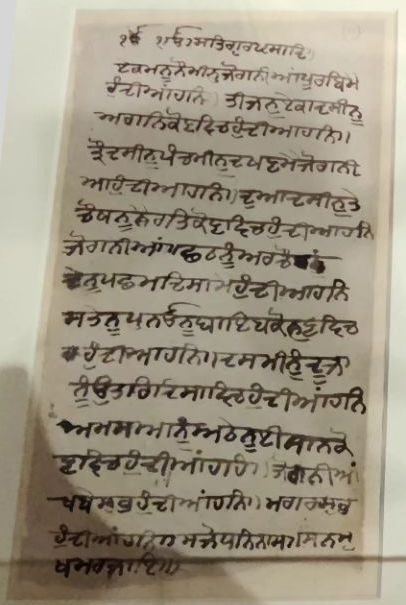
The letters you may be learning. Guru Angad shaped the alphabet called Gurmukhi, which means "from the mouth of the Guru."6,88 If you have ever practiced ੳ ਅ ੲ, you are writing letters he helped make standard.88 He did this so that the Gurus' hymns could be written down clearly and correctly.88 What Sikhs remember: he also encouraged young people to keep their bodies strong through wrestling and exercise.6,42
At Khadur, the Guru taught the children their letters himself, in the afternoons.43,89 The basic alphabet has 35 letters, so it is sometimes called the paintī, "the thirty-five."92
Honest history: Guru Angad did not invent these letters out of nothing. The script already existed before his time, and it seems to have grown out of an older one called Lahnda.88,92 So historians today see him as the one who made Gurmukhi standard and spread it, not the one who first made it.88 Even so, a note in one of the Goindval pothis already gives him credit for the letters.93 The pothis are books of hymns that many scholars date to about twenty years after he died.93
The wrestling ground. An akhara is a wrestling ground.42 At Khadur today, a place called Mall Akhara marks the spot where, Sikhs remember, wrestling matches for the young were held in Guru Angad's time.43,89
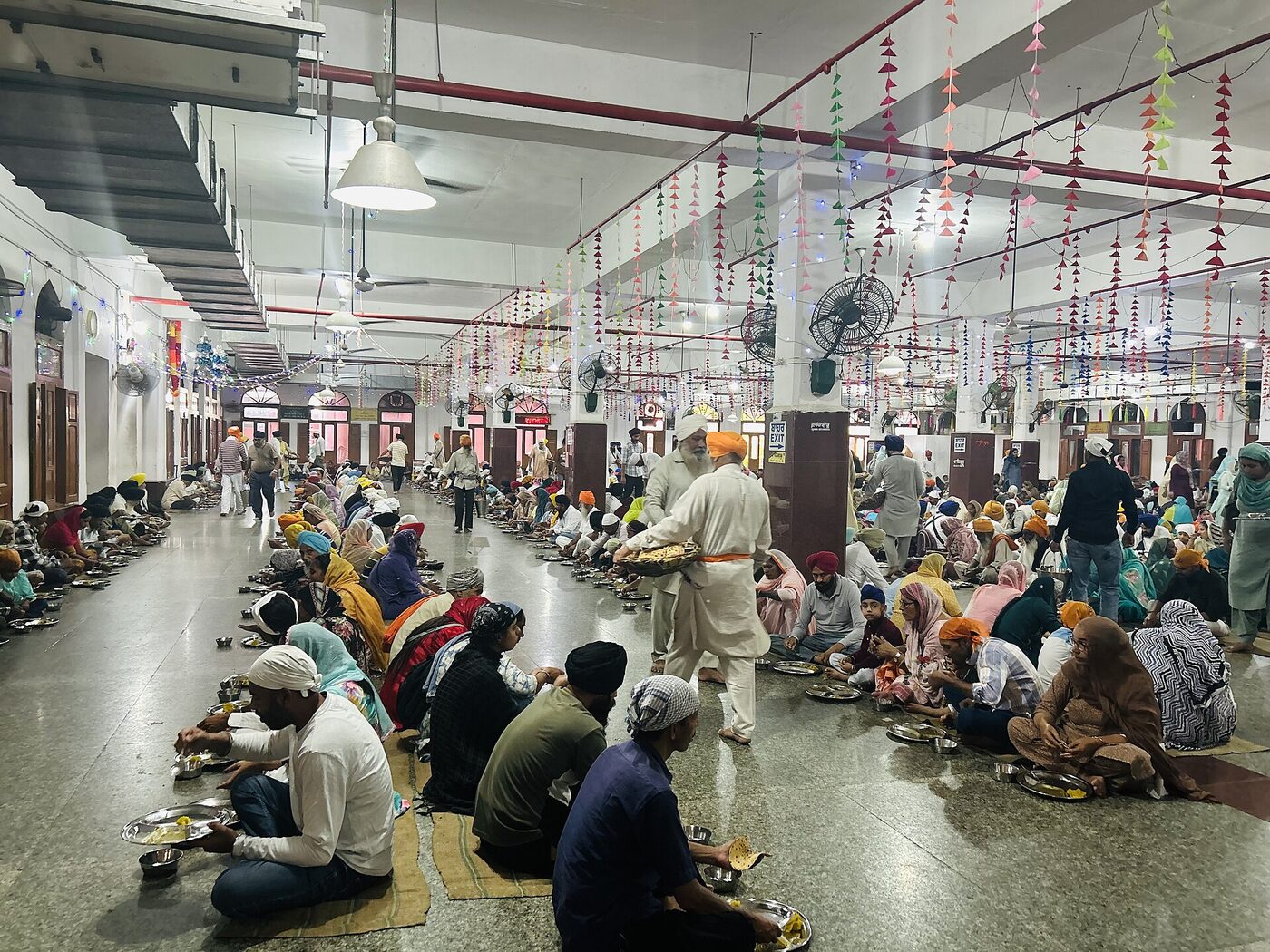
Mata Khivi, a great leader of langar. Guru Angad's wife, Mata Khivi, ran the community kitchen at Khadur Sahib. She made sure everyone was fed, richly and with love.86 What we know: she is named and praised in the Sikh scripture itself, for her generous kitchen and its rich kheer, a sweet rice pudding.86,94 She is one of the very few women named in the scripture, a rare honor.95
How sure are we? Some books say Guru Angad started the langar, but no reliable documents from the time prove it.6 (Look back at Kartarpur in Chapter 1.) What we do have is Balwand's poem, written down by Guru Arjan's time, which praises Mata Khivi's langar at Khadur.91,94
Gathering Guru Nanak's words. Guru Angad began collecting Guru Nanak's hymns.42 An early Sikh life story says that Guru Nanak handed him a book of his hymns.93 Some people have linked it to an old manuscript, a book written by hand, that is now thought to be lost.93 But there is not enough evidence to be sure.93 Guru Angad's own hymns are short verses called saloks, and they make up about one percent of the Guru Granth Sahib.42 Like every Guru whose hymns are in the scripture, he did not sign them with his own name. He signed them "Nanak."96
How sure are we? Sikh tradition also tells a story about Bhai Bala, who it says was a companion of Guru Nanak.47 It says Guru Angad asked Bala to tell the story of Guru Nanak's life, so that it could be written down.47 Most scholars do not accept this.47 The oldest accepted copy of that life story was written in 1658.47 That is more than a hundred years after Guru Angad died, though the story itself may be somewhat older.47 And the story itself admits that Guru Angad had never heard of Bala.47
The next Guru. Like Guru Nanak, Guru Angad did not choose either of his own sons, Dasu and Datu.42,43 He chose his disciple, or follower, Amar Das, who was about twenty-five years older than he was.7,42,43 Guru Angad died at Khadur in 1552.43
Guru Amar Das (Guru 1552–1574)
A seeker who kept looking. Amar Das was a deeply religious Hindu who made the pilgrimage to Haridwar, on the holy river Ganges, year after year. Chroniclers, the writers of old records, count twenty trips.7,97 After the twentieth, a holy man scolded him for having no guru of his own, and Amar Das decided to find one.7 Then he heard Bibi Amro, Guru Angad's daughter, singing a hymn by Guru Nanak. She had married into Amar Das's family.7,97 In about 1540, when he was around sixty, she took him to Khadur, and he became Guru Angad's disciple.7,97
Becoming Guru in old age. He became Guru at about 73, after years of humbly serving Guru Angad.97 (Sikhs remember him carrying water for the Guru before dawn.)7 He made a rule: whoever came to see him had to eat in the langar first, sitting on the floor in rows with everyone else. This is called pangat.99
Sikhs sum up his rule in a short saying: pahile pangat, pachhe sangat.99 It means first sit together in rows to eat, and only then sit together as a congregation, the sangat.99 The Guru himself lived on plain bread that he earned by his own work.7
What Sikhs remember: even the Mughal Emperor Akbar came to visit, and he too sat on the floor and ate in the langar before meeting the Guru.7,97
Sikh life stories called janamsakhis add that the Guru persuaded Akbar to end a tax on Hindu pilgrims going to Haridwar.7,97 It was the same journey Amar Das had once made so many times.7,97
The baoli at Goindval. Guru Amar Das moved the center of the Sikh community from Khadur to a new town called Goindval.103 There, in the 1550s, he began digging a baoli, a deep well with steps going all the way down to the water.101,104 A covered stairway of 84 steps leads down to it.101,103 It became the first place of pilgrimage that belonged to the Sikhs themselves.97,101
Why did a well matter so much? In those days, people called "untouchable" were often not allowed to draw water from wells used by "higher" castes.105 What Sikhs remember: the water of the Goindval baoli was for everyone, whatever their caste.106
Sikhs also remember a teaching of the Guru about the steps and Guru Nanak's Japji Sahib, the hymn that opens the Guru Granth Sahib.21,107 Whoever recites the Japji on each of the 84 steps with a pure heart, and then bathes, he taught, will be spiritually set free.21,107 The number 84 recalls an old Indian belief in 8.4 million rounds of birth and rebirth.103 Many pilgrims still recite Japji on every step today.108
A town at a crossroads. Goindval stood on the main road between Delhi and Lahore, at a busy ferry crossing on the Beas river.7 It also stood where three regions of Punjab meet: Majha, Malwa and Doaba. That helped the Sikh message spread.97 The Guru asked Sikhs to gather there at the start of the months of Baisakh and Magh, and at Diwali.7,97 He made two older harvest festivals part of Sikh life: Vaisakhi in spring and Diwali in autumn.98 Chapter 4 tells how Diwali became an even more special day for Sikhs, and Chapter 6 tells of a famous Vaisakhi.
Home of the homeless. Sikhs tell two stories about Guru Amar Das's humility, one from before he became Guru and one from after. What Sikhs remember: one stormy night at Khadur, Amar Das was carrying water from the Beas river.7,89 He tripped over a peg in the dark and fell into a weaver's pit.7,89 A weaver woman called him "Amru nithavan," Amru who has no home of his own.7 When Guru Angad heard this, he praised Amar Das's devotion and called him the home of the homeless.7,89 A small shrine at Khadur called Killa Sahib, "the peg," marks the spot.89
Sikhs also remember what Guru Angad did when he chose Amar Das as the next Guru.7 In their telling, Guru Angad placed a coconut and five coins before him as a sign of honor, and Bhai Buddha marked his forehead.7
What Sikhs remember: Guru Angad's son Datu would not accept Guru Amar Das.109 Datu went to Goindval and kicked the old Guru as he sat among his followers.97,109 Guru Amar Das did not fight back.109 He held Datu's foot, asked Datu to forgive him, and said he hoped his old bones had not hurt Datu's tender foot.109 Datu called him a usurper, someone who takes a place that is not his, and ordered him to leave.109 Guru Amar Das quietly left for his home village, Basarke.97,109 Sikh tradition says that Datu made amends, or made up for what he had done, many years later, in Guru Arjan's time.109
Guru Amar Das spoke clearly against the burning of widows.7 What we know: his hymn in the Sikh scripture says a woman who burns on her husband's fire is not truly devoted; true devotion is shown by how you live.97,110 He also sent out teachers to 22 regions to spread the Sikh way, and Sikh accounts say women teachers were among those sent out too.7,97
The manjis. Each of these regions was called a manji.7,100 In Punjabi, a manji is a simple string cot, a bed of woven string. The Guru's teachers sat on these seats while they preached.100 The manjis helped tie Sikhs in faraway places into one community.7,100 Their leaders sent the Sikhs' offerings, or gifts, back to Goindval.7,100 Sikh accounts name three women who preached mainly to women, including Muslim women: the Guru's daughters Bibi Dani and Bibi Bhani, and a woman called Bibi Pal.97
He also allowed widows to marry again, and encouraged marriages between people of different castes.98 He discouraged purdah, the custom of women hiding their faces behind a veil.7,97 What Sikhs remember: when the raja (king) of Haripur came to visit with his queens, one queen would not lift her veil. The Guru asked why she had come at all, if she did not want to see the Guru's face.97
A song of bliss. Guru Amar Das also wrote the Anand Sahib, forty verses whose name means "bliss."102 He wrote it at Goindval.103 A shorter form of it is sung at the end of every Sikh congregational service, when people gather to worship, and at weddings and other ceremonies.102 If you have been to a gurdwara, you have probably heard it.102
It begins: Anand bhaiaa meree maae, satiguroo mai paaiaa. It means: I am filled with joy, my mother, for I have found my True Guru.111,112 The shorter form is the first five verses and the last one, six in all.113
The Goindval pothis. Guru Amar Das gathered the hymns of the Gurus before him, and of some earlier saints, into books called pothis.7,97 What we know: the pothis that survive hold hymns of the first three Gurus and of eight earlier saints, such as Kabir and Namdev.93 Many scholars date them to 1570–72, though some date them later.93 Many also credit Sahansar Ram, the Guru's grandson, as the copyist, the one who wrote them out.93
Two of them survive, and one encyclopedia says both have been kept by the Guru's descendants.93 They were an important step toward the Sikh holy book, and Chapter 3 tells how Guru Arjan got hold of them.7,93
One of Guru Amar Das's hymns begins: Jaati kaa garbu na kareeahu koee. It means: let no one be proud of their caste.114,115 Guru Amar Das, too, passed over his own sons, Mohan and Mohri. He chose his son-in-law, Jetha, who became Guru Ram Das.7,97
Guru Ram Das (Guru 1574–1581)
The boy who sold boiled grain. He was born in Lahore in 1534 and named Jetha, which means "firstborn."116 By the time he was seven, both his parents had died.116,117 His grandmother raised him in Basarke, the same village where Guru Amar Das was born.7,116,117 To earn a living, the young Jetha sold boiled chickpeas and grains in the market.116,117 He often gave his food away to hungry people, and his grandmother sometimes scolded him for it.116,117 At about twelve he went to Goindval, the town of Guru Amar Das, and settled there for good.116
The city of Amritsar. Guru Ram Das was married to Bibi Bhani, the daughter of Guru Amar Das.7,97 She was a strong and respected woman in her own right.7,97 He dug a sacred pool (one source says Guru Amar Das had already begun the digging), and built a town around it.119 The town was first called Ramdaspur. Later it took the name of its pool: Amritsar, the "pool of nectar."87
Building a town. It was Guru Amar Das who chose the site and asked Ram Das to start a new town there.87,116 Before it was called Ramdaspur, the settlement was known as Guru ka Chakk.87,116 Guru Ram Das invited merchants and craftspeople from faraway places to come and live there.87,116 The town grew into a center of trade as well as of pilgrimage.87,116
How sure are we? The sources disagree about how the land was obtained.8,87,116 One record says it was bought for 700 rupees, paid with Sikh donations, from the landowners of a village called Tung.87,116 Another account says Emperor Akbar offered the land to Guru Amar Das, who would not accept it.116 In that account, the land was given to Bibi Bhani instead, and she gave it to the Sikh community.116 A third account simply says that Akbar gave the land.8
The masands. Guru Ram Das needed to pay for the pool and for feeding everyone in the langar.116,117 So he organized Sikhs called masands to collect the offerings of Sikhs in faraway places and bring them to the Guru.116,117 The masands also carried his message.116,117 The word comes from the Persian masnad, a kind of raised seat.100,120 One Sikh he sent to teach was the poet Bhai Gurdas (you met him in Chapter 1), who went as far as Agra.116,121
How sure are we? Historians are not sure exactly when the masands began. Some sources credit Guru Amar Das, some Guru Ram Das, and some Guru Arjan.120 Honest history: over time, many masands became greedy or dishonest, and some began acting like gurus themselves.120,122,123 Much later, the tenth Guru, Guru Gobind Singh (Chapters 6–7), told Sikhs not to accept such masands, and he did away with the system.100,120
If you ever go to a Sikh wedding, you will hear his words. Guru Ram Das wrote the Lavan, the four hymns sung while the couple walks around the Guru Granth Sahib.118 The Lavan are on Ang 773–774 of the Guru Granth Sahib.124 During the rounds, the couple is joined by a piece of cloth.124 Each round is a promise to God, with the Guru and the gathered sangat as witnesses.124
His hymns. Guru Ram Das wrote hymns in 30 different ragas.116,117 One of them describes how a Sikh's day should begin: Gur satgur kaa jo sikh akhaae, so bhalke uth har naam dhiaavai. It means: whoever calls themselves a Sikh of the True Guru should rise early and remember God's Name.125,126
Honest history: Guru Ram Das was the first Guru to choose his own son to follow him.117 Every Guru after him, from the fifth to the tenth, was his descendant, from his own family line.117 He had three sons: Prithi Chand, Mahadev and Arjan.116 He chose the youngest, Arjan, and Chapter 3 tells why. Prithi Chand, the eldest, protested.116,117 Guru Ram Das died at Goindval in 1581.116
Talk about it In langar, a king and a poor farmer sit on the same floor and eat the same food. Why do you think the Gurus made that a rule, not just an idea? Guru Amar Das answered a kick with kindness. Was that weakness or strength? Why?
Guru Arjan Builds, Gathers, and Gives His Life
Guru Arjan gave Sikhs their most famous building and their holy book.127 He also became the first Sikh Guru to give his life for his faith.127
Guru Arjan (Guru 1581–1606)
Three letters. Arjan was born at Goindval in 1563.128 What Sikhs remember: his father, Guru Ram Das, once sent him to Lahore to stand in for the family at a wedding. Arjan stayed on in the city, teaching.128 He started a Sikh congregation there, a group that met to pray together.128 He missed his father, and wrote him letters in verse, longing to come home.116 His eldest brother, Prithi Chand, kept the first two letters from reaching their father.116,128 When the third one got through, the trick came out.116 Moved by Arjan's devotion, Guru Ram Das chose him as the next Guru.116,128
Prithi Chand never accepted this. His followers became a rival group.117,127 Other Sikhs called them by an insulting name, the Minas.117,127
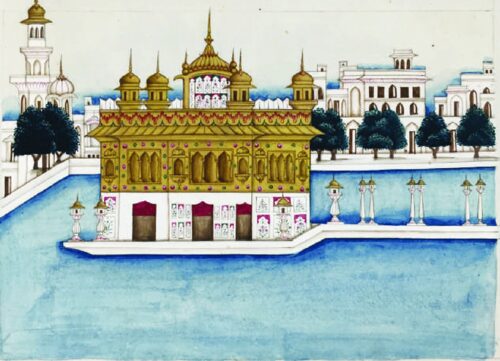
Harmandir Sahib. Guru Arjan, the youngest son of Guru Ram Das and Bibi Bhani, became Guru at 18.127,128 He built the Harmandir Sahib in the middle of the Amritsar pool. Instead of building it up high, he built it low, so you step down to enter.119,128 This was a lesson in humility, in not thinking you are better than others. It has four doors, one facing each direction, meaning people from every side of the world are welcome.119,128
What Sikhs remember: a Muslim Sufi saint from Lahore, Mian Mir, laid its foundation stone, the stone that marks the start of a building.119,132 How sure are we? This story was written down long afterwards. Other Sikh accounts say Guru Arjan laid the stone himself. Historians cannot prove either one.119,132 But the story shows how many people see the place: holy to all.
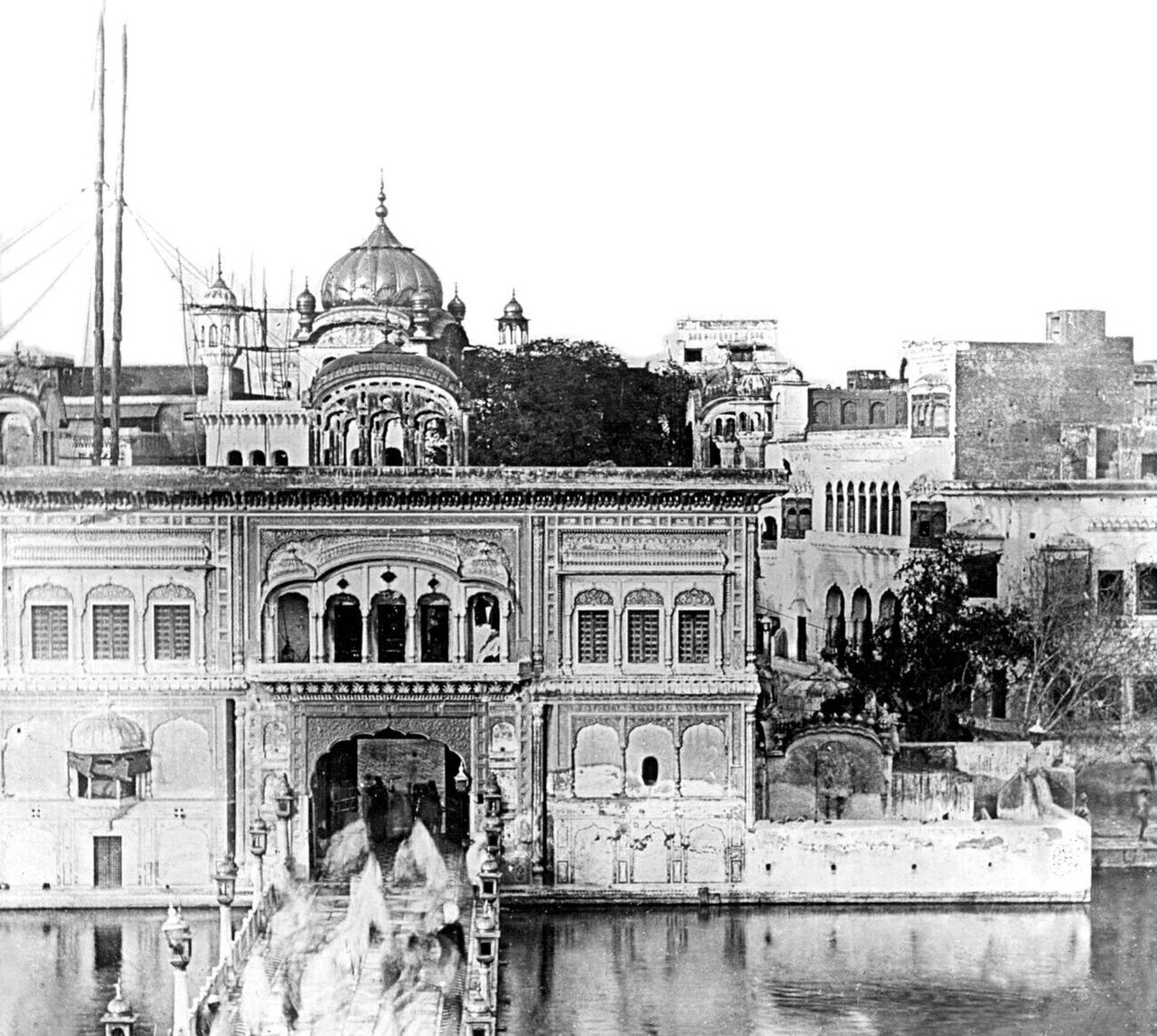
Built by many hands. The sources give different dates for the building.119,133 One says the work began in 1581 and the first building took eight years.119 Another says the foundation was laid in December 1588.133 Sikhs did the work with their own hands. Bhai Buddha (also called Baba Buddha) and Bhai Gurdas were among those who dug out the pool and raised its walls.133,134 The Sikhs' own gifts paid for it.127
Dasvandh. The building cost money, and so did the langar, the shared kitchen where everyone eats together.127,128,135 To pay for them, Guru Arjan asked Sikhs to give one tenth of what they earned.127,128,135 This gift is called dasvandh, which means "a tenth part."135 The masands, local Sikh leaders, collected it from the Sikhs in their areas and brought it to the Guru.127,128,135 Guru Arjan reorganized them to do this.127,128,135 Many Sikhs still give dasvandh today.135 How sure are we? Sources differ on who began it. Some say Guru Amar Das was already preaching it, and the idea of sharing goes back to Guru Nanak's teaching (Chapter 1).135
Tarn Taran. In 1590, Guru Arjan began turning a natural pond into a great four-sided pool.128,136,137 The pond was beside the Delhi–Lahore road, about 24 km south of Amritsar.128,136,137 He named it Tarn Taran, "the boat that carries you across" the ocean of life.136 In 1596 he founded a town around it with the same name.136 Its pool is one of the largest of all the Sikh holy pools, nearly 290 meters long on its longer sides.136
Guru Arjan also set up a home there for people with leprosy.136 Leprosy is an infection that can be cured today.138 But for centuries, in many parts of the world, people who had it were feared and shunned.138 At Tarn Taran they were cared for with kindness.128 Honest history: later, the people in charge of the shrine neglected the home, and in 1858 Christian missionaries took it over.136
Other towns. Guru Arjan also founded Kartarpur, near Jalandhar (not Guru Nanak's Kartarpur).127,128 He rebuilt a village on the Beas river as Sri Hargobindpur, named after his son Hargobind.127,128 In Lahore he built a baoli, a deep well with steps going down to the water.128 When famine struck, and there was not enough food, he led efforts to feed people and dig wells.128
Sukhmani Sahib, the Psalm of Peace. Around 1602, Guru Arjan wrote a long hymn called Sukhmani Sahib.131 He wrote it beside a pool called Ramsar in Amritsar, which was then surrounded by thick woods.131 Its name means "comfort of the mind" or "jewel of peace," and in English it is often called the Psalm of Peace.131,139 (A psalm is a holy song.) It has 24 parts with eight verses each, 192 verses in all, and it is part of the Guru Granth Sahib. Its message is that remembering God brings peace and helps us let go of our ego, the part of us that thinks only of ourselves.131
Many Sikhs still recite it every day, alone or together, at home or in the gurdwara, the Sikh place of worship. Reading the whole of it takes about an hour to an hour and a half.131,140
Why a holy book? Remember that the Gurus signed their hymns "Nanak" (Chapter 2).96 That left room for trouble. Verses signed "Nanak" began to spread, and Guru Arjan's followers saw them as fake.141,142 Many blamed Prithi Chand and his followers.141,142 Guru Arjan wanted one true, carefully checked collection, so that no one could slip false hymns in among the real ones.127,141
Gathering the hymns. Trusted Sikhs searched for old manuscripts, books written by hand.141 Guru Arjan gathered hymns from Guru Amar Das's son Mohan, from Guru Angad's son Datu, and from Guru Nanak's son Sri Chand.141 What Sikhs remember: Baba Mohan, as Mohan was called, kept the Goindval pothis (Chapter 2), books of the Gurus' hymns, and would not let them go.93,143 He turned away Bhai Gurdas, and then Bhai Buddha.143 So Guru Arjan went to Goindval himself.143 He sat in the street below Baba Mohan's upstairs room and sang to him, playing a stringed instrument called a tambura.143 Baba Mohan was won over, and came down with the books.93,143
Guru Arjan set up his work beside the Ramsar pool in Amritsar.141,142 Bhai Gurdas wrote out the master copy as his scribe, the person who did the writing.141,142 Bhai Gurdas was a close relative of Guru Amar Das (a nephew in some accounts, a cousin's son in others) and a poet himself.121 His long Punjabi poems, the Vaars, explain Sikh teachings, and they are often called "the key to the Guru Granth Sahib."121
The holy book. In 1604 Guru Arjan finished gathering the hymns of the first five Gurus into one book, the Adi Granth.130 He also included hymns by saints from other backgrounds.130 Kabir was a weaver.24,130 Ravidas came from a family of leatherworkers whom society called "untouchable".130,144 Sheikh Farid was a Muslim Sufi.130 Putting all of them in the book was a bold choice. The book was placed in the Harmandir Sahib.134 Its first reader was Baba Buddha (also called Bhai Buddha), who had known Guru Nanak.134 You can read more about the book itself in the section called "The Guru Granth Sahib," right after Chapter 7.
More than a third of the book is Guru Arjan's own work.128 One of his lines says: Naa ko bairee nahee bigaanaa, sagal sang ham kau ban aaee. It means: no one is my enemy, and no one is a stranger; I get along with everyone.145,146
Why he was killed. The Sikh community was growing fast.127,128 That worried the new Mughal Emperor, Jahangir, who took the throne in 1605.127,128 (The Mughals were the Muslim emperors who ruled much of India.)
What we know: Jahangir wrote about Guru Arjan in his memoir, the book about his own life.127,147 He wrote this part within weeks of the Guru's death.127,147 He complained that many people, even some Muslims, followed the Guru. For a long time, he wrote, he had wanted either to shut down this "shop" or to bring the Guru into Islam.127,147 "Shop" was his insulting word for the Sikh faith.127,147 In his own words, the man who ordered the killing admitted that he wanted to end the Guru's following. Historians still argue about how much the killing was about religion and how much about politics.127,147
Jahangir said his reason was that the Guru had blessed a rebel prince, Jahangir's own son Khusrau.127,147 Jahangir ordered the Guru's death.127,147 Guru Arjan died in Lahore in 1606.128 A Christian priest living in Lahore at the time, Father Jerome Xavier, wrote that the Guru died after terrible suffering and cruelty.127,128 What Sikhs remember: Chandu Shah was a rich official of Lahore. He turned against the Guru because the Guru's family had refused a marriage between Chandu's daughter and the Guru's son Hargobind. Sikh tradition says Chandu turned the emperor against the Guru and had a hand in his torture.127,148 How sure are we? No record from the early 1600s names Chandu. Stories that blame him instead of Jahangir have no support in those records.127 But Father Xavier did write that a rich man, who had promised to pay the Guru's fine, tortured him.148 The historian Pashaura Singh thinks that man was Chandu. He argues that the Mughal court used the Chandu story to take the blame off Jahangir.148
What Sikhs remember: over several days in the heat of summer, the Guru was made to sit on a red-hot iron plate while burning sand was poured over him.127,128,149 He stayed calm. He repeated a line from his own hymn: Tera keeaa meethaa laagai, "Whatever You do is sweet to me" (Ang 394).150–152 Then he was taken to the Ravi river, where he died.128
Today, on the anniversary of his martyrdom (his death for his faith), in the hot days of May or June, Sikhs set up stands called chhabeel.127,149 They hand out cold, sweet drinks to anyone passing by.127,149 They answer cruelty with kindness, and heat with something cool.
Talk about it Why do you think Guru Arjan put hymns by Hindu and Muslim saints into the Sikh holy book? Guru Arjan asked Sikhs to give a tenth of what they earned. What could you share a tenth of, besides money?
Two Swords, Healing Herbs, and a Very Young Guru
After Guru Arjan's death, Sikhs learned they would need to protect themselves, without ever forgetting kindness.153
Guru Hargobind (Guru 1606–1644)
Two swords. Hargobind became Guru at 11, right after his father was killed.154,155 He wore two swords. One stood for Piri, spiritual life. The other stood for Miri, worldly life: justice, self-defense, and standing up for the weak.10,155 A Sikh, he taught, should be both a saint and a soldier.153
A new path. He was the only son of Guru Arjan and Mata Ganga.154 He built up a Sikh army.10 He is said to have done this on his father's instructions.10 What we know: in June 1606, soon after his father's death, letters went out to Sikh congregations.154 They asked Sikhs to bring arms (weapons) and horses as their offerings.154 Letters of instruction like these are called hukamnamas.154
Facing the Harmandir Sahib, Guru Hargobind built a raised platform called the Akal Takht, the "Throne of the Timeless One." The Mughal emperor had a throne; Sikhs would have one too, for God's justice. To this day it is where the Sikh community gathers to make its biggest decisions.156
It began as a simple brick platform, first called the Akal Bunga.156 The Guru built it with Baba Buddha, whom you met in Chapter 3, and with Bhai Gurdas, a Sikh poet and teacher.134,155,156
How sure are we? Sources disagree about the year. Many say the Akal Takht was built in 1606, but some historians say 1609.10,156
Horses, bards and a fort. A Persian book written between 1645 and 1658, the Dabistan-i-Mazahib, is one of the earliest books to mention the Sikhs.157 It says Guru Hargobind kept 700 horses in his stables, with 300 horsemen and 60 men armed with muskets, an early kind of gun.155 He built a fort near Amritsar and named it Lohgarh.10 He trained in sword fighting, wrestling and riding himself.10 He hired bards, singers of poems, such as Abdulla and Natha, to sing heroic poems.154 Sports that built strength became popular among Sikhs.154
Still a man of prayer. What Sikhs remember: the Mahima Prakash, a Sikh history written long after his time, says he rose three hours before dawn to sit alone and meditate on God.154
Honest history: not every Sikh liked the change at first. Bhai Gurdas wrote down the complaints. The earlier Gurus had sat in one place of worship and taught.155 But this Guru kept moving about, and even kept dogs for hunting.155 Bhai Gurdas's answer was that the Guru must stay at the center of a Sikh's faith.155
Guru Hargobind trained horsemen and kept an army.10 Jahangir imprisoned him for a time in Gwalior Fort.155 What Sikhs remember: when the emperor agreed to free him, the Guru refused to leave unless 52 imprisoned kings were freed too. He had a cloak made with 52 tassels, and each king held one and walked out with him. Sikhs celebrate this as Bandi Chhor Divas, the Day of Liberation, at the same time as Diwali, the festival of lights.155,158
How sure are we? Nobody knows how long he was held at Gwalior.155,158 Different sources say anything from 40 days to 12 years.154 The Dabistan says he was held because a fine (money his father was ordered to pay) had not been paid.154 One modern account says he agreed to leave only if the other prisoners were freed too, and that he led 52 prisoners out of the fort.154 But it does not call them all kings. It says some hill chieftains, or local rulers, such as the raja (king) of Kahlur, were freed with him.154
The idea that all 52 were hill rajas, and the cloak with 52 tassels, come from Sikh tradition.155,158 A robe with 52 corners, which some believe is that very cloak, is kept today at Gurdwara Chola Sahib, in Punjab.158
Bandi Chhor. To this day, Sikhs call him Bandi Chhor, the Liberator.154 A gurdwara named Data Bandi Chhor stands inside Gwalior Fort, where he was held.158 Each year the Harmandir Sahib is lit up with lights and fireworks on the day.154 The name Bandi Chhor Divas was formally added to the Sikh calendar in 2003.158 But Sikhs had gathered at the Gurus' seat at Diwali time since the days of Guru Amar Das.158
After his release, Jahangir was friendly for a while. In 1620 the Guru even traveled to Kashmir in the emperor's company.154 Things changed under the next emperor, Shah Jahan, who came to the throne in 1628.10,159
Later, between 1628 and 1635, Mughal forces attacked the Sikhs several times.10,154,155 The Sikhs won several of these fights.10,154,155 But after a battle at Kartarpur in 1635, the Guru moved to Kiratpur. (This Kartarpur is a town near Jalandhar, not Guru Nanak's Kartarpur.)10,154,155
What Sikhs remember: one battle, at Amritsar in 1634, started over a hawk. Shah Jahan was out hunting near Amritsar when one of his favorite hawks flew off and fell into the hands of the Sikhs. The angry emperor sent troops.154 On the Mughal side, the battle at Kartarpur in 1635 was led by Painde Khan.154,155 He was a Pathan soldier who had once been one of the Guru's own followers.154,155
Kiratpur. Guru Hargobind spent the last nine years of his life at Kiratpur, in the Shivalik hills beside the Sutlej river, in peace and mostly in prayer.154,155,160 The town stood on land from the hill raja of Kahlur, and it now became the center of the Sikh faith.154,160 He died there in 1644.154 His body was cremated, or burned in a funeral fire, on the riverbank, where Gurdwara Patalpuri now stands.154 Today many Sikh families still bring the ashes of loved ones to Patalpuri, to be placed in the Sutlej.160
A family of Gurus. Guru Hargobind had five sons and a daughter.154 The next three Gurus all came from his family: his grandson Har Rai, Har Rai's son Har Krishan, and his own youngest son, Tegh Bahadur.154,161,162 He chose his grandson Har Rai, whose father, Baba Gurditta, had died before Guru Hargobind.154,161 He passed over Har Rai's older brother, Dhir Mal, who had sided with the Mughal government and spoken against his grandfather.155 Guru Hargobind added no hymns to the holy book, and neither did the next two Gurus.130
Guru Har Rai (Guru 1644–1661)
The gentle Guru. Guru Har Rai kept about 2,200 armed followers ready, but he avoided war.161 He is remembered for loving nature and growing healing herbs.12 What Sikhs remember: he even sent healing herbs to Dara Shikoh, a son of the Mughal emperor, when Dara was very sick.161
A garden of healing. What Sikhs remember: at Kiratpur he founded and cared for a large garden, the Naulakha Bagh, full of plants used as medicine.12,163 Its name is said to mean "garden of 900,000 plants."12 Sikh accounts say he also set up a dispensary at Kiratpur, a place where medicines were given out.164 They say the medicines were free to anyone who was sick, whatever their caste (the social group a person is born into) or religion.164 In 2013, Sikh leaders began replanting the old garden with more than 70 kinds of healing plants, such as turmeric, cardamom and aloe vera.163
The Green Guru. Some Sikhs today call him the "Green Guru" because of his care for the natural world.12 Sikh Environment Day is held on 14 March, the anniversary of the day he became Guru.12,163
What Sikhs remember: one day, as he walked in a garden, his long robe caught a flower and broke it off its stem. He was sad to have spoiled something beautiful for no reason.12,164 For the rest of his life he was careful with his clothes.12,164 The story is told in several versions.12 Sikhs also remember that he went hunting, as his grandfather had, but never killed the animals. He kept them in a zoo at Kiratpur instead.12 Sikh accounts say he ate simple food, earned by the work of his own hands.161
The prince who came for help. The sick prince, Dara Shikoh, was the eldest son of Emperor Shah Jahan.165 He was the heir to the throne, the one in line to be the next emperor.165 Dara was a Muslim who was also open to Hindu thought.165 He translated fifty Upanishads, ancient Hindu holy texts, into Persian.165 He became a friend of the Guru.165 What Sikhs remember: someone asked the Guru why he helped Dara.12 The Guru answered that if one hand picks flowers and the other hand gives them away, both hands get the same fragrance.12
In 1658, Dara's brother Aurangzeb defeated him in a war for the throne.165 Fleeing from Aurangzeb's army, Dara reached Goindval in June 1658 and asked for the Guru's blessing.161 What Sikhs remember: an old Sikh chronicle, or history book, says the Guru's soldiers held the river ferry there to slow down the army chasing Dara.161 Dara was caught the next year. A council called by Aurangzeb declared that he had turned away from Islam, and Aurangzeb's men killed him in 1659.165
How sure are we? One short encyclopedia entry calls the Guru's help for Dara his first "political blunder," a big mistake in dealing with people in power.11 It describes Dara as stirring up a rebellion.11 But in 1658 Dara was the eldest son of the emperor and heir to the throne, fighting his brother in a war for it.165 The Encyclopaedia of Sikhism says the reports sent to Aurangzeb about the Guru were "highly coloured," or exaggerated.161 The Guru said he was simply helping someone in need.11
Aurangzeb's officials told him that the Guru was a rebel who had helped Dara.161 They also said that the Sikh holy book had verses against Islam.161 So the emperor summoned the Guru, or ordered him to come, to Delhi.161 What Sikhs remember: the Guru answered, "I rule over no territory, I owe the king no tax, nor do I want anything from him."161
When Emperor Aurangzeb summoned him, Guru Har Rai sent his son Ram Rai.161 What Sikhs remember: at court, Ram Rai changed a word in one of Guru Nanak's hymns so it would not offend the emperor. Guru Har Rai never accepted Ram Rai again.161 The lesson: you may never change the truth to please someone powerful.
The word Ram Rai changed. Ram Rai was about 15, and the emperor kept him at court as a hostage, a person held to make sure others behave.12,166 Aurangzeb objected to a line in the Asa di Var, a long composition by Guru Nanak.167,168 The line says that the clay from a Muslim's grave ends up kneaded into a potter's lump of clay.167 The verse goes on to say that only the Creator knows whether it is better to be buried or cremated.169 It is about death, which comes to everyone (Ang 466, which means page 466 of the Guru Granth Sahib).169
Ram Rai said the line had been copied wrongly.167 He said it really said beiman, "faithless," not Musalman, "Muslim."167 The emperor was pleased.167
How sure are we? One modern account calls the story of Ram Rai at court a legend.11 Another tells it as history.161
Guru Har Rai chose his younger son, Har Krishan, as the next Guru instead of Ram Rai.11,161 Aurangzeb gave Ram Rai land in the Garhwal region. The town that grew up around his dera, or shrine, took the name Dehradun.167 His followers, the Ramraiyas, became one of five groups that Sikhs were told to keep away from.167
Spreading the teaching. Guru Har Rai traveled through Punjab and as far as Kashmir, and sent out preachers to spread Guru Nanak's teaching.161 What Sikhs remember: he blessed a poor boy named Phul, who became the founder of the ruling families of Patiala, Nabha and Jind.161
Guru Har Krishan (Guru 1661–1664)
A Guru younger than you. Har Krishan became Guru at just five years old. When he was called to Delhi in 1664, the city was struck by smallpox, a deadly disease.170 What we know: he died of smallpox in Delhi in 1664, when he was about seven.170 What Sikhs remember: the young Guru cared for sick people during the epidemic, the fast spread of the disease, and caught it from them.170,172 Gurdwara Bangla Sahib in Delhi stands where he stayed, and visitors still take home its water.172
Why he went to Delhi. Har Krishan was the younger son of Guru Har Rai and Mata Sulakhni.162 His older brother, Ram Rai, was angry at being passed over, and complained to Emperor Aurangzeb.162,171 The emperor sent Raja Jai Singh of Amber to bring the boy Guru to Delhi.162 The young Guru traveled with his mother and grandmother.162 At the village of Panjokhra, near Ambala, he stopped at the request of Sikhs who were expecting visitors from as far away as Kabul and Kashmir.162 In Delhi he stayed at Raja Jai Singh's house. That is why the gurdwara there is called Bangla Sahib: its name comes from the word "bungalow."162,173
How sure are we? Very little was written down about his short life at the time, and later accounts often disagree.170 One account says he went to the emperor's court in March 1664.162 It says the emperor tested him with two trays: one of ornaments and toys, and one holding a holy man's cloak. The boy chose the cloak, and he would not perform a miracle.162 Other sources say he refused to meet the emperor, because he expected to be asked for a miracle, which Sikh teaching forbids.170
The child prophet. What Sikhs remember: during the epidemic he served sick people day and night, whatever their caste or religion.171,173 He turned the raja's house into a shelter for them.171,173 Delhi's Muslims called him Bala Pir, the child prophet.171 When he fell ill himself, he was moved out of the house to a camp on the bank of the Yamuna river.162 He asked that no one mourn him after his death, and that the Sikhs sing Gurbani, the Gurus' hymns, instead.171
What Sikhs remember: before he died, he said only Baba Bakale: the next Guru is in the village of Bakala.170
Where he is remembered. Guru Har Krishan was cremated at the place where Gurdwara Bala Sahib now stands, in Delhi.160,174 His ashes were placed in the Sutlej at Patalpuri, in Kiratpur.160,174 The first gurdwara at Bangla Sahib was a small shrine built in 1783 by a Sikh general, Baghel Singh.173,175
In 2024 the head of the Delhi Sikh Gurdwara Management Committee, the group that runs the city's main gurdwaras, said it was following Guru Har Krishan's example.174 He said free kidney dialysis at its Bala Sahib hospital had helped about 75,000 patients.174 He also said MRI and CT scans at Bangla Sahib cost only 50 rupees.174 (Dialysis is a treatment for people whose kidneys have stopped working. MRI and CT scans are pictures of the inside of the body.)
In every Ardas. Guru Gobind Singh later honored him in the Var Sri Bhagauti Ji Ki, the poem whose opening lines begin the Ardas, the Sikh prayer.4,171 So whenever Sikhs say the Ardas, they remember "revered Hari Krishan on seeing whom all suffering vanishes."176 (There is more about the Ardas near the end of this book.)
Talk about it Sikhs remember that Guru Har Krishan was younger than you when he helped strangers who were sick. What does it look like to be brave when you are young? Guru Har Rai helped Dara Shikoh even though it got him into trouble with the new emperor. Would you help someone if it might get you into trouble?
Guru Tegh Bahadur Dies for Other People's Freedom
Sikhs remember Guru Tegh Bahadur as the Guru who gave his life so that people of a different religion could keep practicing theirs. That is why he is called Hind di Chadar, the Shield of India.177
Guru Tegh Bahadur (Guru 1664–1675)
The quiet Guru. Tegh Bahadur was the youngest son of Guru Hargobind.14 His name means "brave with the sword." Sikhs say he earned it when he fought bravely in a battle at Kartarpur, at about 14.14,177 But he was also deeply quiet and thoughtful, and spent years in meditation at Bakala, sitting quietly and thinking of God. He became Guru in 1664.14
Growing up. As a boy he was called Tyag Mal.177 Baba Buddha taught him archery and riding, Bhai Gurdas taught him the holy writings, and he also loved music.14 In 1633 he married Gujri, who would become the mother of the tenth Guru. Sikhs know her as Mata Gujri.14
After his father died in 1644, he moved with his mother and wife to Bakala, a village near the Beas river.14,177 He lived there until 1656.14,177 Then he spent about eight years traveling in the east, and was back at Bakala by 1664.14,177 He lived simply and spent long hours in prayer, but he also went out riding and hunting.14
"Guru ladho re!" After Guru Har Krishan's last words, several men at Bakala each claimed to be the new Guru.14 One account says there were 22.15
What Sikhs remember: a rich trader named Makhan Shah Lubana had once been in danger at sea.14,177 He had promised 500 gold coins to the Guru if he was saved.14,177 At Bakala he gave two coins to each man who claimed to be Guru. Only Tegh Bahadur reminded him that he had promised 500.14,177 Makhan Shah climbed onto a rooftop and shouted, Guru ladho re!, "I have found the Guru!"14
How sure are we? This story comes from Sikh tradition, not from records written at the time.177 One modern account tells it in a plainer, more down-to-earth way: Makhan Shah could see that Tegh Bahadur, unlike the others, was not greedy.15
Tegh Bahadur was formally made Guru on 11 August 1664.14
Forgiveness. Not everyone accepted him. His jealous nephew Dhir Mal, Guru Har Rai's older brother, sent men who attacked and looted (robbed) his house.14,155 The Guru stayed calm.14 Then Makhan Shah struck back and raided Dhir Mal's house.14 The Guru had the goods returned.14 He taught that forgiveness is the most worthy kind of self-discipline, or control over yourself.14 Even at Amritsar, the priests at the Harmandir Sahib would not let him in. He waited for a few hours nearby, where Gurdwara Thara Sahib now stands.14
In 1665 he founded a new town in Punjab and named it Chakk Nanaki, after his mother. Later it was renamed Anandpur Sahib, the "city of bliss."179 (Bliss means deep joy.)
How Anandpur began. In May 1665 he went to Bilaspur to mourn its raja, Dip Chand, who had died.14,177 Rani Champa of Bilaspur (rani means queen) offered him land on a mound called Makhoval.14,177 He paid 500 rupees for it.14,177 That is where he built Chakk Nanaki.14,177
Journeys to the east. Then he traveled far to the east again, through Bengal and Assam.14 On his travels he started community wells and langars.177 His family stayed at Patna while he went on to Dhaka, in Bengal.14 Dhaka became his base for visits to places such as Chittagong and Sylhet.14 His son Gobind was born at Patna on 22 December 1666, while he was away.14,177
In 1668 the emperor sent Raja Ram Singh, an old follower of the Guru, to fight the Ahom kings of Assam.14 The Guru went with him.14 What Sikhs remember: the Guru helped make peace between the two sides.14,177
His journey home began late in 1669.14 On the way he stopped at Patna and saw his son for the first time, when the boy was about three.14 He was home at Chakk Nanaki by 1672.14
His hymns are in the Guru Granth Sahib.177 One of his most famous lines teaches: frighten no one, and be afraid of no one.178 That is a pretty good rule for life.
His hymns. What we know: he wrote 59 hymns, set to 15 ragas, and 57 saloks, short verses, which makes 116 in all.14,130 His saloks come near the very end of the Guru Granth Sahib.14 He wrote in a language called Braj, while most of the Guru Granth Sahib is in Punjabi.14
His hymns are about how we cling to people and things, about the body and the mind, and about sorrow, service, death and being set free.177 One raga, Jaijavanti, appears in the Guru Granth Sahib only in four of his hymns.180,181 His hymns were not in the book Guru Arjan put together.130 His son, Guru Gobind Singh, added them later (Chapter 7).130
That famous line comes from one of his saloks: Bhai kaahoo kau det neh, neh bhai maanat aan. It says a truly wise person is "someone who frightens no one, and is afraid of no one" (Ang 1427).182
Pressure on other faiths. Emperor Aurangzeb was stricter toward non-Muslims than the emperors before him. He ordered his governors to tear down Hindu schools and temples, and in 1669 he ordered the great Vishvanath temple at Varanasi destroyed.183,184 He gave gifts and government jobs to people who became Muslims.184 Historians disagree about how many temples were destroyed in all, and about how much of this was about religion and how much was about power.183
What Sikhs remember: in 1675, a group of Hindu priests from Kashmir, called Kashmiri Pandits, came to Anandpur Sahib. They said they were being forced to convert to Islam, and they begged for help. The Guru said that if someone great gave his life, it might stop the cruelty. His son Gobind, only eight years old, answered: who could be greater than you, Father?14,177
Sikh accounts date their visit to 25 May 1675.14 They say the priests had been driven to despair, made to feel hopeless, by Iftikhar Khan, the Mughal governor of Kashmir.14
Sikh scholars point to the Bhatt Vahis, record books kept by court bards, which record the Pandits' visit to the Guru in May 1675.185
What we know: on 8 July 1675, before he set out, Guru Tegh Bahadur named his son Gobind as the next Guru.14
Guru Tegh Bahadur set out knowing he would likely be arrested. He was arrested on the way, in Punjab, and taken to Delhi.14,177
Sikh accounts say he was arrested near Ropar on 12 July, the day after he left Anandpur. He was held at Sirhind for more than three months, then taken to Delhi in an iron cage.14,177
Sikh accounts say he was told to convert to Islam, or to perform a miracle to prove his holiness. He refused both.14
A message from prison. What Sikhs remember: while he was held, the Guru sent his young son Gobind Rai a short verse, and Gobind Rai sent one back.186 Both verses are near the very end of the Guru Granth Sahib, on Ang 1429.187 The father's verse begins: Bal chhutkio bandhan pare, kachhoo na hot upaai, "My strength is gone, I am in chains, and nothing can be done." It ends by asking God for help.187 The son's answer begins: Bal hoaa bandhan chhute, sabh kichh hot upaai, "Strength has come back, the chains are broken, and everything is possible." It ends by saying that everything is in God's hands.187
How sure are we? The story of the exchange comes from Sikh writers who lived long after, such as the poet Santokh Singh, and it cannot be confirmed.186 Both verses are printed among Guru Tegh Bahadur's saloks. Sikh writings from the 1700s say the second one was written by Guru Gobind Singh.188
Three of his Sikh companions were killed first, in front of him.177 What Sikhs remember: Bhai Mati Das was sawn in half. Bhai Sati Das was wrapped in cotton and set on fire. Bhai Dayala was boiled in a huge pot. Some accounts say of water, some say of oil. None of them gave up.177,189
Just before his death, Guru Tegh Bahadur is said to have recited the Japji, Guru Nanak's hymn that opens the Guru Granth Sahib (Chapter 1).15
What we know: in November 1675, on Aurangzeb's orders, Guru Tegh Bahadur was beheaded in Chandni Chowk, a busy market in Delhi. Gurdwara Sis Ganj stands there now.14,177
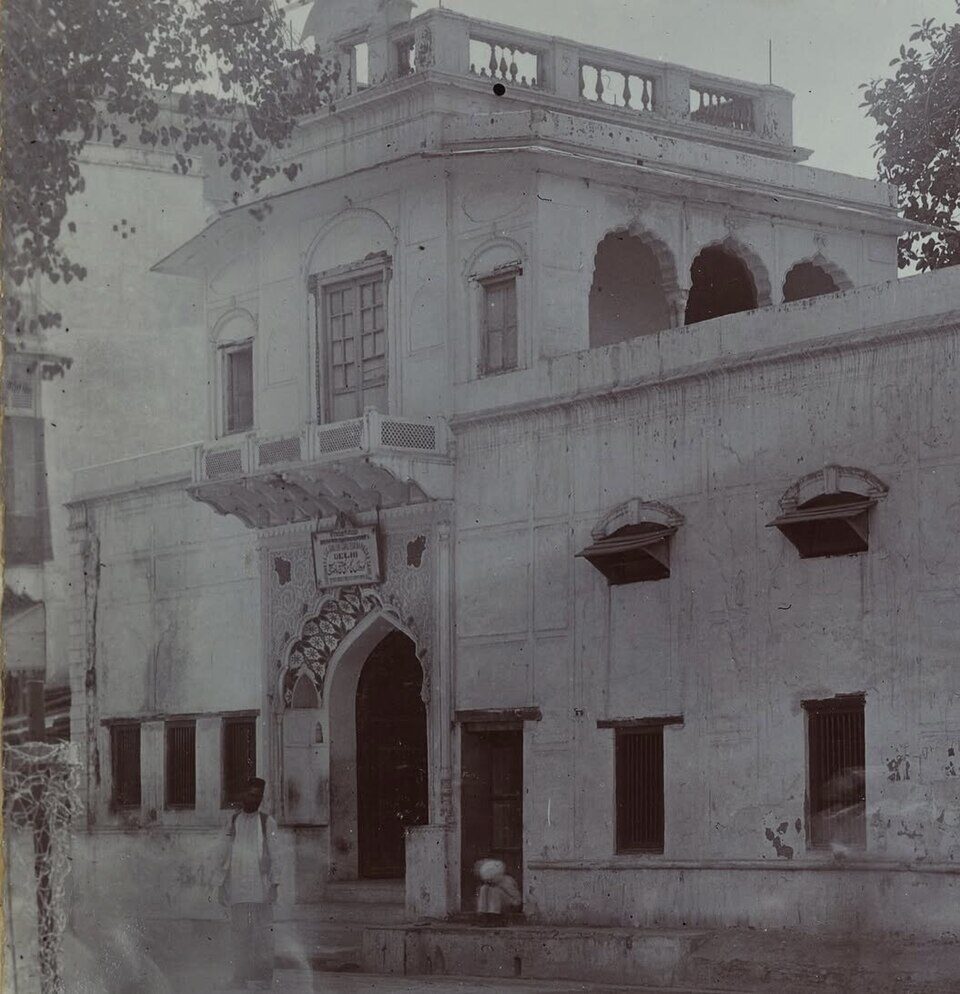
The earliest Sikh account of his death is a poem called the Bachittar Natak. It is traditionally said to be by his son, Guru Gobind Singh, and it was written within about twenty years. The poem says his father gave his head for the forehead mark and sacred thread.14,177,190 Most Sikhs understand this as defending Hindus' right to wear them (some historians read it differently).14,177,190
How sure are we? Writers in Persian told a different story. They called him a rebel and a robber, and said that was why he was killed.177 Most of those writers worked for the Mughal side, and most of them wrote decades or even a century later.177
Historians still discuss exactly why he was killed. But the earliest account comes from the Sikh side, not from his killers.14 It is traditionally said to be by his own son.14 Sikhs have always believed he could have saved his life by giving up his faith. He refused.14
Brave hands. Bhai Jaita, a Sikh from a caste that society looked down on, secretly carried the Guru's head all the way to Anandpur Sahib.14,191 What Sikhs remember: the young Gobind embraced him and called his people the Guru's own sons.191,192 Another Sikh, Lakhi Shah Vanjara, carried away the Guru's body and burned his own house down to cremate it in secret. Gurdwara Rakab Ganj in Delhi marks that spot.14,193
At Anandpur, on 16 November 1675, the young Gobind cremated his father's head with honor, at the place now marked by another Gurdwara Sis Ganj.14
Two gurdwaras in Delhi. In 1783 the Sikh general Baghel Singh built shrines at Sis Ganj and Rakab Ganj.193,194 He was the same man who built the first shrine at Bangla Sahib (Chapter 4).173,175,193,194 Inside Sis Ganj, two things have been kept: the trunk of the tree where the Guru was beheaded, and the well where he bathed as a prisoner.194
In November 2025, Sikhs around the world marked 350 years since his martyrdom. In Srinagar, Kashmir, more than 400 Kashmiri Pandit (Hindu) families joined to remember him.195
Talk about it Guru Tegh Bahadur died defending people whose faith was not his own. Is it harder to stand up for yourself, or for someone different from you? He also had the goods taken from his jealous nephew given back. Why do you think forgiving mattered so much to him?
Guru Gobind Singh and the Birth of the Khalsa
On one spring day in 1699, Guru Gobind Singh created the Khalsa.17 It was a family of Sikhs with no castes and shared names, and with a promise to stand up for anyone who was being treated unfairly.17
Guru Gobind Singh (Guru 1675–1708)
Born far from Punjab. Gobind Rai was born on 22 December 1666 in Patna, a city in Bihar, far to the east of Punjab. His father was away at the time, traveling in Bengal and Assam.17,196 Gobind Rai spent about the first four years of his life in Patna. The house where he was born is now a gurdwara, Takht Patna Sahib.17,196 In 1670 his father told the family to return to Punjab. In March 1672 they reached Chakk Nanaki, the town his father had founded, which later became Anandpur Sahib (Chapter 5).17,196
What Sikhs remember: a Muslim Sufi saint, Pir Bhikhan Shah, traveled to Patna to see the baby. He set two small pots in front of the baby, one standing for Hindus and one for Muslims. The baby covered both at once.199 The Pir, or Muslim holy man, took this to mean the child would treat Hindus and Muslims alike.199 How sure are we? The story is preserved in a long poem about the Gurus written between 1835 and 1843, more than 160 years later.199,200 So it cannot be proved.199,200
A young Guru. Gobind Rai became Guru at about nine years old, after his father's martyrdom, his death for his faith. He grew up at Anandpur Sahib with his mother, Mata Gujri. He studied Persian, Sanskrit and Punjabi, rode horses, practiced archery, and wrote poetry.17 Poets and writers filled his court.201
A town of poets. In 1685 the Guru moved for a while to Paonta, a new town he founded on the banks of the Yamuna river.17,197 The land was given by Raja Medini Prakash of Nahan, in the nearby hills.17,197 He stayed about three years, and much of his own writing was done there.17,197
Sikh tradition counts 52 poets and writers in his service, at Anandpur as well as Paonta.202 One modern account says the real number was even larger.202 They also translated old Indian classics, famous old books, into Braj, a language the Guru often wrote in himself.197,203 At Paonta, a shrine called the Kavi Darbar, the "court of poets," marks the place where their works were read aloud and talked over.197
One of the Guru's favorite disciples, or followers, was the poet Bhai Nand Lal.204 Nand Lal had worked for Aurangzeb's son Prince Muazzam, the future Emperor Bahadur Shah, before coming to Anandpur around 1682.17,204,205 He wrote mostly in Persian.17,204,205 Sikhs may recite his poems alongside the scripture at their gatherings.17,204,205
The Guru's own writings. His first poem is said to be the Chandi di Var, written in 1684.17,206 It is his only long work in Punjabi.17,206 It retells a story from an old Hindu holy text, the Markandeya Purana.17,206 The story is about a war between gods and demons, and the poem tells it to stir up courage.17,206 The Ardas, the Sikh prayer, begins with its opening lines (see the Ardas section near the end of this book).207 (This is the same poem that Chapter 4 calls the Var Sri Bhagauti Ji Ki.)206
After his death, the writings linked with him were gathered into a book of their own, the Dasam Granth, or "Tenth Book."198,207,208 Sikhs still say some of it every day. The Jaap Sahib is part of the morning prayers.203,209 Three of the five prayers read while Amrit is being prepared come from the Dasam Granth.203,209 (You will read about Amrit later in this chapter.)
How sure are we? Scholars do not agree on how much of the Dasam Granth the Guru wrote himself.208 The traditional view is that all of it is his. Others think part of it, or nearly all of it, was written by poets at his court.203,208 The biggest argument is about its longest part: more than 400 tales.203 Many of them are about trickery and deceit (lying), and some readers feel they do not fit the rest of Sikh teaching.203
Works labeled as the Tenth Guru's own words, such as the Jaap, the Bachittar Natak and the Zafarnama (Chapter 7), are generally accepted as his.207 Sikhs honor the Dasam Granth, and some call it a second scripture, but only the Guru Granth Sahib is the Guru.196,207,208
Not Hindu versus Muslim. Many of the Guru's battles were against Hindu hill kings who felt threatened by the growing Sikh community.17 A Muslim holy man, Pir Buddhu Shah, fought on the Guru's side at the Battle of Bhangani in 1688 (some sources say 1686).17,210,211 He came with his followers and his own sons. Two of his sons died there.17,210,211 Sikh history is not a story of one religion against another. Many of these battles were about power, not religion. A Muslim holy man fought beside the Guru, and Hindu kings fought against him.17,211
No more middlemen. Earlier Gurus had appointed local leaders called masands to look after Sikh communities far from the Guru. They taught, and they collected the offerings Sikhs gave for the Guru's work, including dasvandh, a tenth of what a Sikh earned.120 Over time, many masands became quarrelsome or corrupt (dishonest), and some even acted as if they were Gurus themselves.120,122
In 1698, after hearing complaints against them, Guru Gobind Singh told Sikh communities in many places to stop recognizing the masands.17 He told them to bring their offerings straight to him at Anandpur.17 From then on, Sikhs would be joined to the Guru directly, through the Khalsa, which he created the next spring.120,122
Vaisakhi, 1699. Sikhs gathered at Anandpur Sahib for Vaisakhi, the spring harvest festival.212 What Sikhs remember: the Guru stood before them with a sword and asked: who is ready to give their head for their faith?212,213
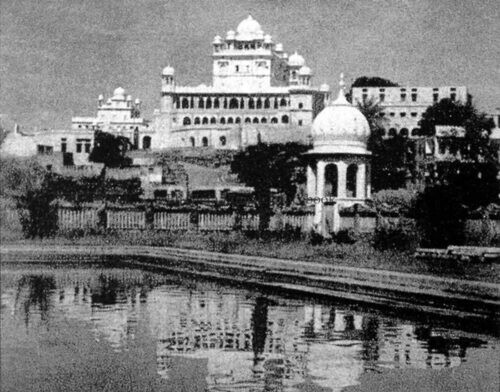
The crowd went silent. Then one man stood up. The Guru took him into a tent. He came back out and asked again. Five men stepped forward in all. Sikh tradition tells what happened inside the tent in different ways. What matters is this: all five were ready to give their lives, and all five came back out alive, dressed in saffron-colored clothes and turbans.212,213
What we know: the Guru created the Khalsa at Anandpur around this time. The famous story of the five volunteers was first written down in detail about fifty years later, by Sikh writers.212,213
They are the Panj Pyare, the Five Beloved Ones. Sikh tradition, written down later, remembers who they were:213,214
| Name | Work | Home |
|---|---|---|
| Daya Ram | shopkeeper (Khatri) | Lahore, Punjab |
| Dharam Das | farmer (Jat) | Hastinapur, near Delhi |
| Himmat Rai | water-carrier | Puri, in the east |
| Mohkam Chand | cloth-printer | Dwarka, in the west |
| Sahib Chand | barber | Bidar, in the south |
They came from different castes, three of them from castes that others called "low," and from every direction of India. Together they became one.213
Amrit. The Guru stirred water in an iron bowl with a double-edged sword called a khanda, while reciting hymns.215 What Sikhs remember: one of the Guru's wives added sugar puffs to the water, so the strength would come with sweetness. Many Sikhs today name Mata Sahib Kaur, whom Sikhs call the Mother of the Khalsa. Some older accounts name Mata Jito instead.215,216 That is because Mata Sahib Kaur may not yet have been married to the Guru in 1699.215,216 The five drank this Amrit. Then the Guru did something surprising: he asked the five to give Amrit to him. The teacher became the student of his students.212,213
One family name. Men who took Amrit received the name Singh, meaning lion.17 What Sikhs remember: women took Amrit too, as equals, and received the name Kaur, usually translated as princess.217 How sure are we? The writings that survive from that time don't clearly say this.217 Some historians think women's Amrit and the name Kaur became the rule later.212,217 Others, such as the scholar Nikky-Guninder Kaur Singh, have argued that women took Amrit and the name Kaur from the start. She has also written that the name's exact beginnings are unclear.212 In the early 1900s, Sikh leaders made Kaur the name for every Sikh woman.212,217
Today women and men take Amrit in the same ceremony.209,215 Either way, the idea of a shared name comes from the Guru. In India a last name announced your caste, and a shared name was meant to set caste aside.217 Today a woman named Kaur never needs to take her father's or husband's name to know who she is.
The Five Ks. Members of the Khalsa today keep five articles of faith, things they keep as signs of their faith.209,218 Sikhs trace them to Guru Gobind Singh.218 How sure are we? Historians think the exact list of five was written down and made standard over the generations after him.122,219 One encyclopedia says the Five Ks became a duty for all Sikhs only with the Singh Sabha reform movement (Chapter 12).122
- Kesh — uncut hair, kept as the Creator made it, usually covered with a turban.
- Kangha — a small wooden comb, for keeping clean and tidy.
- Kara — a steel bracelet, a reminder that your hands should do good.
- Kirpan — a small sword, a promise to protect the defenseless.
- Kachhera — special shorts, for modesty and self-control.
The Khalsa's code. The Guru also gave the Khalsa rules to live by. In short: believe in one God, protect the helpless, stand up to oppression (cruel and unfair rule), and treat everyone as equal, whatever their caste or faith.17 Members of the Khalsa were never to cut or trim their hair, and never to smoke tobacco.17,176,220 They were never to eat kutha, meat from an animal slaughtered in the Muslim ritual way (halal).17,176,220 And they were never to be unfaithful in marriage.17,176,220
Honest history: like the list of the Five Ks, the full written code, called the Rahit, grew over time.122 One modern history says it reached nearly its final form only in the early 1900s.122
The word Khalsa has a second meaning, too. It was the word for land that belonged directly to the emperor, with no landlord in between. The Khalsa belongs directly to God, with no middleman.212
Talk about it Why do you think the Guru wanted Sikhs to share the same names? What does your name, Kaur, mean to you? Guru Gobind Singh was a warrior, and also a poet who filled his court with writers. Why do you think words mattered so much to him?
Anandpur, Chamkaur, Sirhind and Muktsar
In a few weeks of winter, Guru Gobind Singh lost his mother and all four of his sons. He never lost his faith.221,222
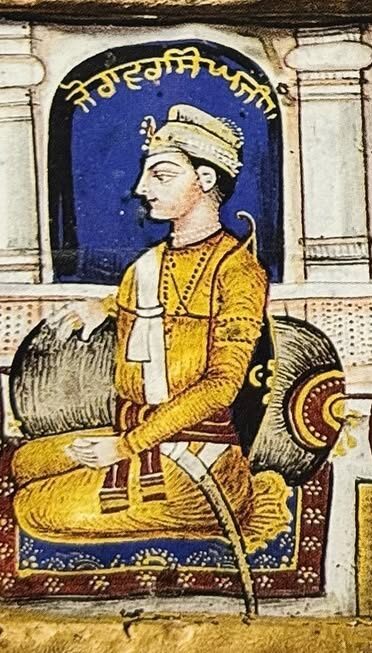
The siege of Anandpur. The hill kings and the Mughal governor of Sirhind, Wazir Khan, surrounded Anandpur Sahib in 1704 (some historians say 1705). The siege lasted months. (A siege is when an army surrounds a place so that no one can get in or out.) Food ran out, and the people inside began to starve.17,201
The attackers swore holy oaths that the Sikhs could leave safely.201 They swore on the Quran, the Muslim holy book, and on a cow, which Hindus hold holy.201 On a freezing December night the Sikhs left.221 The oaths were broken at once. The army attacked them at the flooded Sarsa river. Many drowned, many precious writings were lost, and the Guru's family was split apart.223
Chamkaur. The Guru, his two older sons, and about forty Sikhs took shelter in a small fort at Chamkaur, surrounded by a huge army.17,224 Sikhs call the Guru's four sons the Sahibzade; one son is a Sahibzada. Sahibzada Ajit Singh, about 18, led a group of Sikhs out to fight. Then his brother Jujhar Singh, about 14, led the next group out. Both died in battle.222,225 Almost all the Sikhs there were killed.17
The surviving Sikhs told the Guru the community needed him alive and asked him to escape. He slipped away with three companions.17,224
Alone in the forest. In the dark, the Guru and his three companions were separated. He went on alone through thorny forest to Machhiwara. When the three found him again, he was asleep in a garden outside the village.226 What Sikhs remember: for days he had eaten only the leaves of the wild akk plant, and slept on the bare ground.227 His feet were blistered and cut.227 Gurdwara Charan Kanwal Sahib now marks that garden.226
Think about what he had just lost. His two older sons, and almost all the Sikhs with him, had been killed at Chamkaur. His mother and his two youngest sons had been lost at the Sarsa river, and he did not know where they were.17,228
Mittar Pyare Nu. What Sikhs remember: there in the forest, resting against a tree, he wrote a short hymn that Sikhs still sing today.227,229
ਮਿਤ੍ਰ ਪਿਆਰੇ ਨੂੰ ਹਾਲੁ ਮੁਰੀਦਾਂ ਦਾ ਕਹਿਣਾ ॥
ਤੁਧੁ ਬਿਨੁ ਰੋਗੁ ਰਜਾਈਆਂ ਦਾ ਓਢਣੁ ਨਾਗ ਨਿਵਾਸਾਂ ਦੇ ਰਹਿਣਾ ॥
ਸੂਲ ਸੁਰਾਹੀ ਖੰਜਰੁ ਪਿਆਲਾ ਬਿੰਗ ਕਸਾਈਆਂ ਦਾ ਸਹਿਣਾ ॥
ਯਾਰੜੇ ਦਾ ਸਾਨੂੰ ਸਥਰੁ ਚੰਗਾ ਭਠ ਖੇੜਿਆਂ ਦਾ ਰਹਿਣਾ ॥230
Mittar pyare nu haal mureedan da kehna.
Tudh bin rog rajaiyan da odhan, naag nivasan de rehna.
Sool surahi, khanjar pyala, bing kasaiyan da sehna.
Yaarre da sanu sathar changa, bhath kherian da rehna.
In everyday English, it says something like this:
Go and tell the dear Friend how His followers are doing.
Without You, warm quilts feel like sickness, and living in a house feels like living with snakes.
The water jug feels like a spike, the cup like a dagger, like the cut of a butcher's knife.
With the Beloved, a bed of straw on the ground is good. Without Him, the comfortable town is a furnace.
In Sikh poetry, God is often called the beloved Friend. The Guru had just lost almost everything. Yet the hymn does not name his sons, the battle, or his enemies. It speaks only of missing God, and it says that with God, even the bare ground is enough.
How sure are we? The hymn is in the Dasam Granth, a collection of writings linked with Guru Gobind Singh. It is the sixth of ten hymns called the Shabad Hazare. One historian points out that many early copies of the Dasam Granth do not include these ten hymns.230
The story that it was written at Machhiwara is Sikh tradition. A modern encyclopedia article about Machhiwara does not mention it.226,230 Some accounts say he wrote it after all four of his sons had died.230 But the SGPC, the committee that runs the major gurdwaras in Punjab, says he learned of his youngest sons' deaths only later, at Raikot (see below).228
Carried to safety. In Machhiwara, two Muslim horse-traders, Nabi Khan and Ghani Khan, carried him to safety.231 What Sikhs remember: they dressed him as a Muslim holy man and carried him right past Mughal soldiers. They risked their own lives to save him.231,232
The two youngest. Mata Gujri, the Guru's elderly mother, was with his two youngest sons, Zorawar Singh, about 9, and Fateh Singh, about 6. (Because sources disagree on whether all this happened in 1704 or 1705, each of the four boys may have been a year younger.)221,233 A former servant they trusted betrayed them to local Mughal officials, who sent them to Wazir Khan at Sirhind.17,221
They were held for days in the Thanda Burj, the "Cold Tower," in the bitter December weather. The boys were brought to court and told: become Muslims, and you will live and be rewarded. They refused, again and again.221,234
One man in that court objected. Nawab Sher Muhammad Khan of Malerkotla, a Muslim noble, spoke up for the children and asked that their lives be spared.221,235 He was overruled: his plea was turned down. What we know: in December, on Wazir Khan's orders, the two boys were killed at Sirhind.221,233 What Sikhs remember: they were first bricked into a wall.233,234 Mata Gujri died in the tower soon after, when the news reached her.221
What Sikhs remember: a rich merchant of Sirhind, Diwan Todar Mal, wanted to give them a proper cremation. He was told he could have only as much land as he could cover with gold coins, and he covered it.233,234 Gurdwara Jyoti Sarup stands on that land now. Nearby, Gurdwara Fatehgarh Sahib marks the place where the boys were killed, and every December thousands of Sikhs gather there to remember.234,236
Sikhs never forgot Sher Muhammad Khan either. Many Sikhs believe this memory is one reason Malerkotla, his town, stayed largely safe even in the terrible violence of 1947.235 Historians add that its ruler in 1947 worked hard to keep the peace, and that Muslims, Hindus and Sikhs there all honored the same Sufi shrine.235,237
How the news came. After Machhiwara, the Guru hid for some days at Raikot, with a landowner named Rai Kalha. He asked Rai Kalha to send a messenger to Sirhind to find out what had happened to his family. The messenger came back with the news of his two youngest sons.228 What Sikhs remember: the Guru said his sons had been a gift from God, and had gone back to Him.228
Mai Bhago and the Forty. During the siege of Anandpur, some Sikhs from Mai Bhago's part of Punjab had given up and gone home. Mai Bhago, a Sikh woman, rallied them, calling them together, and led them back to find the Guru and ask his forgiveness.238 In 1705 at Khidrana, a band of forty Sikh men, led by Mai Bhago, fought a Mughal army chasing the Guru. All forty men died.238,239
What Sikhs remember: the last one alive begged the Guru to forgive them.239 The Guru blessed them as the Chali Mukte, the Forty Liberated Ones, the forty who were set free. The town is now called Muktsar.239 Mai Bhago survived her wounds and stayed with the Guru.238,239
A letter of victory. After losing his sons, the Guru wrote a letter in Persian poetry to Emperor Aurangzeb. He called it the Zafarnama, the "Letter of Victory." He called out the emperor's broken oaths, and he wrote that when every other way has failed, it is right to take up the sword.240 A father who had just lost everything called his letter a victory.
How sure are we? Sources differ on the details. He wrote it at Dina, a village in Punjab, or at the nearby village of Kangar.17,240,241 He wrote it in late 1705 or in 1706. One encyclopedia even gives both years, in two different articles.17,240,241
Sikh accounts say two Sikhs carried it far south to the emperor's camp at Ahmadnagar.17,240,242 They name Bhai Dharam Singh and Bhai Daya Singh.17,240,242 They say Bhai Daya Singh was the Daya Ram who was first to stand up at Vaisakhi in 1699.17,240,242 One account says the letter seems to have moved Aurangzeb, or touched his feelings, and that he invited the Guru to meet him. But the Guru had already set out for the south, and the emperor died in February 1707.17
Some historians doubt that the poem we have today is exactly the letter that was sent.241 Two of them, A.C. Banerjee and Christopher Shackle, think the first version may have been in prose, ordinary writing that is not poetry.241
Damdama Sahib. After Muktsar, the Guru traveled on to Talwandi Sabo, in Punjab, near today's city of Bathinda.243,244 He stayed there for more than nine months in 1706. (Some sources say he came in 1705.)243,245 The place where he rested came to be called Damdama Sahib.243 What Sikhs remember: the Gurus called this place Guru ki Kashi, the Guru's seat of learning.244,245
What we know: Guru Gobind Singh added his father Guru Tegh Bahadur's hymns to the holy book. That made the final version, the one Sikhs read today. After it, no more hymns were added, not even the Guru's own poems. (A few scholars think one short couplet, a two-line verse near the end, may be his.)130,198
What Sikhs remember: this work was done at Damdama. The Guru dictated the scripture, saying it aloud, and a scholar named Bhai Mani Singh wrote it down. That copy is called the Damdami Bir.130,141,244,245
How sure are we? Sources do not agree on the year. Some say 1704, which would mean it was done before the Guru reached Damdama.198 Sikh accounts say 1705 or 1706.243,245 The original copy is said to have been lost in 1762, in the Vadda Ghallughara, a terrible massacre you will read about later. By then many copies had been made, so the words survived.141,246
South with the new emperor. After Aurangzeb died, his son Bahadur Shah became emperor. He invited the Guru to meet him, and they met at Agra on 23 July 1707. The Guru then traveled south with the emperor's camp.17 Towards the end of August 1708 he reached Nanded, on the Godavari river.17
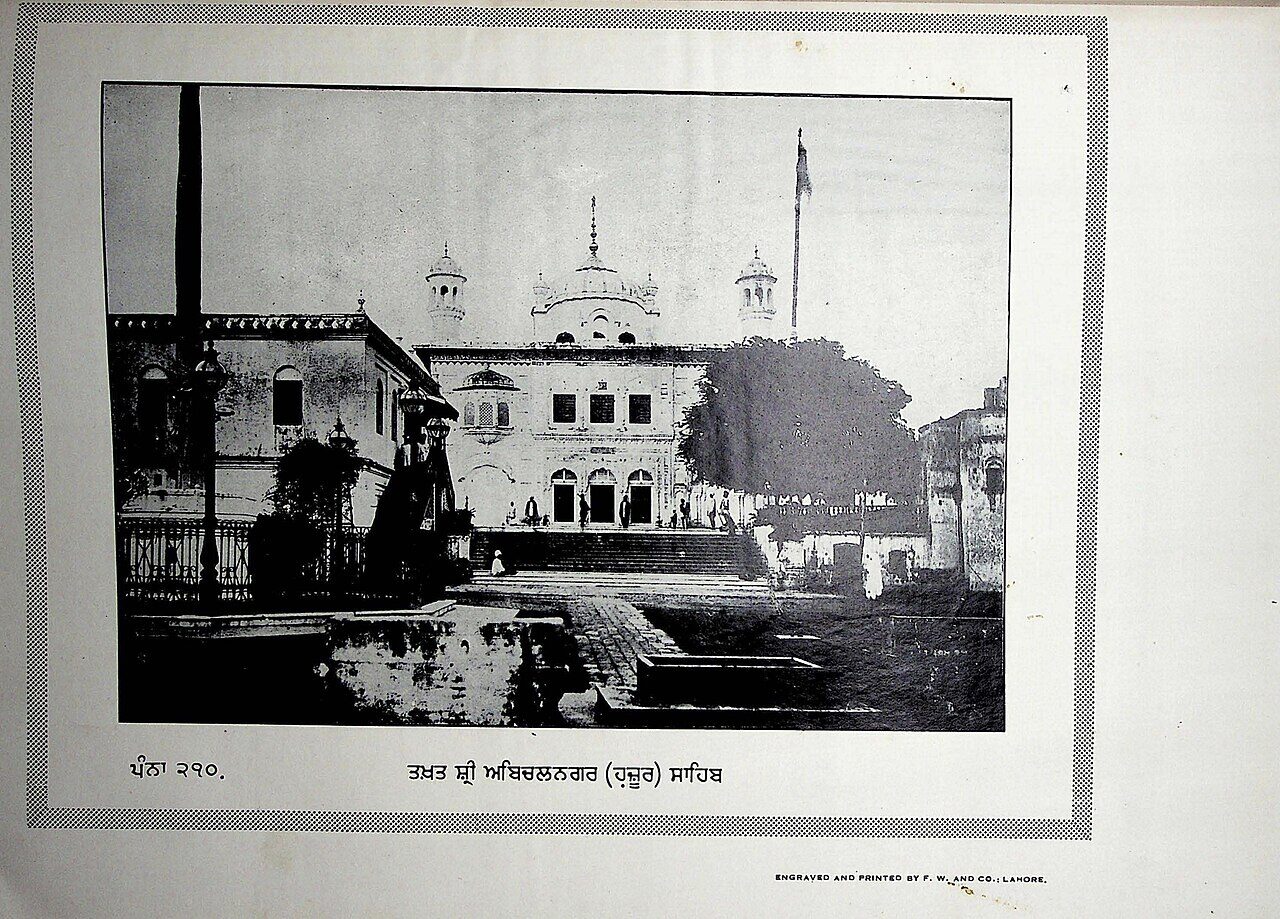
The eternal Guru. In 1708, at Nanded in the south of India, Guru Gobind Singh was stabbed by assassins (people who set out to kill an important person). Sikh accounts say Wazir Khan, the governor of Sirhind, sent two Afghans to do it.17,196 Some scholars think the killers may have been sent by the Mughal army camped nearby instead.196 One short encyclopedia entry says the attacker was taking revenge for his own father's death.16 Before he died, the Guru made a decision that still shapes every Sikh's life. There would be no more human Gurus. From now on, the Guru would be the Guru Granth Sahib, the holy book, and the community, the Khalsa Panth, would make decisions together.17,130
That is why, in the gurdwara, Sikhs bow to the Guru Granth Sahib, and not to any living person.17
Talk about it In this chapter, Nabi Khan, Ghani Khan, Sher Muhammad Khan, Todar Mal and Mai Bhago all showed courage. Which of them would you most want to be like, and why?
The Guru Granth Sahib
Before he died in 1708, Guru Gobind Singh said there would be no more human Gurus. From then on, the Guru would be the holy book, the Guru Granth Sahib (Chapter 7).17,130 Ever since, Sikhs have honored this book as their living Guru.130 This section brings its story together: how it grew, what is inside it, and how Sikhs honor it today.
How it grew. The book was not written all at once. It grew over the lives of the Gurus.
- Guru Angad began collecting Guru Nanak's hymns (Chapter 2).42
- In the time of Guru Amar Das, the hymns of the first three Gurus and of earlier saints were copied into books called the Goindval pothis. Many scholars date them to 1570–72 (Chapter 2).93
- Guru Arjan brought those books back from Baba Mohan, and in 1604 he finished the Adi Granth, with Bhai Gurdas writing it out. It was placed in the Harmandir Sahib (Chapter 3).130,134,143
- Guru Gobind Singh added his father Guru Tegh Bahadur's hymns, making the final version, and in 1708 he named the book the Guru (Chapter 7).17,198
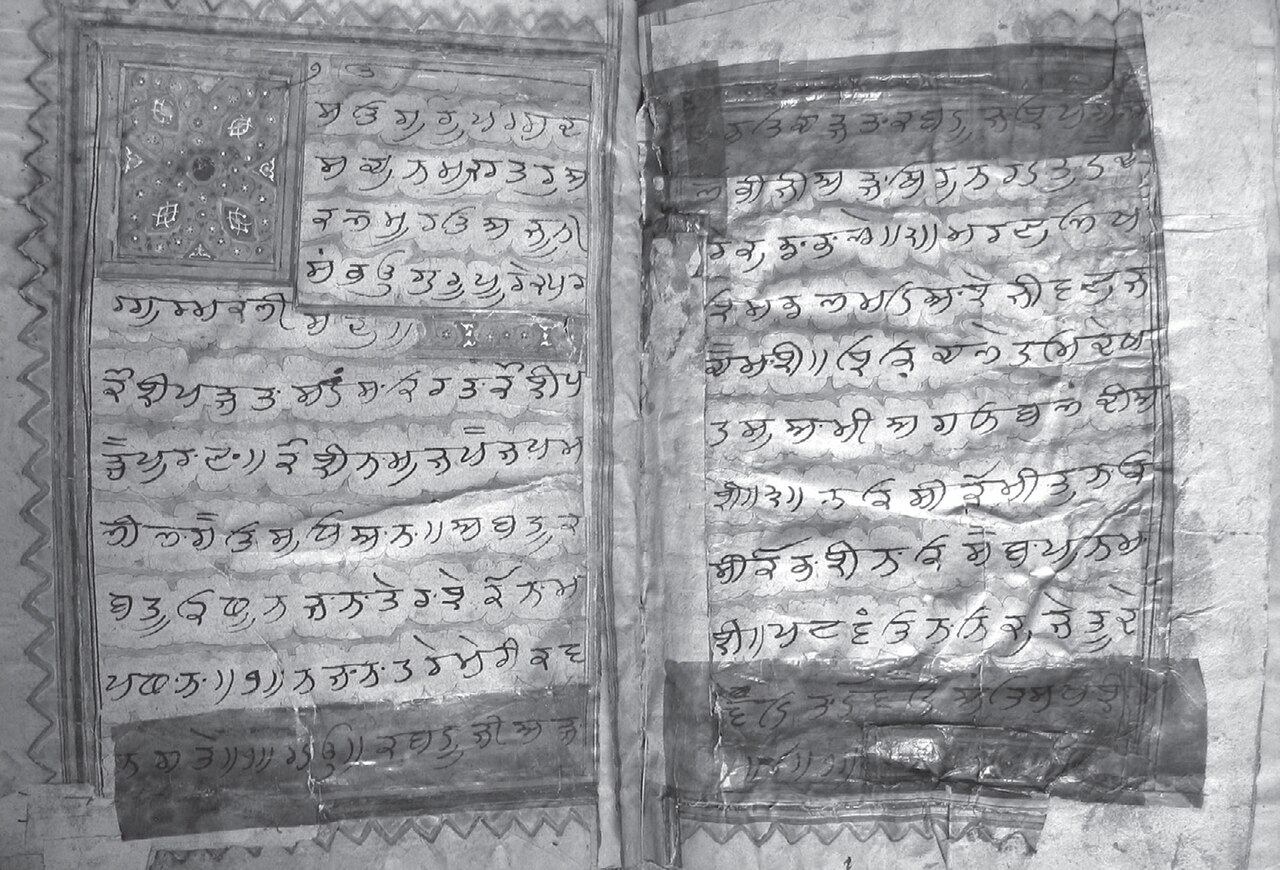
What's inside the Guru Granth Sahib. Today's Guru Granth Sahib has 1,430 pages, which Sikhs call angs.130,247,249 Its nearly 6,000 hymns are arranged mainly by raga, the musical measure each one is meant to be sung in.130,198 There are 31 main ragas. Some lists count about 60, because they count different forms of a raga separately.130,247,248
The hymns come from six Gurus (Guru Tegh Bahadur's were added later). They also come from 15 bhagats, holy men of different castes and faiths, Hindu and Muslim.96,130 Among them were Namdev, a cloth-printer, and Sain, a barber.96,130 Then there are 11 bhatts, bards who wrote poems praising the first five Gurus.96,130 There are also four others close to the Gurus: three Muslim musicians, Mardana, Satta and Balwand, and Baba Sundar.96,130 Counted this way, that makes 36 writers.96 How sure are we? Some lists count 17 bhatts instead of 11 and get 42 or 43, so the sources really do differ.248
The words are mostly Punjabi and Hindi, with some Marathi, Persian and Arabic words.198 But all of it is written in one alphabet: Gurmukhi, the letters Guru Angad helped make standard.130,247
The first version. The volume that Guru Arjan and Bhai Gurdas prepared in 1604 is known today as the Kartarpur Bir, or Kartarpur Pothi.129,250 (Bir and pothi are both words for a book, here a copy of the scripture.) It is the Adi Granth, the first version of the scripture, and the Guru Granth Sahib grew from it.129,250 But it is not the complete Guru Granth Sahib that Sikhs read today.130,198 Guru Tegh Bahadur's hymns were added later, by Guru Gobind Singh (Chapter 7).130,198 The Kartarpur Bir is kept by a Sodhi family in Kartarpur, near Jalandhar.142,250
How sure are we? Scholars have very rarely been allowed to study it, and very few photographs of it are known.250 Many scholars accept it as Guru Arjan's 1604 volume. One of them was the Sikh scholar Jodh Singh, who studied it closely.130,251,252 But some scholars, Sikhs among them, have questioned whether it is the original or a later copy with changes. They include G.B. Singh, Pritam Singh and the historian W.H. McLeod. Its defenders point out that none of these three had examined the volume itself.251,252
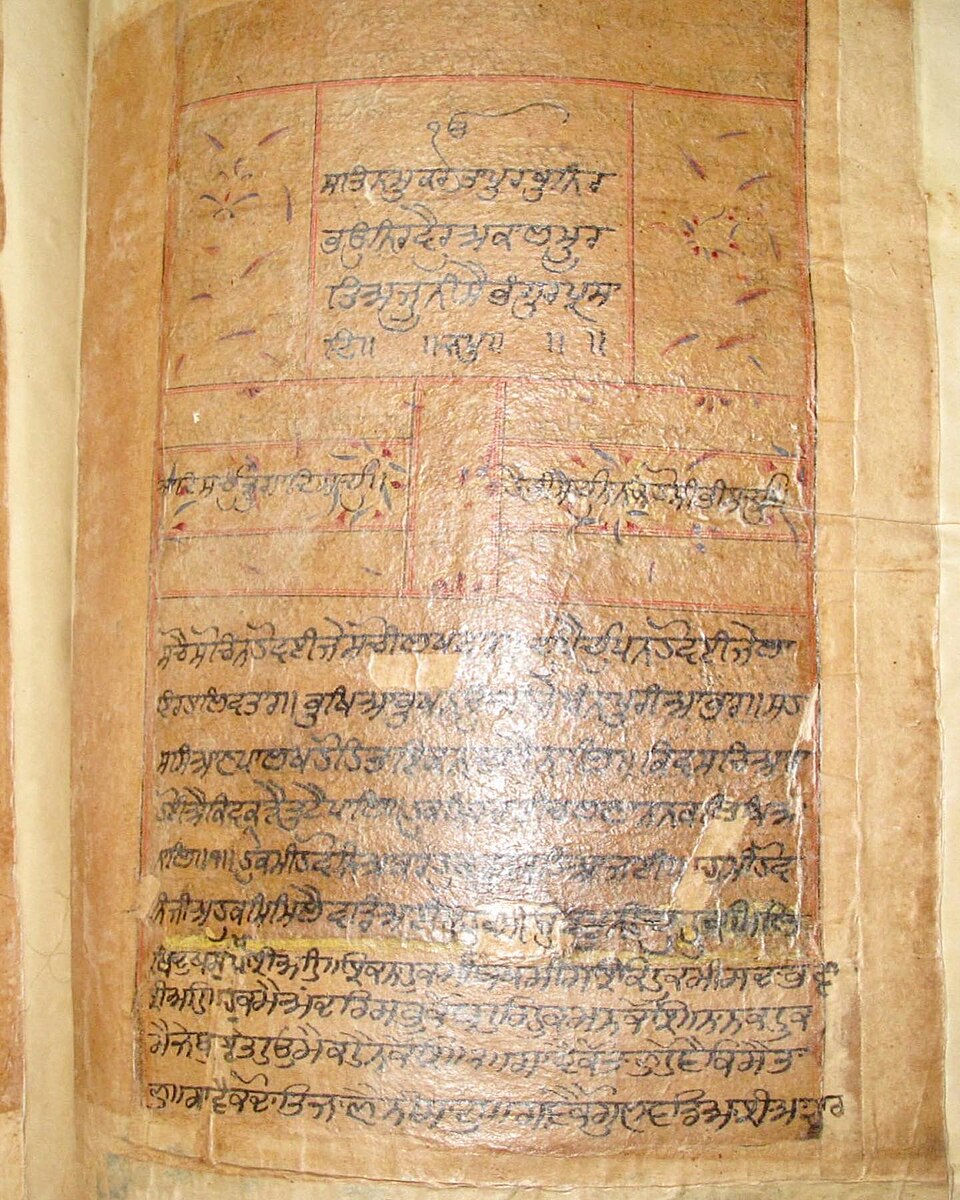
The complete Guru Granth Sahib. Guru Gobind Singh made the final version by adding his father Guru Tegh Bahadur's hymns.130,198 What Sikhs remember: it was written out at Damdama Sahib under Guru Gobind Singh, with Bhai Mani Singh as scribe. That copy is called the Damdami Bir.244,245 Sources do not agree on the year (Chapter 7).198,243,245 The original copy is said to have been lost in 1762, in the Vadda Ghallughara, so no picture of it survives.141,246
What we know: a Sikh scholar, Amar Singh, has listed old copies of this final version.253 The oldest dated copy on his list is from 1707, the year before Guru Gobind Singh died.253 It is kept at Takht Sri Hazur Sahib, a gurdwara in Nanded.253 We could not find a public photograph of it. Baba Deep Singh made some of the earliest handwritten copies of the final version.254,255 He was the scholar and warrior who later died in battle near the Harmandir Sahib (Chapter 9).254,255 One account says he had four copies made in 1726 from Bhai Mani Singh's version.254,255
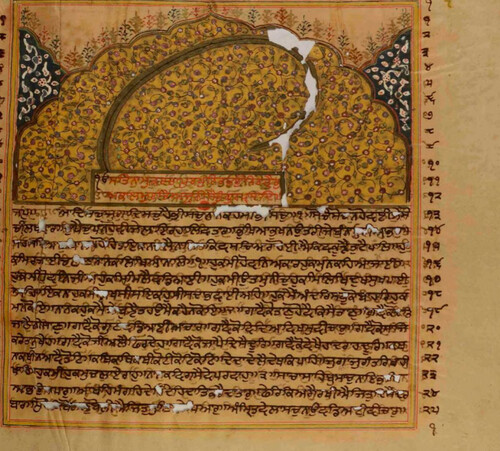
How Sikhs honor it today. In a gurdwara, the Guru Granth Sahib is opened every morning, and is generally closed after the evening prayer, Rehras.256 It rests on a small cot under a canopy (a cloth roof), and a whisk called a chaur is waved over it. When no one is reading from it, it is covered with cloths called rumalas.256 Sikhs take off their shoes and cover their heads in its presence, and the first thing a Sikh does on entering a gurdwara is to bow before it.256
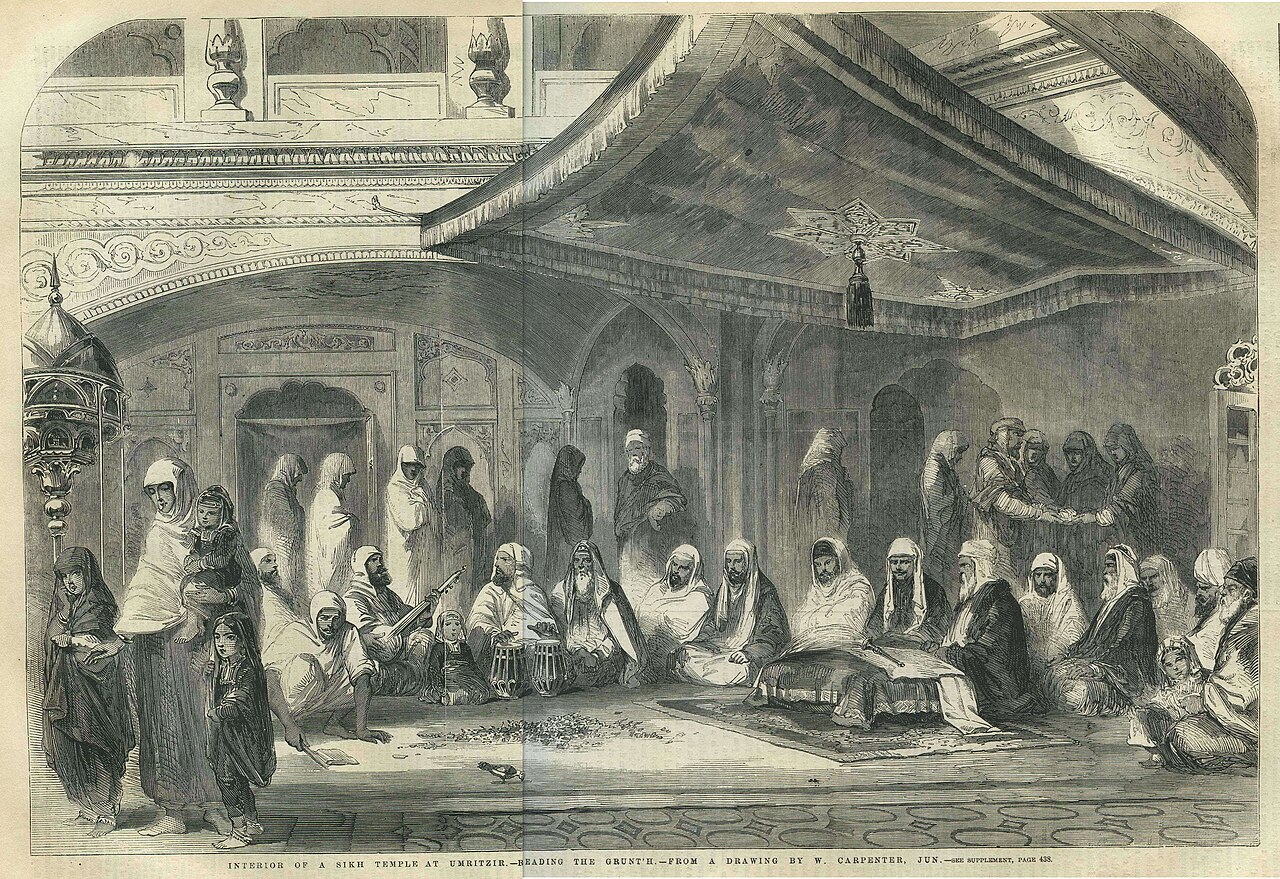
The hukam. After the book is opened, a reader reads the hymn that continues at the top of the left-hand page. Sikhs call it the hukam, the Guru's command.257 The Sikh code of conduct asks Sikhs to hear or read a hukam early each morning.258 It says that on days when they cannot, they should not feel guilty.258
Reading it all. A complete reading straight through, without stopping, is called an Akhand Path. Readers take turns, it takes about 48 hours, and someone must always be listening.258 Sikhs are also encouraged to read the whole book more slowly, over a month or two or longer.258 The code asks every Sikh, man, woman, boy or girl, to learn Gurmukhi so they can read it.257
Talk about it Why do you think Guru Gobind Singh made a book, and not a person, the next Guru? What would be different if the Guru were a living person today?
Hunted, Never Broken (1708–1765)
Banda Singh Bahadur and the Fall of Sirhind
Within two years of Guru Gobind Singh's death, an army of farmers and villagers led by Banda Singh captured the city of Sirhind.259,260
From hermit to general. Banda Singh was born in 1670 at Rajouri, in the hills of Jammu.260,261 As a young man he became a Hindu hermit, a holy man who lives alone, and lived far away in the south, at Nanded. In 1708 he met Guru Gobind Singh there and became his Sikh. He called himself Banda, which means "servant" of the Guru.260,261 The Guru sent him north to Punjab with five Sikhs and letters asking the Sikhs to join him.260,262
Sirhind falls. As Banda Singh marched into Punjab, Sikhs and poor villagers joined him.260,262 The governor of Sirhind was Wazir Khan. He was the man who had ordered the deaths of the two youngest Sahibzade, Guru Gobind Singh's sons.259,260 In May 1710, at the Battle of Chappar Chiri, the Sikhs defeated the Mughal army, the army of the empire that ruled much of India.263 Wazir Khan's army had cannons and war elephants. Banda Singh's army had neither.263 Wazir Khan was killed.259,260
Then the Sikhs attacked the city of Sirhind itself. Guns on the walls of its fort kept firing at them and killed about 500 Sikhs. The Sikhs fired back at the gunners until the guns went silent, and broke open the city gates. On 14 May 1710, two days after Chappar Chiri, Sirhind fell.260,264,265
How sure are we? Much of what we read about Sirhind's fall comes from writers on the Mughal side, who wrote in Persian. Khafi Khan worked for the Mughal emperors. Muhammad Qasim worked for one of the empire's most powerful nobles.266,267 They were writing for the rulers who were trying to wipe out the Sikhs, and they called Banda Singh insulting names.266,267 Even so, Muhammad Qasim admitted that he admired the Sikhs' courage.267 Historians read these writers with great care. One historian, Ganda Singh, argued that Khafi Khan and another Persian writer made the Sikhs' actions sound worse than they were.264,268 Even he agreed that the city "lost heavily in life and property."268
To Sikhs, Sirhind was the city where the Sahibzade had been killed, and its fall was justice.263,265 Many Sikh accounts, like Rattan Singh Bhangu's history from the 1800s, were written down long afterward, so historians check them carefully too.269
Honest history: the fighting was fierce, and ordinary people suffered. Whoever tells the story, one thing is clear: the city was plundered, or robbed of its riches, and many people died. War is always terrible for ordinary people.260,264
Land to the tiller? A tiller is a farmer who plows the land. Sikh historians later wrote that Banda Singh took land from big landlords and gave it to the farmers who worked it, in the areas he controlled.260,270 Other historians say there is no solid evidence from that time that he ended the landlord system.270 What is certain is that many poor farmers, angry about heavy Mughal taxes, joined him.259
Banda Singh set up a capital at Lohgarh, "the iron fort," and struck coins.260,271 To strike coins means to stamp them out of metal. His coins carried the names of Guru Nanak and Guru Gobind Singh, not his own name.260,271 It was the first time the Khalsa, the community of initiated Sikhs, ruled land of its own.260
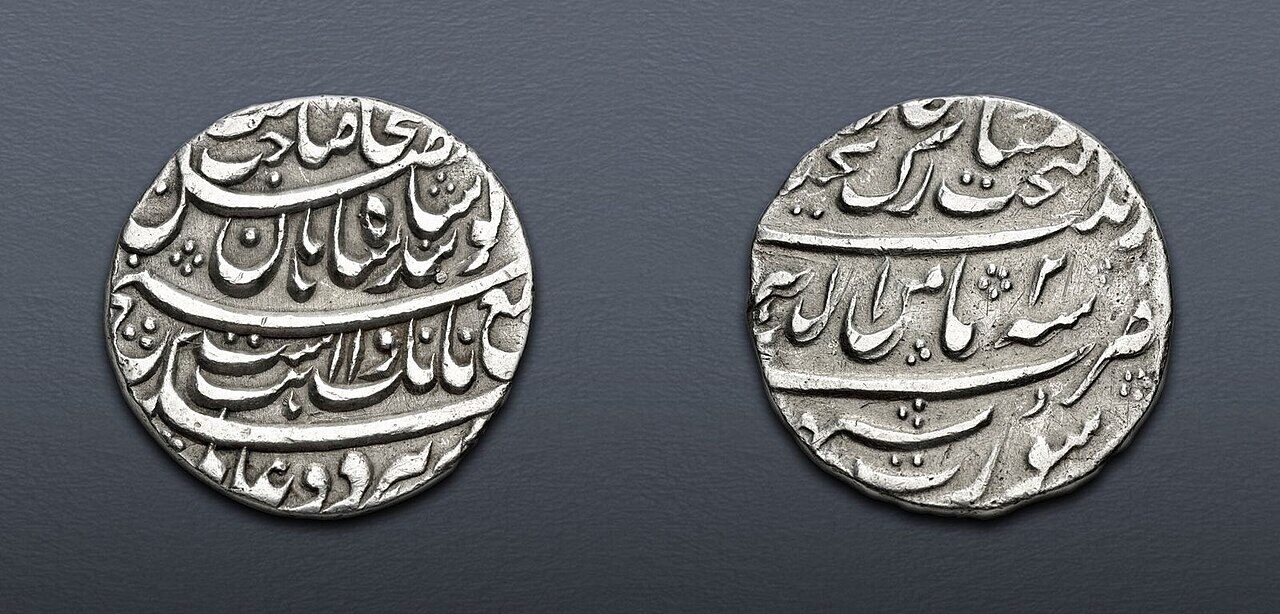
Captured. In 1710 the Mughal emperor ordered his officers to kill Sikhs wherever they were found, and he sent huge armies after Banda Singh.260 In 1715 Banda Singh and his followers were trapped at the village of Gurdas Nangal and besieged, or surrounded, for eight months.260,261 Khafi Khan, the writer on the Mughal side, described how the starving Sikhs ate grass and then, when the grass was gone, leaves from the trees.260 In December 1715 they were captured.260
In February 1716, Banda Singh and the other prisoners were paraded into Delhi. Banda Singh was locked in an iron cage on an elephant.259,260,272 Behind him came more than 700 Sikh prisoners in chains, and about 2,000 heads of others killed, carried on poles.260,272
What we know: starting on 5 March 1716, about 100 Sikh prisoners were beheaded every day, for about a week.260,272 Two Englishmen, John Surman and Edward Stephenson, were in Delhi at the time, working for the East India Company, a British trading company. On 10 March 1716 they wrote a letter about what they saw. They wrote that the prisoners faced death with great patience, and that "to the last" not one of them gave up his faith.272
A British historian, writing much later, added that each prisoner was promised his life if he would give up his faith.272 He also wrote that the prisoners begged the executioner to kill them first.272 Those details do not come from the Englishmen's letter.272 Even Khafi Khan, the writer on the Mughal side, told of a young prisoner whose mother won an order from the emperor to set him free. The young man refused to be spared and died with his companions.266
On 9 June 1716, Banda Singh was offered a choice: give up his faith or die. He refused. His four-year-old son, Ajai Singh, was killed in front of him. Then Banda Singh was tortured to death near the Qutb Minar, a tall old tower in Delhi.260
Talk about it Banda Singh's army was mostly poor farmers and villagers, not nobles. Why might that have frightened powerful people?
The Hunted Years and the Two Massacres
For about fifty years, with only a few short truces, or pauses in the fighting, governments tried to wipe the Sikhs out. They failed.259,273
Prices on their heads. After Banda Singh's death, Mughal governors in Lahore paid rewards for Sikhs captured or killed.274,275 Tahmas Khan Miskin, a soldier who served the Mughal governor in Lahore, wrote that the government paid ten rupees, the money of India, for each Sikh head.276 Sikhs left their villages and lived in forests, deserts and hills, in small bands called jathas. They rode fast, struck back, and disappeared.273,277 Twice a year, at the festivals of Vaisakhi and Diwali, they tried to gather at Amritsar to make decisions together.273
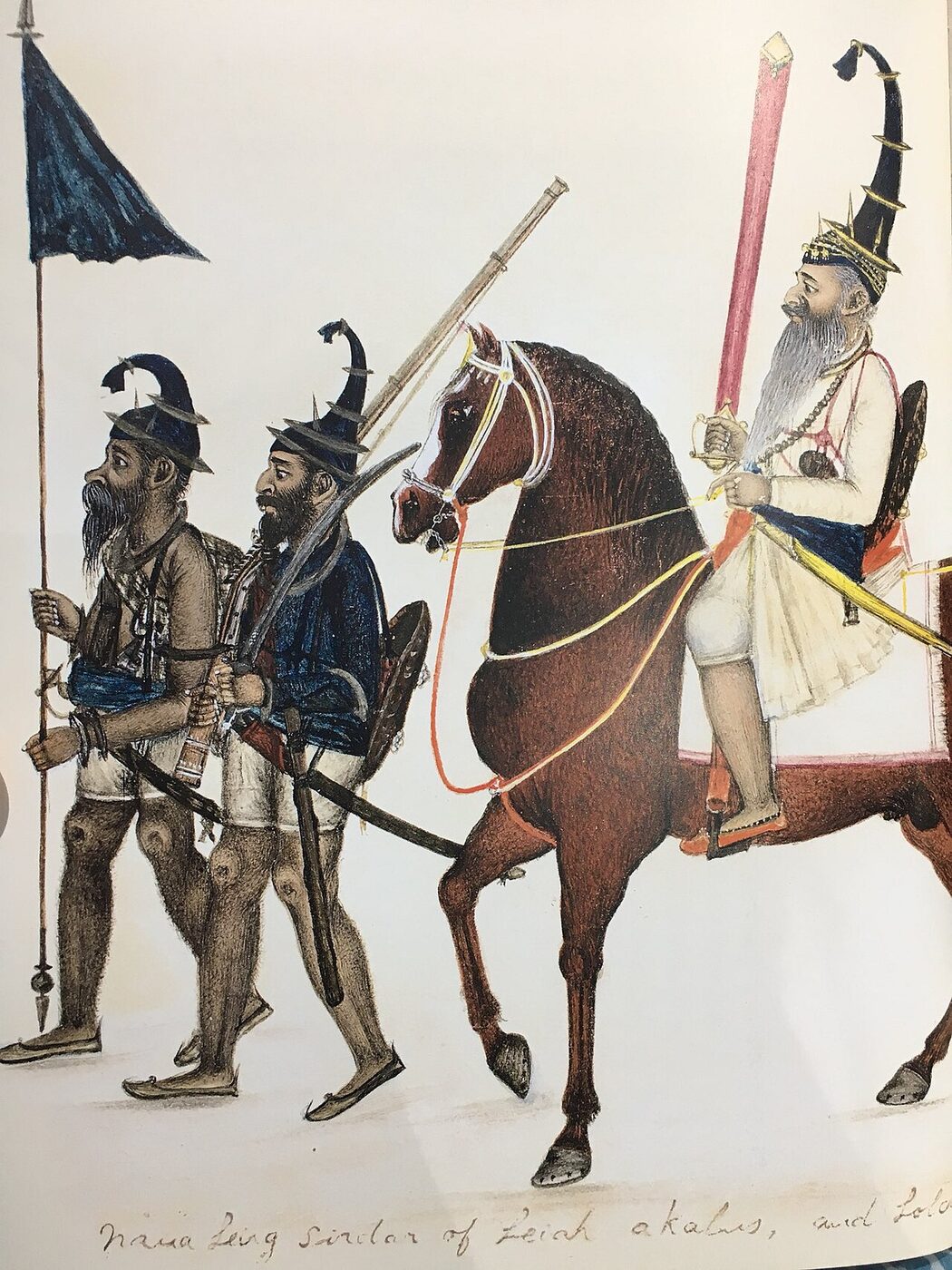
Every time you hear the Ardas, you remember people like these. The Ardas is the prayer Sikhs say standing at the end of their services. It does not name these people one by one. It remembers Sikh men and women who did not give up their faith.278 Some were cut joint by joint, some had their scalps removed, and some were broken on wheels and sawn apart.278 Sikhs connect those words with real people like these:
- Bhai Mani Singh was a great scholar and the head of the Harmandir Sahib, the Sikhs' holiest place, in Amritsar. Sikh tradition remembers him as the one who wrote down the final Guru Granth Sahib for Guru Gobind Singh.277 In the 1730s the governor let Sikhs gather at Amritsar for Diwali if Bhai Mani Singh paid a tax. When he learned soldiers planned to attack the gathering, he warned Sikhs to stay away, so there was no money to pay. He was arrested and told to convert, or change his religion. He refused, and was executed in Lahore by being cut apart, joint by joint.277
- Bhai Taru Singh, a young farmer, secretly gave food to Sikhs who had been forced into hiding. He was arrested and told to give up his faith and cut his hair. He refused. In 1745, when he was about 25, his scalp was cut from his head, and he died.279,280
- The women in the Lahore prison. Between 1748 and 1753, Mir Mannu, the governor of Punjab, imprisoned Sikh women and their children in Lahore.275,281 What Sikhs remember: the women were forced to grind grain on heavy millstones while starving, and their babies were killed in front of them. They still did not give up their faith.281–283 When the Ardas remembers the Sikh men and women who gave their lives for their faith, Sikhs think of them.278
Two riders, 1740. After Bhai Mani Singh was killed, the government took control of Amritsar.133 The governor in Lahore, Zakariya Khan, made a landlord named Massa Ranghar the police chief of Amritsar.133,284 Massa came from the nearby village of Mandiala.133,284 Massa moved into the Harmandir Sahib itself. He held drinking parties there with dancing girls, and he dirtied the sacred pool.133,284–286
Mehtab Singh, a Sikh from Mirankot, near Amritsar, was far away in Rajasthan when the news reached him.133,287 He rode back with Sukha Singh, a Sikh from a family of carpenters.287,288 On 11 August 1740, Sikh accounts say, the two got inside the Harmandir Sahib and killed Massa. Then they rode away to safety.133,284,287
How sure are we? Almost all of this story comes from Sikh writers. The most important one is Rattan Singh Bhangu, Mehtab Singh's own grandson.287,289 He wrote it down many years later, in the 1800s, from family memories and what other people told him.289 An encyclopedia article about Massa lists only Sikh sources for the story.284 To the rulers, Massa was a government officer, and killing him was a crime. To Sikhs, the two riders had saved their holiest place from dishonor.133
What Sikhs remember: the two riders carried bags on their backs that looked full of coins. A dust storm gave them a reason to cover their faces.287 When Massa bent down to feel the bags, Mehtab Singh cut off his head and put it in a sack.286,290 The riders carried it to the Sikhs hiding in the Rajasthan desert and hung it from a tree. A gurdwara, or Sikh place of worship, called Buddha Johad now stands at that place, in Rajasthan's Sri Ganganagar district.286
What happened next. Soldiers raided Mehtab Singh's village. The village elder who was looking after Mehtab Singh's family was killed, along with the elder's own son, his nephew and two servants. Mehtab Singh's young son, Rai Singh, was badly wounded and left for dead.287 But Rai Singh lived. He grew up to be the father of Rattan Singh Bhangu, the writer who told this story.287,289
Mehtab Singh escaped capture for five more years. In 1745, when he heard that Bhai Taru Singh had been arrested, he gave himself up so he could die by his side.287 He was broken on a wheel in Lahore, and he died.287,291 Sukha Singh died fighting an invading Afghan army in 1752.288
The Small Massacre, 1746. Lakhpat Rai was a Hindu minister who served the Mughal governor of Lahore.292,293 His brother was killed in a fight with the Sikhs, and Lakhpat Rai swore to destroy them.292,293 Some Hindu leaders in Lahore begged him to spare the Sikhs, but he ignored them.292 His army trapped thousands of Sikhs in swamps and forests near Kahnuwan. One common estimate is that about 7,000 were killed in the fighting and about 3,000 more were captured and beheaded in Lahore.292,294 This is called the Chhota Ghallughara, the Small Massacre. A massacre is the killing of very many people.
How sure are we? Most estimates say 7,000 to 11,000 Sikhs died, and some say up to 15,000.294,295 The highest number, 40,000, comes from Rattan Singh Bhangu, the Sikh writer you met above.294
Baba Deep Singh, 1757. An Afghan king, Ahmad Shah Abdali, invaded India again and again.259 In 1757 his forces damaged the Harmandir Sahib and filled in its sacred pool.133,296 Baba Deep Singh was a scholar of about 75 who had made handwritten copies of the Guru Granth Sahib.296 He swore he would free the Harmandir Sahib or die trying.296 He led a band of Sikhs toward Amritsar and was killed in battle near the Harmandir Sahib.296
What many Sikhs believe: Baba Deep Singh's head was cut off in the battle, but he held it on his palm and fought on until he reached the Harmandir Sahib. Sikh paintings often show him this way.296 How sure are we? The Encyclopaedia of Sikhism, from Punjabi University, says he was badly wounded, kept fighting toward the shrine, and fell close to the Harmandir Sahib. It calls the story of the headless body a legend.296 Encyclopaedia Britannica says his head was cut off in the battle.297 Either way, an old man rode into battle to keep a promise, and kept it with his life.
The Great Massacre, 1762. On 5 February 1762, Abdali's army caught the Sikhs near the village of Kup, close to Malerkotla.298 Thousands of the people with the Sikh fighters were not soldiers at all. They were women, children and old people traveling with the baggage (the belongings they carried). The Sikh fighters formed a moving ring around them and fought for hours, trying to get their families to safety.298,299 Abdali's allies that day included Bhikhan Khan, a later Nawab, or ruler, of Malerkotla. The same town can have rulers who act very differently in different times (see Chapter 7).298
It is called the Vadda Ghallughara, the Great Massacre. Many of the dead were women, children and old people, all killed in a single day.246 Two months later, Abdali blew up the Harmandir Sahib with gunpowder.133,246
How sure are we? No one knows exactly how many people died, because no one counted the dead. Most of the old histories put the number between about 20,000 and 30,000. The historian Hari Ram Gupta settled on about 20,000.298,300 Tahmas Khan Miskin, the soldier-writer you met earlier, was there with the attacking army.246,300 He put the number at about 25,000.276,300 Winners sometimes boasted about how many they had killed, so even his number is an estimate. But it means the attackers' own side said the dead numbered in the tens of thousands. Rattan Singh Bhangu, the Sikh writer, wrote that his father and uncle, who were in the battle, told him 30,000. He also wrote that people said 50,000.300,301 He wrote many years later, so historians check his numbers carefully too.289 An old letter in Marathi, a language of western India, gave a much lower number: 5,000 to 7,000.300
And then? You might think that would be the end. Within months the Sikhs were fighting again.298 In 1764 they began rebuilding the Harmandir Sahib.133 In 1765 they took Lahore and struck their own coins in the Gurus' names.271,302
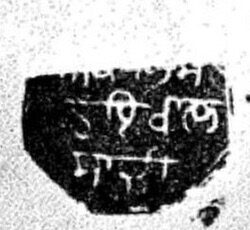
What Sikhs remember: during these same years, Abdali's armies carried off captured Hindu women and girls to sell.302,303 Sikh bands attacked the convoys (the groups taking the captives away), freed the captives, and took them home to their families.302,303 One famous rescue, near Amritsar in 1761, freed about 2,200 women.302,303
Long before, Bhagat Kabir wrote a line about courage that is now in the Guru Granth Sahib. He was not writing about these rescues: Sooraa so pahichaaneeai, jo larai deen ke het, "Know as a true hero the one who fights for what is right and for the helpless" (Ang 1105). Many Sikhs also read it as the fight against wrong inside ourselves.304
Honest history: Sikh fighters could be harsh in victory too. Brahmins in the town of Kasur complained that its ruler had seized the wife of one of them and forced her to convert.300,305 (Brahmins are the Hindu priestly caste.) In 1763 Sikh bands attacked Kasur.300,306 The town was looted and burned, and its ruler and about 500 of his men were killed. The Sikhs gave a Brahmin woman back to her husband.300,305 In January 1764 the Sikhs attacked Sirhind. They killed its governor, Zain Khan, who had fought against them at Kup, and laid the city waste (wrecked it).265,302,307 The historian Hari Ram Gupta wrote that most of its houses were pulled down, and that the city's men were killed, except for children, old men and Hindus.300 For the ordinary people living there, it was a terrible time.
Talk about it Sikhs remember these martyrs in their prayer every day instead of trying to forget. Why do you think they chose to remember?
A Sikh Kingdom, Won and Lost (1765–1849)
From Bands of Riders to Maharaja Ranjit Singh
Within about 60 years of the Great Massacre, a Sikh Maharaja, or great king, ruled from Multan to Kashmir, from a capital in Lahore.308
The misls. The Sikh bands grew into about a dozen groups called misls, each led by a chief. Most of them joined together as the Dal Khalsa, the army of the Khalsa.273,309 Some of their greatest leaders came from castes, or birth groups, that others looked down on. Jassa Singh Ahluwalia came from a family of distillers, people who made alcohol.309,310 Jassa Singh Ramgarhia came from a family of carpenters.311 In the Khalsa, they could rise to the very top, even though caste prejudice, unfair treatment because of caste, never fully disappeared from Punjab.273,312
In 1783, a Sikh general named Baghel Singh rode into Delhi with his army. The Mughal emperor agreed to let him build gurdwaras at places in Delhi connected with the Gurus. Gurdwaras Sis Ganj, Rakab Ganj and Bangla Sahib began with him.313
Sada Kaur. In 1785, Sada Kaur's husband was killed in a battle against the army of Mahan Singh, the chief of the Sukerchakia misl.314,315 Even so, Sada Kaur persuaded her father-in-law, Jai Singh, the chief of the Kanhaiya misl, to promise her only daughter, Mehtab Kaur, in marriage to Mahan Singh's young son.314,315 That boy was Ranjit Singh. The two were promised to each other as small children and married in 1796.314,315 The match joined two of the most powerful misls.315,316
When Mahan Singh died in 1792, Sada Kaur became one of Ranjit Singh's three regents, the grown-ups who ruled for him until he was old enough.314 After her father-in-law died, she took over as leader of the Kanhaiya misl and its army.314,317 In 1799 she helped Ranjit Singh capture Lahore, leading her own soldiers beside his.314,318 She fought beside him again at Amritsar, Kasur and other places.314
Years later, they fell out. Ranjit Singh wanted control of her lands. She refused and threatened to ask the British for protection.314 He coaxed her into coming to Lahore, and there she was kept under close watch.314 Once she escaped, hidden in a covered litter, but she was caught and brought back.314 Around 1821, he took her lands.314,319 She died in Lahore in 1832, still not free.314,319
The one-eyed Maharaja. Ranjit Singh was born in 1780. As a small child he survived smallpox, a dangerous disease, but it took the sight of one eye and left marks on his face.308,318 He became chief of his misl at about 12, captured Lahore at 18, in 1799, and became Maharaja of Punjab in 1801.308,318
Ranjit Singh built an empire that stretched from the Khyber Pass in the west to Kashmir and Ladakh in the north.308,320 He called his government the Sarkar Khalsa, the Khalsa government, and kept the Gurus' names on his coins.271,318
Taking the fight to the Afghans. For most of the 1700s, armies from Afghanistan had invaded Punjab again and again. You read in Chapter 9 what Ahmad Shah Abdali's invasions cost the Sikhs.246,259 Ranjit Singh turned things around. His armies took Multan in 1818, Kashmir in 1819, and later Peshawar, pushing Afghan rule back toward the mountains it had come from.308,321
Multan, 1818. Multan's fort, one of the strongest in India, was held by an Afghan ruler, Nawab Muzaffar Khan.322,323 Ranjit Singh's army brought its giant cannon, Zamzama. How sure are we? Accounts differ about what the cannon did. One says it fired four times and blew two holes in the walls.324 Another says its shots could not break the thick walls.325 Either way, it was so badly damaged that it could never be used again.322,324,325
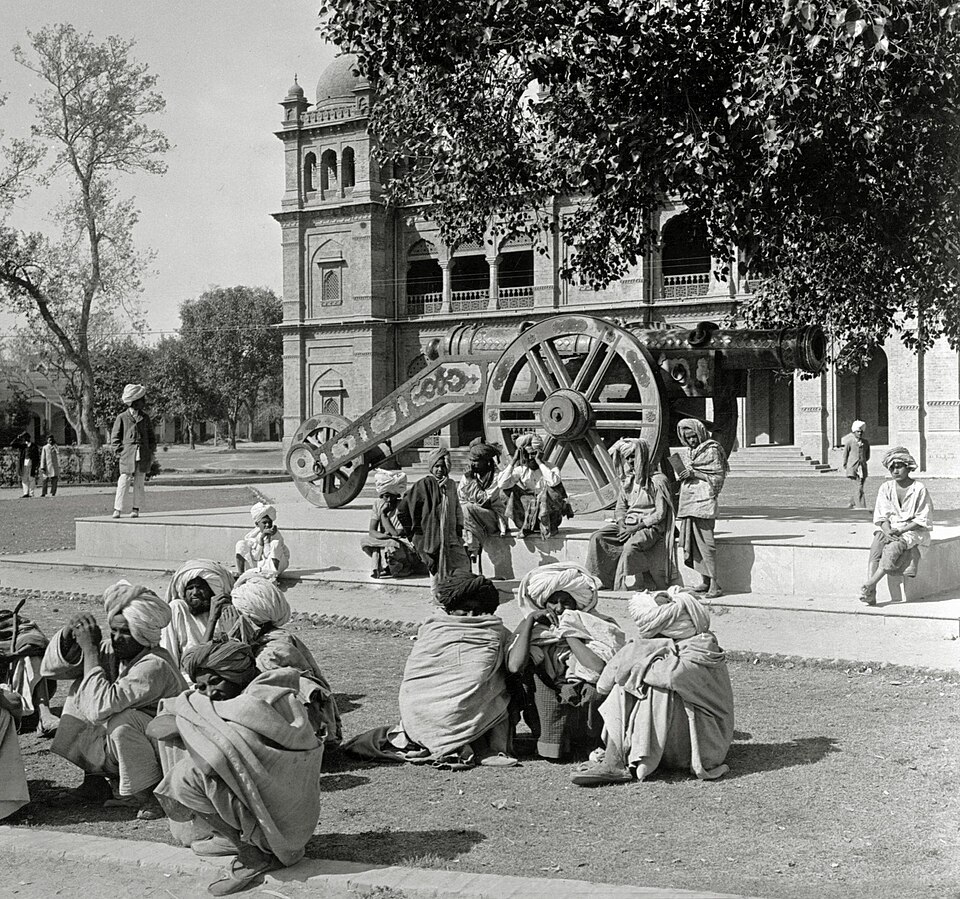
In June 1818 (most historians say 2 June), Akali Sadhu Singh led a band of Nihangs through a breach, and the rest of the army followed. Nihangs are an order of Sikh warriors, and Akali was a title some of them used. A breach is a gap broken open in a wall. Muzaffar Khan came out with his sons to fight, and died fighting.322,326
What Sikhs remember: during the siege, a wheel broke off one of the Sikh guns. Soldiers argued over who would have the honor of holding it up on their shoulders so it could keep firing. A big gun kicks back hard when it fires, and this kick is called the recoil. Many of the men holding it were killed by the recoil.327,328
How sure are we? This story comes from Jang-i-Multan, by Ghulam Jilani, a writer who was not a Sikh. The historian Khushwant Singh quoted it in his history of the Sikhs.327,328 Some retellings add that the gun broke a big hole in the wall. The words quoted from Jilani do not say that.327,329
Honest history: after the fort fell, the army sacked Multan, which means it robbed and wrecked the city. Many houses were burned, and many of its people were killed.322,330 No one knows how many. One old history says hundreds. Other accounts say thousands.322,330
Hari Singh Nalwa. Hari Singh Nalwa was Ranjit Singh's most famous general.321 He was born in Gujranwala in 1791.321 His grandfather had been killed fighting Ahmad Shah Abdali's army in 1762.321 He joined Ranjit Singh's service as a young man in 1805.321 What Sikhs remember: a tiger attacked him on a hunt, and he killed it.321,331 This earned him the names Baghmar, "tiger-killer," and Nalwa.321,331
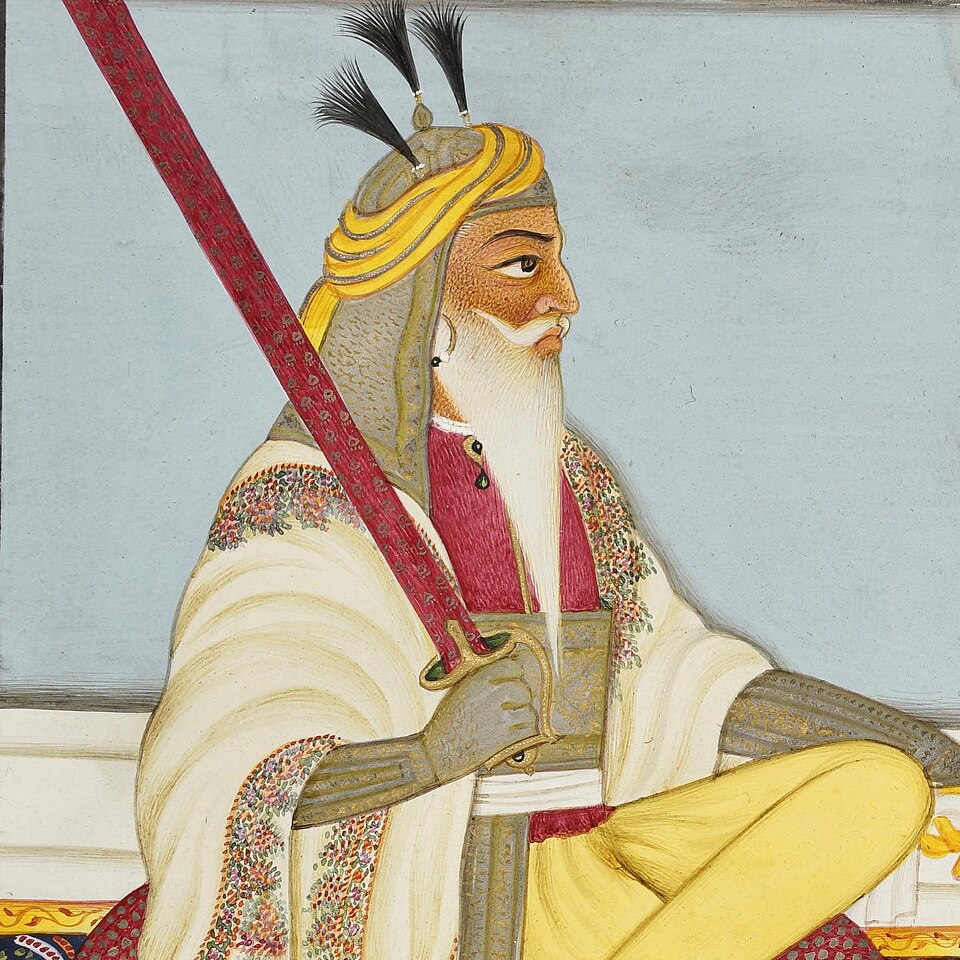
Hari Singh fought at Kasur, Attock, Kashmir and Multan.321 As governor of Kashmir he restored order and was even allowed to strike coins in his own name. As governor of Hazara, he founded a town, Haripur, which is still named after him today.321 In 1834 he took Peshawar. In 1836 he built a fort at Jamrud, at the mouth of the Khyber Pass.321 The Khyber Pass is the road through the mountains that invaders from the northwest had used to enter India for centuries.321
On 30 April 1837, an Afghan army attacked Jamrud. Hari Singh Nalwa rode to rescue its defenders and was badly wounded. One writer of his life story says he was hit four times by gunfire and twice by swords. The historian Hari Ram Gupta says he was hit by two bullets.321,331 He asked that his death be kept secret until help arrived, so his men would not lose heart.321,331 The Afghans did not take Jamrud.331 In 2013, India issued a postage stamp in his honor.331
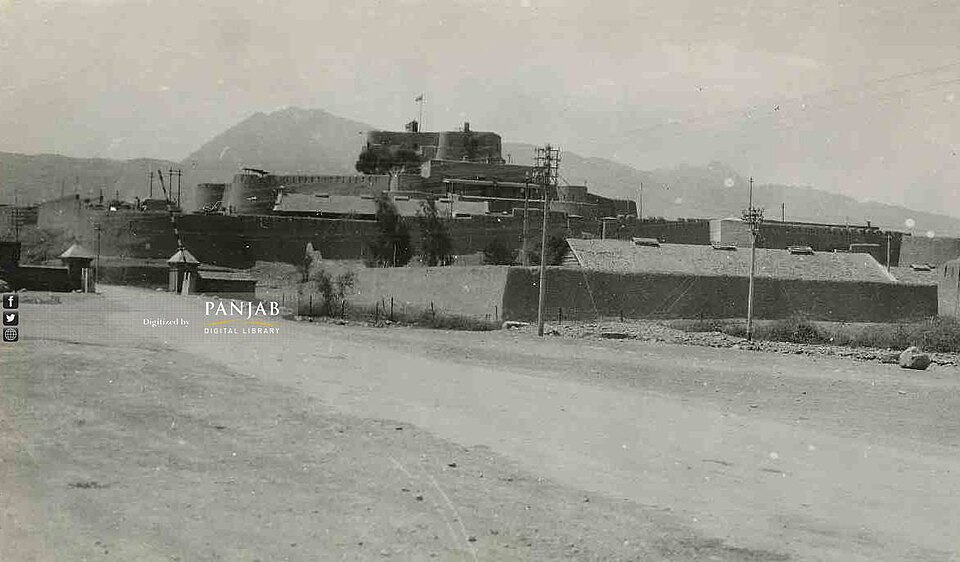
People remember that Afghan mothers would quiet their crying children by telling them that "Haria" (Hari Singh) was coming.331,332 A writer in Lahore, in Pakistan, says his own father told him this saying.332 Honest history: that saying shows how he was seen on the other side. To the Pashtun people of the frontier, the border lands, he was a feared conqueror. One people's hero can be another people's terror, and both memories are real.
A court for everyone. Fakir Azizuddin, Ranjit Singh's foreign minister, was Muslim. A foreign minister deals with other countries. Many of Ranjit Singh's top ministers were Hindu.308,318 Ranjit Singh hired officers from Europe.308 Many of them had fought for Napoleon, the French emperor, and they trained his army in modern European ways.308 He also gave gold to cover the dome of the Kashi Vishwanath temple, a holy Hindu temple in Varanasi.333
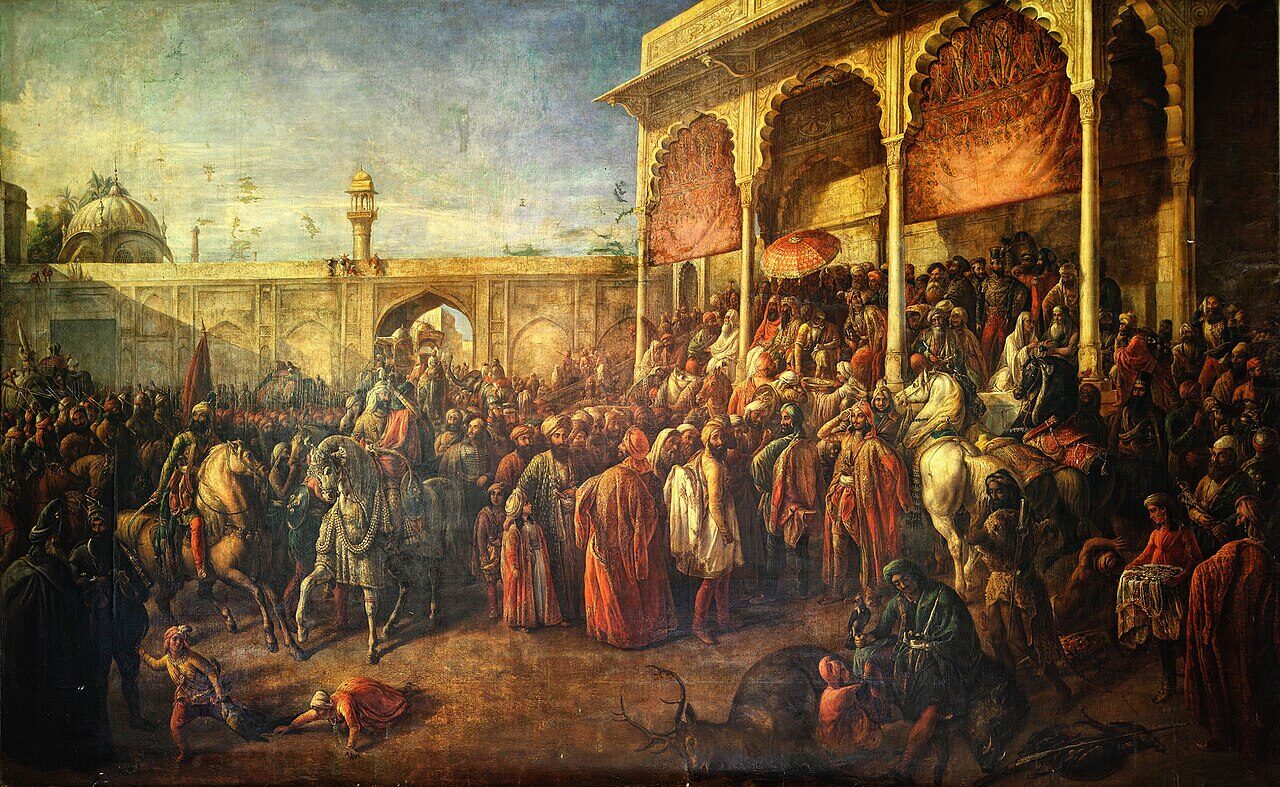
The Golden Temple. Ranjit Singh paid to cover the upper part of the Harmandir Sahib with gilded copper, which is copper covered in a thin layer of gold. That is why the world calls it the Golden Temple.119,133,318
What Sikhs remember: once, Akali Phula Singh, the leader at the Akal Takht, the seat of Sikh decisions, ruled that Ranjit Singh had broken Sikh rules.318,334 He said the Maharaja must be punished with lashes, or strokes of a whip.318,334 The most powerful man in Punjab came, bowed, and agreed to be lashed. Most tellings say the gathered Sikhs then forgave him.318,334 How sure are we? An encyclopedia of Sikh history says Akali Phula Singh did once punish Ranjit Singh for breaking Sikh rules, but it does not give the details. The whip and the forgiveness come from later retellings.334,335 To Sikhs, the story shows that the Akal Takht stood above the king.
Honest history: Ranjit Singh's rule was not perfect. Taxes were very heavy in some places, especially Kashmir. In the early 1830s, early snow and frost ruined Kashmir's rice crop, and a famine, a time of terrible hunger, followed. Huge numbers of people died or fled.336,337 Many historians say heavy taxes, and officials who held back or seized grain, made it much worse.320,336 A European visitor who saw Kashmir in 1835 blamed the frost and disease instead. But he also said the taxes demanded from Kashmir were more than it could pay.337 In Kashmir, his governors also kept the great mosque of Srinagar closed for more than twenty years, starting in 1819.320,338,339 Lahore's great Badshahi Mosque was used to store ammunition and as stables for army horses, which deeply hurt Muslims.318,340
Ranjit Singh left no strong system to hold the kingdom together.259,320
Talk about it Ranjit Singh's government had Muslim, Hindu, Sikh and European officials. What does that tell you about how he saw his kingdom?
The Fall of the Kingdom, a Prince Taken from His Mother, and a Princess Who Fought for the Vote
Ranjit Singh's kingdom collapsed only ten years after his death. Fighting and betrayal inside the kingdom made it weak, and the British East India Company wanted Punjab and took its chance.259,320
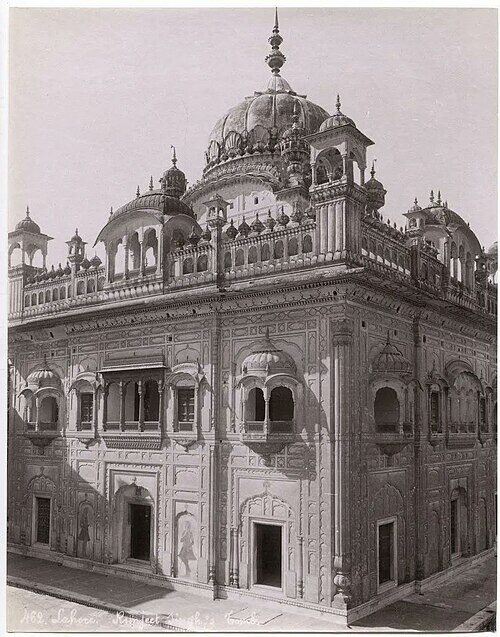
Chaos in Lahore. After 1839, rulers and ministers were murdered one after another in a fight for power.320,341 In 1843 a five-year-old boy, Duleep Singh, Ranjit Singh's youngest son, became Maharaja.342 At first powerful ministers ran the government. Before long his mother, Maharani Jind Kaur, took charge and ruled for him.343 (Maharani is the title of a queen.) She was smart and fearless.344,345 By then the British ruled most of India, and they came to see her as a danger.344–346
The Anglo-Sikh Wars. The British East India Company and the Sikh Khalsa army fought two wars, in 1845–46 and 1848–49.347,348 (Anglo here means British.) The Sikh soldiers fought so hard that the British commander, General Hugh Gough, wrote of "the splendid gallantry of a fallen foe."349 Gallantry means bravery, and a foe is an enemy. He said that if he had not believed his country needed the victory, "I could have wept."349
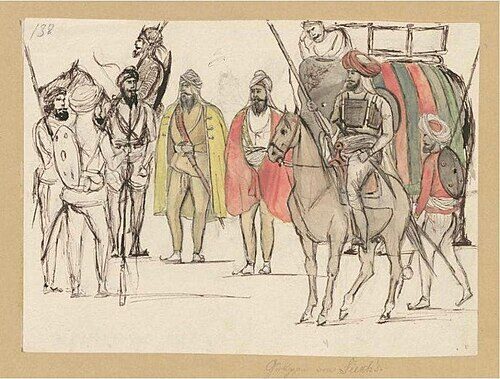
What we know: in the first war, the two top Sikh commanders, Lal Singh and Tej Singh, let their own army down at key moments. Lal Singh was secretly in touch with a British officer, Captain Peter Nicolson. A British officer who served in the war, Joseph Cunningham, wrote that this was "notorious," or widely known, at the time.350–352 Tej Singh pulled back his fresh troops at the battle of Ferozeshah just when the British were close to defeat.350,353 Historians still argue about exactly why they did it.347
What Sikhs remember: at Sobraon, Tej Singh fled early and broke the bridge of boats behind his own soldiers, so they could not get away. (A bridge of boats is made of boats tied together across a river.)352,354 How sure are we? The bridge did break, and thousands of Sikh soldiers were trapped.347,354 Joseph Cunningham, a British officer who was at Sobraon, wrote that Tej Singh fled at the first attack. He also wrote that Tej Singh sank a boat in the middle of the bridge, "either accidentally or by design" (by accident or on purpose).350,355,356 Other British accounts say the river, swollen by rain, and the crowd of retreating men broke it. Historians still debate it.347,354
In March 1849, the British took over Punjab. The Sikh kingdom was gone.346
A boy taken from his mother. When the British took Punjab, Duleep Singh was ten.342 In 1847 the British had already separated him from his mother and locked her up in a fort.344,345 Jind Kaur escaped, disguised as a servant, and in 1849 reached safety in Nepal.343,345 Duleep was raised by a British guardian and became a Christian at 14.342,357 He was taken to England, where Queen Victoria, the British queen, made a fuss over him (gave him a lot of attention).342,357
The saint-soldier. Not every Sikh accepted that the kingdom was gone. Bhai Maharaj Singh was born Nihal Singh, in the village of Rabbon in Ludhiana district.358 He was a holy man. In 1844 he became head of the dera, or religious community, of his teacher, Bhai Bir Singh of Naurangabad.358,359 In the second war against the British, he rode among the Sikh soldiers on his black mare, a female horse, urging them on. He fought at the battles of Chillianwala and Gujrat.358,359 Even after the Sikh army surrendered in March 1849, he kept going. He visited Sikh soldiers to win their support for a new fight.358
Honest history: in 1847, before that war, the British accused him of backing a plot.358,359 They said it was a plot to kill Henry Lawrence, the top British officer at the Lahore court, and other officials who sided with the British.358,359 To the British he was a dangerous rebel. To many Sikhs he was a freedom fighter.360,361
Captured. On 28 December 1849, Bhai Maharaj Singh was arrested in a sugarcane field near Adampur, with 21 of his followers. There was a reward of 10,000 rupees for his capture.358,359 The British officer who arrested him, Dr. Vansittart, wrote: "The Guru is no ordinary man." He wrote that to the local people, Bhai Maharaj Singh was "what Jesus is to the most zealous of Christians."358 (Zealous means very eager and devoted.) Vansittart asked that he be treated with special care. The government did not want to take any risks.358
Sent across the sea. Because so many people followed him, the British sent him far away, to Singapore. He arrived there as a prisoner in 1850.361,362 For years he was kept in solitary confinement, locked away alone.358,359 His eyes failed until he was blind, and he became ill with cancer.358,359,363 He died in Singapore on 5 July 1856, far from Punjab.358,362
Remembered by many faiths. Bhai Maharaj Singh's tomb later stood on the grounds of Singapore General Hospital. People came there to pray, including Hindu Tamils and some Muslims.362,364 In 1966 it was moved to the Sikh gurdwara on Silat Road.362,363 There it drew followers of different races and faiths.362,363 In 2010, Singapore's former leader Lee Kuan Yew opened a new memorial there.360,361 In 2024, Singapore's President, Tharman Shanmugaratnam, said it is "not uncommon" to find people who are not Sikhs there, paying their respects at the memorial.360 The British sent him far away. Today people of many faiths come to remember him.360,363
The Koh-i-Noor. Years earlier, an Afghan ruler, Shah Shuja, had fled to Lahore.308,365 Ranjit Singh pressured him into giving up the famous Koh-i-Noor diamond.308,365 The treaty, or agreement, that ended the Sikh kingdom forced the boy Maharaja to hand it over to Queen Victoria.366,367 It is still part of the British Crown Jewels, the crowns and jewels of Britain's kings and queens, kept in the Tower of London.368 In 2023 the Tower began describing it as a "symbol of conquest."368 Conquest means taking over lands by force. India, Pakistan and Afghanistan have all claimed it should belong to them.368
Coming home, in his heart. In 1861, Duleep Singh, now a young man, was finally allowed to see his mother again.342,357 She was nearly blind, but she told him about his father, his kingdom and his faith.344,357 Years later, in 1886, at Aden on his way to India, he went through a ceremony to return to the Sikh faith. The British stopped him from returning to India.342,357 He died in Paris in 1893, deep in debt and far from home.342
Princess Sophia Duleep Singh (1876–1948). Duleep Singh's daughter Sophia was born in 1876 and grew up at Elveden Hall, her father's country house in England. Queen Victoria was her godmother.369,370 In 1896 the Queen gave Sophia and her sisters a home called Faraday House, beside Hampton Court Palace near London. It was her home for about fifty years.369
A visit to Punjab. As a young woman, Sophia traveled to India, to the land her father had once ruled. She visited Lahore and Amritsar.369,370 She met Indians who were working to free India from British rule, such as Lala Lajpat Rai and Gopal Krishna Gokhale.369,370
Votes for women. Back in England, she could have lived a quiet, comfortable life. Instead, around 1908, she joined the suffragettes, the women fighting for the right to vote.369 She sold their newspaper, The Suffragette, outside the gates of Hampton Court Palace.369,371 She joined the Women's Tax Resistance League.369,370,372 Its slogan was "No vote, no tax": if women could not vote, the government should not take their money.369,370,372 When she refused to pay, officials seized one of her diamond rings and sold it at auction. A friend from the League bought it and gave it back to her.369
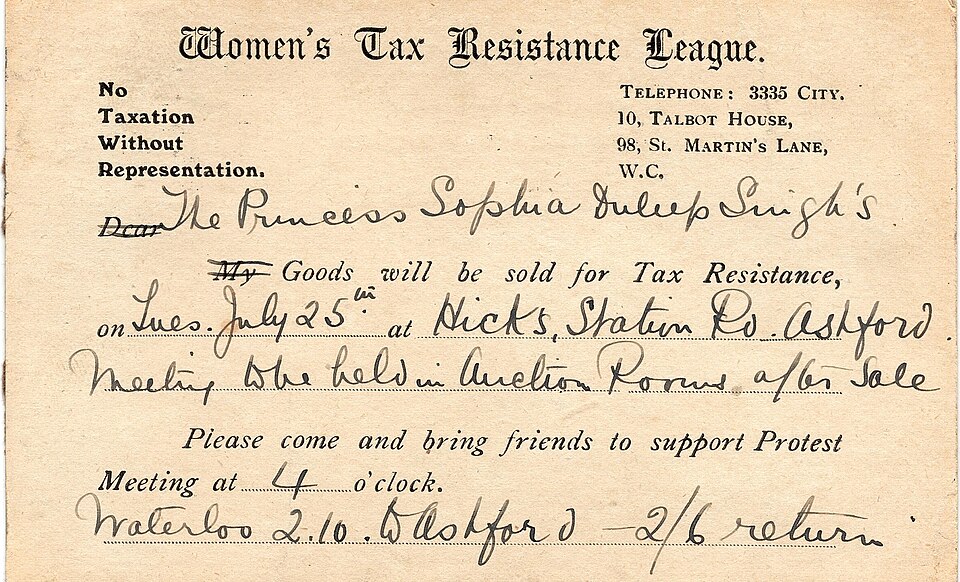
On 18 November 1910, a day remembered as Black Friday, she marched to Parliament with other women, and police attacked the marchers.369,373 In 1911 she refused to fill in the census, the government's count of everyone in the country. She declared: "No vote, no census, as women do not count, they refuse to be counted."370 In 1913 she tried to throw herself in front of the Prime Minister's car, holding a poster that said "Give women the vote!"370 King George V, the British king, was so annoyed that he asked, "Have we no hold on her?"370 (A hold on someone means power over them.)
Caring for soldiers. During World War I, from 1915 to 1917, she worked as a Red Cross nurse.369,370 She cared for wounded Indian soldiers brought back from the battlefields of the Western Front.369,370 She also raised money for Indian soldiers, and after the war she welcomed Indian soldiers to her home at Faraday House.369,370
She won. In 1918 some British women won the right to vote, and in 1928 women won it on the same terms as men.370 Sophia died in 1948, a year after India became independent. The next year, her sister Bamba carried her ashes to India.369
Remembered today. In 2018, Britain put her on a postage stamp.369,370 That same year, her name was carved on the statue of Millicent Fawcett, a leader in the fight for women's votes, in Parliament Square, London.369,370 In 2023, a blue plaque, a sign marking where a famous person lived, went up on Faraday House: "Suffragette lived here."369,370
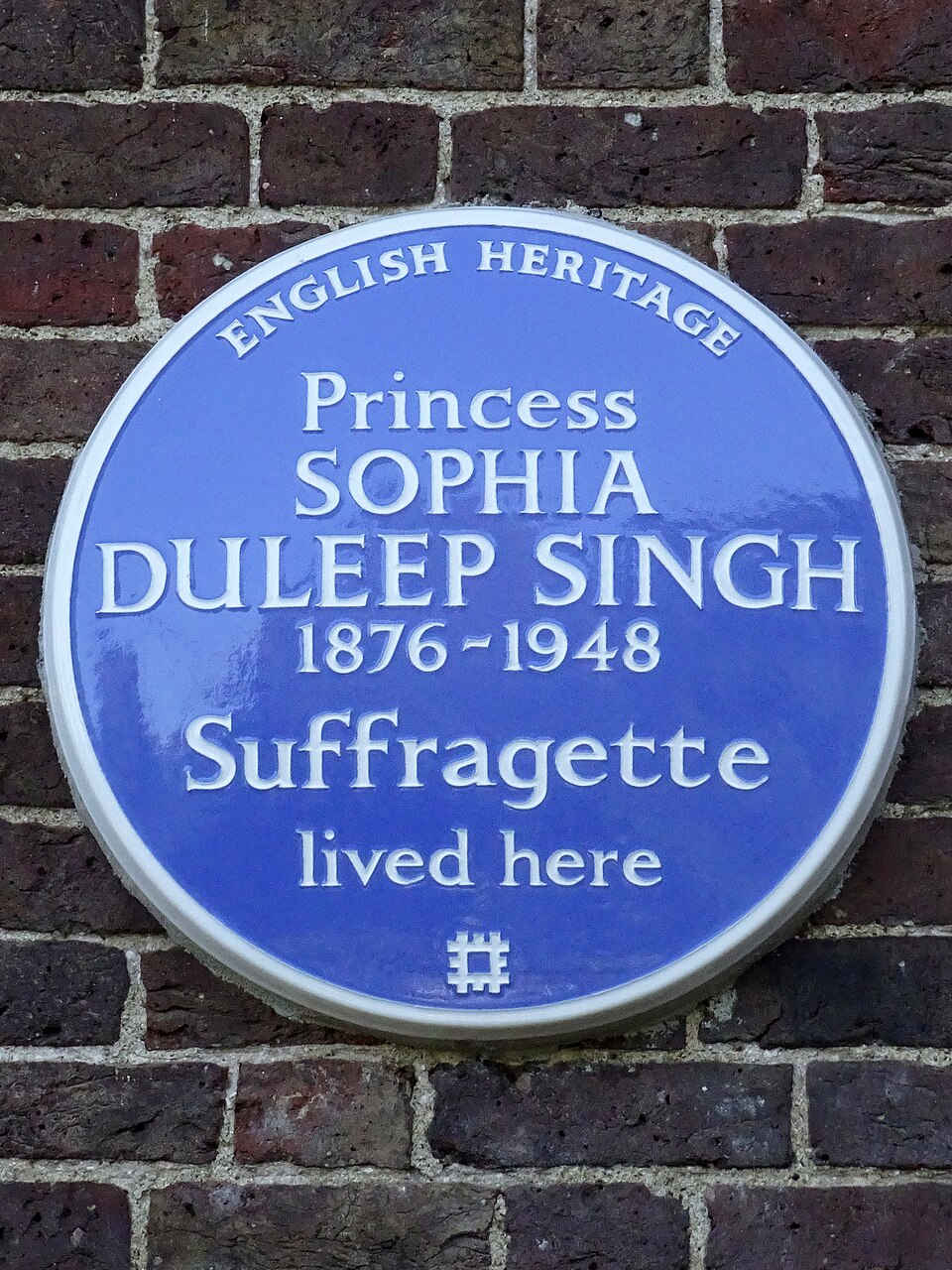
Talk about it Princess Sophia could have stayed comfortable and quiet. Why do you think she chose to fight for other women instead?
Under the British, and Across the Oceans (1849–1947)
Soldiers, Saragarhi, and a Sikh Revival
The British, who had just defeated the Sikhs, soon wanted Sikhs in their own army more than almost anyone else.374
Honest history: 1857. In 1857, many Indian soldiers rose up against British rule. Most Sikh princes and many Sikh soldiers fought on the British side.375 Many Sikhs looked down on the soldiers from eastern India. Many Sikhs felt that in the wars against the Sikh kingdom, British troops had done the hardest fighting while these eastern soldiers held back.375 Those wars were only eight years before, and now those same soldiers guarded Punjab for the British.375 It is a complicated part of the story, and it is true.
After that, the British called Sikhs a "martial race," a people born to be soldiers. That label was a British invention, and it was not a compliment to everyone else.374 But Sikhs did join in huge numbers. When World War I began in 1914, only about 1 in every 100 people in India was Sikh.376,377 Yet nearly 1 in every 5 soldiers in the British Indian Army, the army Britain ran in India, was a Sikh.376,377
The Kukas, 1872. Not every Sikh accepted British rule. A Sikh group called the Namdharis, or Kukas, refused to use British goods, schools, courts and post offices.378,379 An armed band of Kukas had been attacking butchers over the killing of cows for beef.235,378,379 In January 1872, this band attacked Malerkotla, a town ruled by a Muslim Nawab, or prince.235,378,379 The attack failed, and people on both sides were killed.378,380
A British official had 49 of the captured men tied to the mouths of cannons and blown apart, with no trial at all.381,382 A 50th prisoner was killed by an officer of a nearby princely state. The British government said he did it in self-defense.381 The next day, a higher British official had 16 more killed the same way, after a very quick trial.380,381,383 Today 66 Kuka martyrs are remembered.380 The first official was later dismissed from his job, but the men were already dead.382 The Kukas' leader, Baba Ram Singh, had warned the British that trouble was coming.384 Even so, they sent him away as a prisoner to Rangoon, in Burma.378
The Singh Sabha. Many Sikhs worried their faith was fading. Christian missionaries were winning converts, people who switch to a new religion.385,386 And some Sikh customs were getting mixed up with Hindu ones.385,386 In 1873, Sikhs in Amritsar started the Singh Sabha movement to bring back Sikh learning.385 They opened schools and printed books in Gurmukhi, the alphabet used to write Punjabi.385,386 In 1892 they founded Khalsa College in Amritsar.385,386
Saragarhi, 12 September 1897. Saragarhi was a small stone post for sending signals. It stood on a rocky ridge on the North-West Frontier of British India (today in Pakistan). It was guarded by 21 soldiers of the 36th Sikhs, a regiment, or army unit, of the British Indian Army.387 Their leader was Havildar Ishar Singh (a havildar is a sergeant, a soldier who leads a small group).387
That morning, thousands of Pashtun tribesmen from the frontier hills, from the Orakzai and Afridi tribes, attacked.388 British officers guessed there were 10,000 or more.387 The 21 refused to surrender. They held the post for about six and a half hours, until every one of them was dead.387,389 The signaler, Gurmukh Singh, kept flashing messages to the nearby fort with a mirror signal.387 The story told ever since is that his last message asked permission to put down the signal and pick up his rifle.387,390 As he died, he is said to have shouted the Sikh battle cry: Jo bole so nihal, Sat Sri Akal!387
How sure are we? How big was it, really? Saragarhi is so famous that its story has grown over the years. Here is what careful writers say.389
- How many attacked? British officers watching from the nearby forts guessed that 10,000 or more were attacking.387,391 Lieutenant General H. S. Panag is a retired Indian general. He once served in the same battalion, the same army unit, and he studied the military records.389 He thinks the tribal army of nearly 10,000 was spread along the whole ridge, and that about 1,000 to 1,500 of them attacked Saragarhi itself.389 This is his own reading of the records. He does not say which record gives that number, and the signals sent that day spoke of 10,000 or more.387,389 The way up was steep and narrow, so only about 80 to 100 could charge at a time. But fresh men kept coming.389 Either way, 21 men faced many times their number.
- How many attackers died? Popular accounts say 600, or even 1,400.392,393 About 600 bodies were found when the post was retaken two days later.387,391 But many of them were probably killed by British cannon fire during that attack.387,391 An official British estimate put the tribes' dead at Saragarhi at about 180.389 Some Indian writers, including another retired general, Dhruv Katoch, say the tribes themselves later admitted losing about that many.387,391
- How do we know? No defender survived. There is no record of any Pashtun account of the battle. What we know comes mostly from two places: officers who watched through telescopes and binoculars from the nearby forts, and Gurmukh Singh's signals. The official records mention only two of his messages.389,391
- The 22nd man. A civilian helper named Daad, who worked for the soldiers, also died fighting beside the 21. He was not a soldier, so he got no medal.389,394
- The medal. All 21 soldiers were given the Indian Order of Merit, the highest bravery award an Indian soldier could then receive. Indian soldiers could not win Britain's highest award, the Victoria Cross, until 1911.387,395
Things you may hear that aren't true. Three famous claims about Saragarhi have no evidence behind them:
- "UNESCO lists it among the world's great stories of bravery." Jay Singh-Sohal is a British Sikh writer who spent seven years researching the battle.389,396 He found no record of this.389,396
- "Britain's Parliament gave the 21 a standing ovation in 1897." He found no record of that either.389,396 In 2017 they were finally applauded in Parliament, at a screening of his documentary.397
- "French schools teach it." It is not in France's national school curriculum, the official list of what its schools teach.387
Even some respected writers, including that second retired general, have repeated some of these claims.391,392 That is how stories grow, one retelling at a time.
Like the 300 Spartans? Saragarhi is often compared with Thermopylae, a famous last stand (a fight to the very end) of the ancient world.392,394 In 480 BC, a Greek army held a narrow mountain pass in Greece for three days against the huge army of Xerxes, the king of Persia. On the last day, King Leonidas of Sparta stayed behind with his 300 Spartans and about a thousand other Greeks. Most of them fought until they were killed.398,399 Here is how the two compare:
| Thermopylae, 480 BC | Saragarhi, 1897 | |
|---|---|---|
| Defenders | Several thousand Greeks at first (estimates range from about 4,000 to 7,000). On the last day, the 300 Spartans plus their helpers, 700 men from the city of Thespiae and 400 from Thebes (Herodotus says the Thebans surrendered)398,399 | 21 soldiers and one civilian helper389 |
| Attackers | Herodotus claimed 2.6 million. Modern historians think 120,000 to 300,000398 | British guess: 10,000 or more. Panag: perhaps 1,000 to 1,500 at the post itself387,389 |
| How long | About three days398 | About six and a half hours389 |
| How we know | Mostly from one Greek historian, Herodotus; no Persian account survives398,399 | Signals sent during the battle, and officers watching from nearby forts389 |
Both stories have grown in the telling. No official list ranks the bravest battles in history, but many writers in India and Britain count Saragarhi among the great last stands.392,400 The British Army itself calls it "one of the bravest last stands in military history."393 In 2021, a bronze statue of Havildar Ishar Singh was unveiled in Wednesfield, England.387,393
The true story needs no stretching. Twenty-one soldiers and one helper chose to fight to the end rather than surrender, and they held their post for six and a half hours.
Honest history: the 21 were soldiers of the British Indian Army. The men attacking them, from the Orakzai and Afridi tribes, were Pashtuns who had risen against the British.388,401 They had been stirred up by religious leaders who called it a holy war, and by anger at British forts and the new border in their hills.388,401
That does not mean the 21 were fighting just for the British. Writers say they chose to fight to the last man to slow the attack on the nearby forts.392 At one of them, Fort Gulistan, a nurse helped deliver a baby during the siege, while the fort was surrounded.396 Both things are true: the defenders were incredibly brave, and the men they fought had reasons of their own.
Talk about it Why do you think the 21 kept fighting when they could have surrendered? Can a person be brave and loyal while fighting for a side that is not completely right?
Across the Oceans to California and Canada
Some of the first Sikhs in America lived and worked in the same part of the world you do, more than a hundred years ago.402
Mills and farms. In the early 1900s, young Punjabi men, most of them Sikh, sailed across the Pacific to Canada and the United States.403 They worked in lumber mills (where logs are cut into boards) in Oregon and Washington, built railroads, and farmed in California.402 They were often paid less than white workers and treated badly.403,404
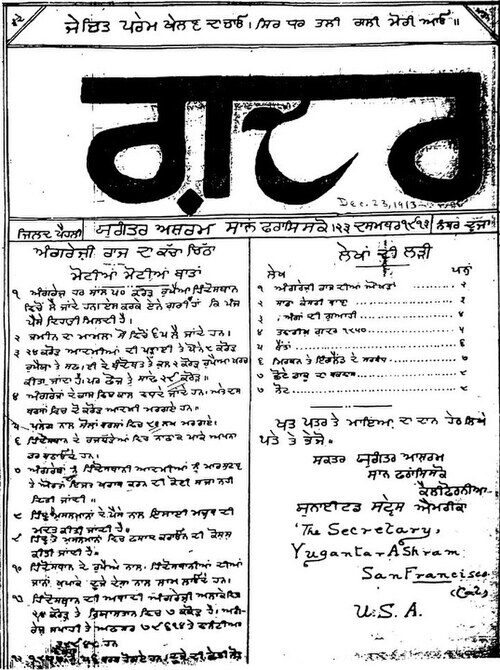
In 1907, in Bellingham, Washington, a mob of hundreds of white workers attacked the South Asian mill workers, men from India and the lands around it. They pulled them out of the mills and the bunkhouses where they lived, and drove them out of town.405,406
The first gurdwara in America. In 1912, Sikh farmers and workers in California founded a gurdwara, a Sikh place of worship, in Stockton, California. It was the first gurdwara in the United States, and it is still there today, a short drive from the Bay Area.407
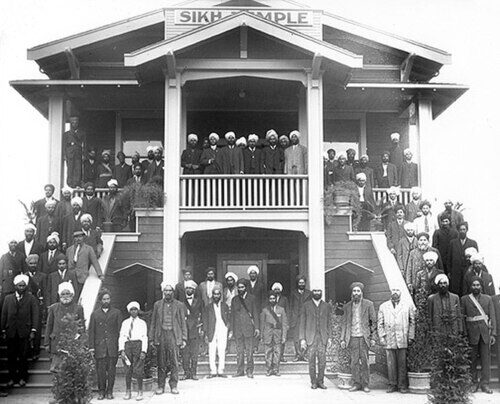
The Ghadar Party, 1913. Many Punjabis in America were angry that their homeland was ruled by Britain while they were mistreated abroad.408 In 1913, at a meeting in Astoria, Oregon, Punjabi workers started the Ghadar Party, and they made San Francisco its home.403,408 Ghadar means "revolution." They printed a newspaper in San Francisco and planned to return to India and free it from British rule.403,408 Today the Ghadar Memorial Hall stands in San Francisco, on the spot where their later headquarters was.409
The rebellion they planned in 1915 failed, because a spy had warned the British.408,410 Kartar Singh Sarabha came to California in 1912, when he was 16. Sikh histories say he enrolled at the University of California, Berkeley, to study chemistry.411 He went back to India to fight. He was arrested and hanged in Lahore in 1915. He was 19.410,411
The Komagata Maru, 1914. Canada had made a rule meant to keep Indians out.412,413 A Sikh businessman, Baba Gurdit Singh, decided to test it. He rented a Japanese ship, the Komagata Maru.412–414 On 23 May 1914 it arrived in Vancouver with 376 passengers: mostly Sikhs, plus Muslims and Hindus.412–414
Canada would not let almost any of them off the ship.413 For two months they waited in the harbor, running short of food and water.412,413 Meanwhile, people from India who already lived in Vancouver raised money and fought for them in court.412,413 In July, a Canadian warship forced the ship to leave.413,414
The ship reached India in September 1914, at Budge Budge near Kolkata. British officials wanted to put the passengers on a train to Punjab. Many refused and set off on foot instead. Police and soldiers opened fire, and about 20 passengers were killed. Many others were jailed.412–414 In 2016, Canada's Prime Minister, the head of its government, stood up in Parliament and formally apologized.414
Bhagat Singh Thind. (He is a different man from the Bhagat Singh in Chapter 14.) Thind served in the U.S. Army in 1918, during World War I, wearing his turban.415 In 1923, the U.S. Supreme Court, the country's highest court, ruled that he could not be an American citizen because he was not "white."415,416 After that ruling, more than 70 Indian immigrants who had already become citizens lost their citizenship.415 Thind kept going. He earned a doctorate, the highest university degree.415 In 1936 he finally became a citizen, under a law for people who had served in World War I.415
Punjabi-Mexican families. U.S. law stopped almost everyone from India from immigrating, so the men could not bring wives from Punjab.417,418 California law would not let them buy farmland, and officials often would not let them marry white women.417,419 So many Punjabi farmers in California's Imperial Valley, Sikhs among them, married Mexican women.418,419 Their children grew up with both Punjabi and Mexican cooking, and some of their descendants still live in California today.419
Dalip Singh Saund. Dalip Singh Saund came to study at Berkeley in 1920. He became a farmer, and he fought for Indians' right to become citizens. In 1956 he was elected to the U.S. Congress from California. (Congress makes the country's laws.) He was the first Sikh, the first Indian American and the first Asian American ever elected to Congress.420,421
Talk about it Kartar Singh Sarabha worked with the Ghadar Party in San Francisco, not far from where you live. What would you be willing to stand up for, even if it was risky?
Jallianwala Bagh, and Winning Back the Gurdwaras Without Striking Back
In these years Sikhs faced bullets and beatings, and won some of their biggest victories by refusing to hit back.422
Vaisakhi, 13 April 1919. Thousands of Sikhs, Hindus and Muslims gathered in Jallianwala Bagh, a walled garden near the Harmandir Sahib (the Golden Temple) in Amritsar.423 Some had come to protest unfair new British laws and the arrest of local leaders. Many were simply visiting for the Vaisakhi festival, including families with children.423
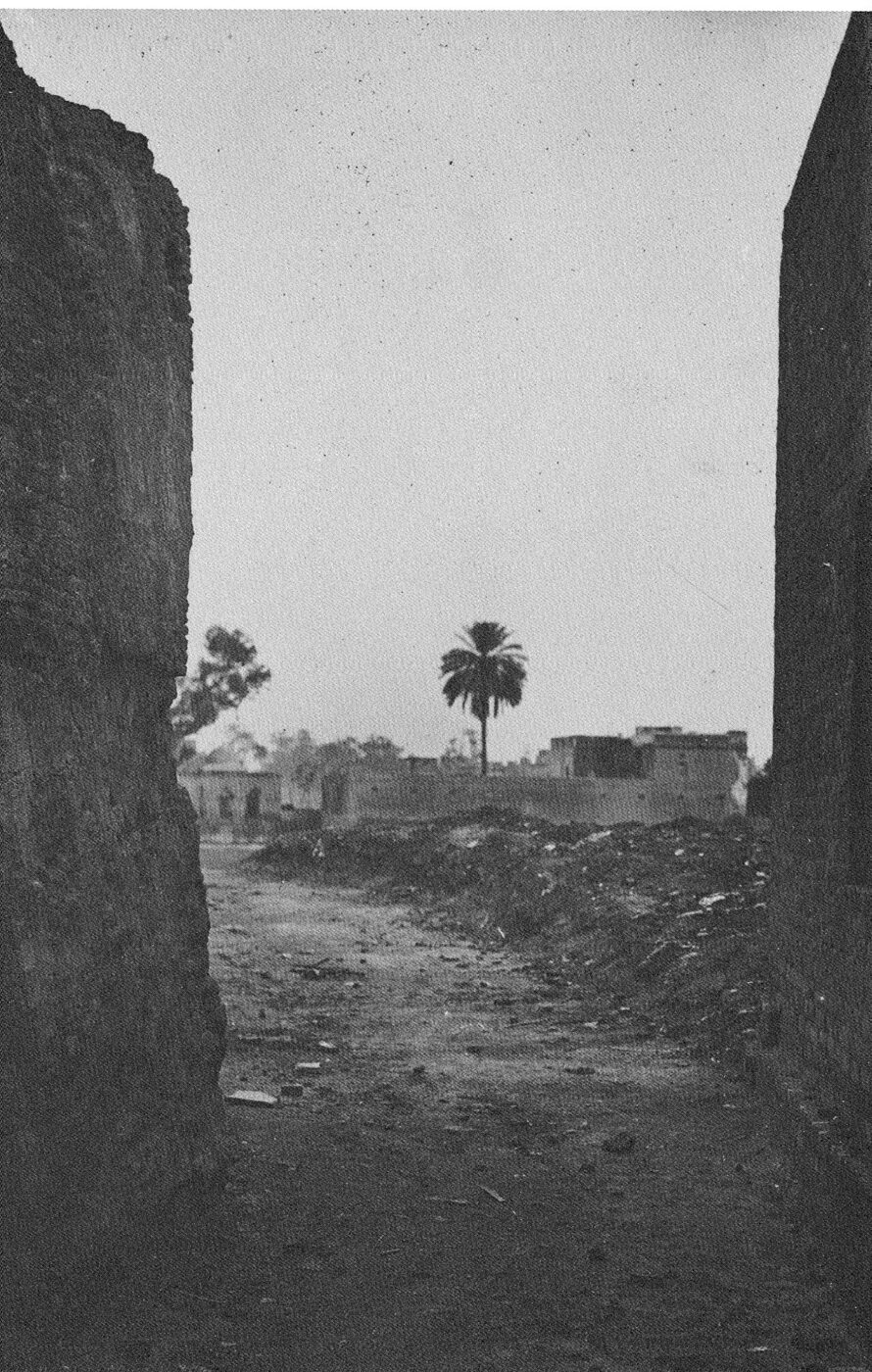
The garden had only a few narrow ways in and out.423 A British general, Reginald Dyer, marched in with soldiers. He blocked the main exit and ordered them to fire into the crowd with no warning. They kept shooting for about ten minutes, until they had nearly run out of bullets.423,424 People tried to climb the walls.425 Some jumped into a well to escape.423
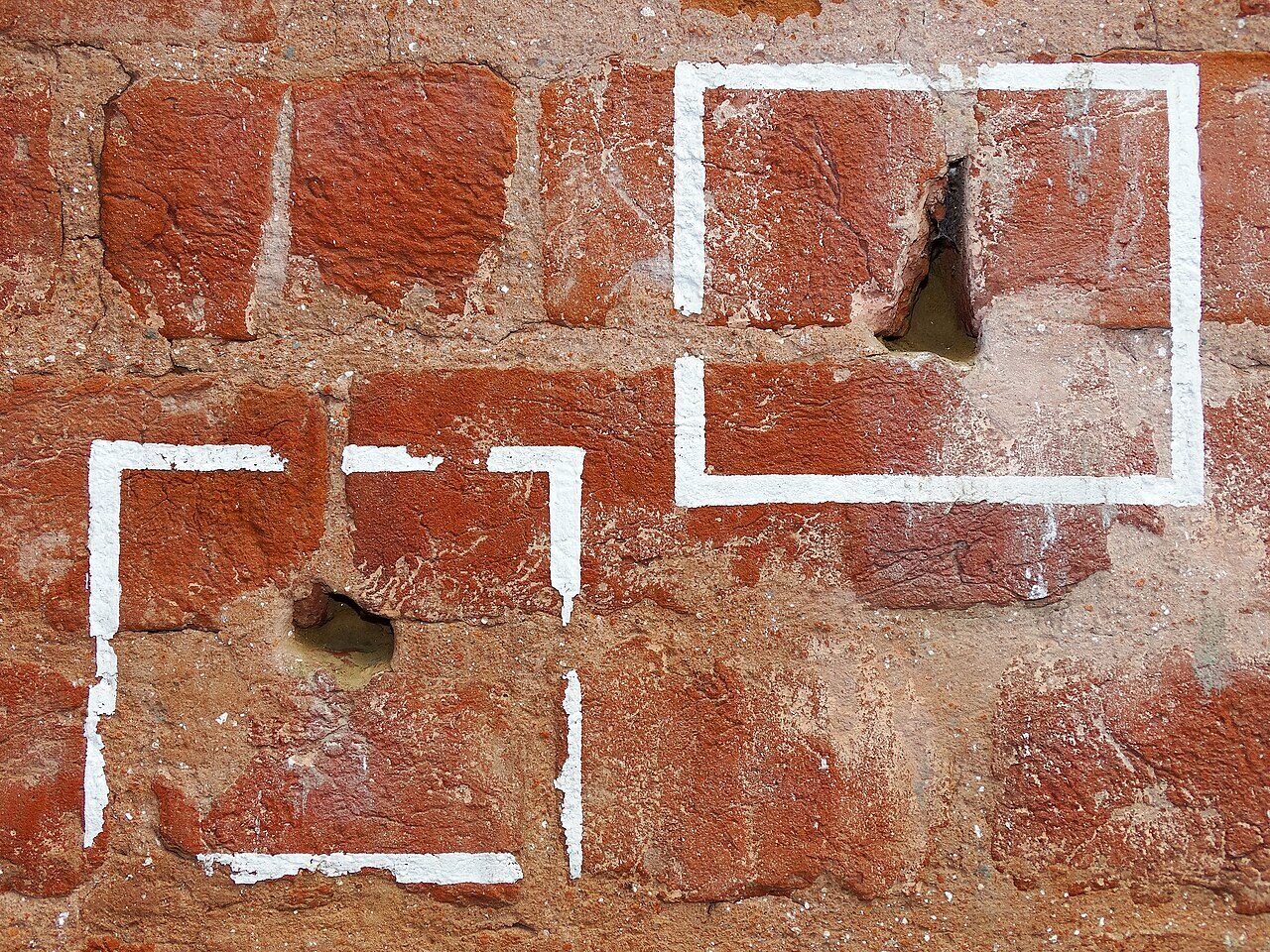
How many died? The British government's count was 379 dead. The Indian National Congress, an Indian political party, investigated and said that 1,000 dead was "by no means an exaggerated" number. One Indian leader at the time wrote that 1,500 had died.423,424 The historian Kim Wagner, who wrote a detailed book about the massacre, estimates about 500 to 600.424,426 Another historian, V.N. Datta, studied city and police records and put the number at about 700.423 Another historian, V.N. Datta, studied city and police records and put the number at about 700.423 For the 100th anniversary, a team that checked every list of names it could find counted 547.424 No one knows the exact number. You can still see the bullet marks in the walls today.423 A British inquiry, or official investigation, said Dyer had made "a grave error," and he was forced to leave the army. But many people in Britain praised him, and a newspaper raised a lot of money for him.423,427
Udham Singh. A Sikh named Udham Singh never forgot the massacre.428 Many stories say he was in the garden that day, serving water to the crowd.429 How sure are we? Some historians say he was away from India at the time.430 One says that at his trial, Udham Singh told the judge he had been in East Africa.430 But at other times he said he had been at the massacre. His biographer, Anita Anand, says only Udham Singh knew where he really was that day.431 In 1940, in London, he shot and killed Michael O'Dwyer.428,432 In 1919, O'Dwyer had been the British lieutenant governor, or head, of Punjab, and he had approved of what Dyer did.428,432
Udham Singh was hanged.428 After his arrest, he had signed his name as Mohamed Singh Azad.428,433 It joined a Muslim name, a Sikh name, and the word for "free," to show that people of every faith were in the freedom struggle together.428,433 Many people today remember it as Ram Mohammad Singh Azad, adding a Hindu name too.429,433
Taking back the gurdwaras. By the early 1900s, many historic gurdwaras were controlled by caretakers called mahants. Some treated the gurdwaras and their lands as their own private property, and misused the offerings that worshippers gave.422,434 At the Harmandir Sahib itself, the priests refused to let new Sikhs from "low" castes offer prayers.422 (A caste is a group a person is born into, ranked high or low.) British officials sometimes took the mahants' side.422
Soon after Jallianwala Bagh, the manager of the Harmandir Sahib, who had been chosen by the British, even gave General Dyer a robe of honor.423,435,436 Many Sikhs were ashamed and furious, and that anger helped start the movement to take back the gurdwaras.423,435,436 In 1920, Sikhs formed the SGPC, a committee to run the gurdwaras, and the Akali movement to take them back peacefully.422 The people in the Akali movement were called Akalis.
Nankana Sahib, 1921. On 20 February 1921, about 150 to 200 Sikhs went peacefully to Gurdwara Janam Asthan, at Guru Nanak's birthplace.437,438 Their leader was Bhai Lachhman Singh.437,438 The mahant had hired armed men.437,438 They attacked the Sikhs inside the gurdwara with guns, axes and swords.437,438 The government's official count was 86 Sikhs killed. Researchers working for the SGPC today have found the names of about 90. Other accounts say about 140, and some as many as 260. No one knows the exact number.437–439 The bodies of the dead and dying were burned. Bhai Lachhman Singh was tied to a tree and burned. That tree still stands there.437,438,440
Guru ka Bagh, 1922. Sikhs went to cut firewood for the langar, the free community kitchen. The wood was on land belonging to a gurdwara called Guru ka Bagh, near Amritsar. The mahant said the land was his own, and the police arrested them.434 Then the police beat them with heavy sticks. Every day a new group of Sikhs arrived, prayed, and walked forward knowing they would be beaten. Not one hit back. More than 5,000 were jailed, by the SGPC's count.434,441
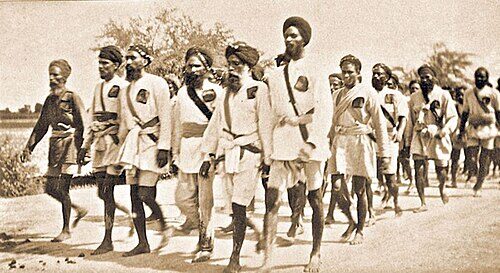
C. F. Andrews, an English Christian missionary, watched in shock.434,441 He wrote that it was like seeing "hundreds of Christs being crucified."434,441 The beatings stopped in September 1922, after the head of the Punjab government visited. The arrests went on until November 1922. Then a man named Sir Ganga Ram rented the land from the mahant and let the Sikhs use it. The jailed Sikhs were freed in April 1923.434
Victory. Earlier in 1922, after another peaceful protest, the British had handed back the keys of the Harmandir Sahib's treasury to the Sikh leader Baba Kharak Singh.442,443 (A treasury is where money and valuables are kept.) Mahatma Gandhi, the leader of India's freedom movement, sent Kharak Singh a telegram saying the first decisive battle for India's freedom had been won.422,443 (A telegram was a fast message sent by wire.) In 1925, a new law, the Sikh Gurdwaras Act, gave control of the historic gurdwaras to the SGPC, elected by Sikhs.422
Jaito, 1923–1925. Before that law was passed, there was one more long struggle. Nabha was a princely state, a small kingdom in India ruled by its own prince under British control. Its ruler, Maharaja Ripudaman Singh (Maharaja means great king), supported the Akalis and India's freedom movement.422,444 In July 1923, the British forced him to give up his throne to his young son.422,444 British officials said he stepped down by his own choice, and they accused him of ruling badly. Historians write that his support for the freedom movement had angered the British.444,445
Sikhs gathered at the town of Jaito, in Nabha, to protest and to pray for him.422,444 At Gurdwara Gangsar, a place Guru Gobind Singh once visited, they held an Akhand Path.446 That is a reading of the whole Guru Granth Sahib from beginning to end, with readers taking turns so that it never stops.447 On 14 September 1923, the police brought in their own reader and pushed the Sikh granthi aside. (A granthi is the person who reads the Guru Granth Sahib in a gurdwara and cares for it.) Sikhs said this broke the holy reading, a terrible insult to their faith. The government said the reading had never been interrupted.444,446
The SGPC decided to send jathas, groups of volunteers, to Jaito to finish the Akhand Path. Day after day, a jatha of 25 Sikhs set out from the Akal Takht, the seat of Sikh decisions in Amritsar.422,448 Each one promised to stay peaceful.422,448 The police stopped them at Nabha's border, beat them, and took them far away, leaving them there with no money.448 The British banned the SGPC and the Akali Dal, the Akalis' own organization, and arrested their leaders.422,444 But new leaders took their places, and the jathas kept coming.422,444
India's Congress party backed the Sikhs and sent observers, people to watch and report. One of them was Jawaharlal Nehru, who would later become India's first Prime Minister. When Nehru reached Jaito in September 1923, he was arrested, handcuffed and jailed.422,448,449 In a statement written in Nabha jail, he said that during the Guru ka Bagh struggle he had "marvelled at the courage and sacrifice of the Akalis."448
21 February 1924. A bigger jatha of 500 Sikhs set out from the Akal Takht on 9 February 1924.422,448 It was timed to reach Jaito just after the third anniversary of the killings at Nankana Sahib.422,448 Near Jaito, the British official running Nabha ordered them to stop. They kept walking, and he ordered the troops to fire.444,448
How many died? The government's count was 19 dead and 29 wounded. The Akalis' own figures were much higher.444 Other accounts say 21 were killed, or 22, and some say about 100.422,446,448 Even then, the jatha walked on to Gurdwara Tibbi Sahib, where the police beat them and arrested them.446
More jathas kept coming, even from Sikhs living in Canada, Hong Kong and Shanghai.444 In July 1925, right after the new gurdwara law was passed, the British let the pilgrims through to Gangsar and freed most of the prisoners. (Pilgrims are people who travel to a holy place.) From 21 July to 6 August 1925, Sikhs completed 101 Akhand Paths there.422,444,446 Honest history: the Sikhs won the right to pray at Jaito, but the Maharaja never got his throne back. In 1928 the British formally removed him.445,450
Bhagat Singh, Shaheed-e-Azam. While the Akalis were marching without hitting back, another young Punjabi chose a different path. Bhagat Singh was born on 27 September 1907 (some sources say the 28th) in the village of Banga, in Lyallpur district, now in Pakistan.451,452 His Sikh family was already standing up to British rule.451,452 Around the time he was born, his father, Kishan Singh, was in jail for joining a protest against a new British law on farmland.451 His uncle, Ajit Singh, was one of that protest's leaders.451
Bhagat Singh grew up reading and writing. As a young man he wrote for Punjabi and Urdu newspapers, including Kirti, the journal of a workers' and farmers' party.451,452 In 1926 he helped start the Naujawan Bharat Sabha, a youth group, and became its secretary.451 He stood with the Akalis too. During the struggle at Jaito (above), a warrant, or order for his arrest, was issued because he had welcomed a jatha.451 He lived in Delhi for five months under another name.451
Why he took up the gun. In October 1928, in Lahore, police beat a protest led by Lala Lajpat Rai, one of Punjab's best-known leaders. Rai was injured, and he died a few weeks later, on 17 November.452 Bhagat Singh and his comrades, his fellow fighters, blamed the police officer who had ordered the beating.451 They planned to kill him.451 On 17 December 1928, in Lahore, they shot the wrong man: John Saunders, a 21-year-old British police officer. A policeman, Head Constable Chanan Singh, chased them.451–453 Their comrade Chandrashekhar Azad shot Chanan Singh dead.451–453
"To make the deaf hear." On 8 April 1929, Bhagat Singh and his friend Batukeshwar Dutt threw two bombs into the Central Legislative Assembly in Delhi. That was where the British made laws for India. The bombs were made to frighten, not to kill, though a few people were hurt.451,452 They threw leaflets that began, "It takes a loud voice to make the deaf hear," and they shouted "Inquilab Zindabad!" ("Long live the revolution!").452,454 Then they stayed where they were, to be arrested.452,454 Bhagat Singh wanted his trial to carry his ideas across India.452
Their leaflet also said they were sorry to have shed blood.454 It said that they "attach so great a sanctity to human life," but had "been forced to shed human blood."454 (Sanctity means holiness.) Their statement in court said, "we hold human life sacred beyond words."455 Asked what he meant by revolution, he said, "It is not the cult of the bomb and the pistol." It meant that "the present order of things, which is based on manifest injustice, must change."455 (Here a cult means a kind of worship, and manifest injustice means plain unfairness.)
In jail. In jail, Bhagat Singh saw that Indian prisoners were treated worse than European ones. He led other political prisoners in a hunger strike, refusing to eat as a protest.452 They asked for equal food, clothing and hygiene (ways to keep clean), and for books and a daily newspaper.452 One of the strikers, Jatin Das, died after a 63-day hunger strike. Bhagat Singh kept going for 116 days.452
Bhagat Singh kept reading and writing in his cell. A fellow prisoner, the Sikh leader Randhir Singh, tried to convince him that God exists.452 Bhagat Singh answered with an essay, Why I Am an Atheist.452 (An atheist is someone who does not believe in God.) Randhir Singh later wrote that Bhagat Singh came to regret giving up his religion. That is Randhir Singh's account. The essay is Bhagat Singh's own words.452 A few weeks before he died, Bhagat Singh wrote to young activists (people working for a cause) that he was not a terrorist, except perhaps at the start.456 He also wrote that "mere bomb-throwing is not only useless but sometimes harmful."456
23 March 1931. A special court tried Bhagat Singh for killing Saunders. The British Viceroy, the top British ruler in India, had set it up.452 The only way to challenge its decision was an appeal to the Privy Council in England.452 On 7 October 1930, it sentenced him and his comrades Sukhdev and Rajguru to death.452 The three were hanged in Lahore jail on 23 March 1931. Bhagat Singh was 23 years old.452 He went to the gallows shouting, "Down with British imperialism."451 (Imperialism means one country ruling over others.)
Gandhi condemned their violence, but he pleaded with the British to spare their lives. Some young people blamed him for not saving them and protested against him.452 How sure are we? Historians still argue about this. Some say Gandhi tried hard, but the power was in British hands, not his.457,458 Others say he could have done more, for example by refusing to sign his agreement with the Viceroy unless the three were spared.457 Strikes of mourning were called: people stopped work to show their sorrow. Gandhi's Congress party said it disapproved of political violence.452 But it admired "the bravery and sacrifice" of the three, and it called their hanging "an act of wanton vengeance."452 (Wanton vengeance means cruel, needless revenge.) The police cremated them in secret at Hussainiwala, on the Sutlej River, and threw the remains into the water.451
How he is remembered. Many Indians call him Shaheed-e-Azam, "the great martyr."451,452 Every 23 March, people gather at the memorial at Hussainiwala to remember the three of them.451,452 In 2008 an 18-foot bronze statue of him was put up in India's Parliament.452 In 2022 the international airport at Mohali, which serves Chandigarh, was renamed Shaheed Bhagat Singh International Airport.459
Honest history: two paths. Gandhi led India's freedom movement with nonviolent resistance.460 He refused to use force, even against the oppressor, the one treating people unfairly.460 Gandhi's way went on to inspire movements for civil rights and freedom around the world.460 Bhagat Singh disagreed with him.
In their statement to the court, Bhagat Singh and Dutt argued: "Force when aggressively applied is 'violence' and is, therefore, morally unjustifiable, but when it is used in the furtherance of a legitimate cause, it has its moral justification."455 In plainer words, they were saying that force used to attack is wrong, but force used for a rightful cause can be right. They said their movement followed the ideals of Guru Gobind Singh, George Washington and other fighters for freedom.455
People fighting foreign rule have taken both paths. One example comes from World War II, when Nazi Germany occupied, or took over, the Netherlands. Most Dutch resistance was nonviolent, such as hiding people from the Nazis. But some fighters also carried out sabotage, secretly damaging or destroying things. They also killed Dutch Nazis and collaborators, people who helped the Germans. The Germans often punished randomly chosen people in return.461 The Netherlands honors its resistance today.461 The names of about 2,000 resistance members killed by the Germans are kept in its parliament.461 This book does not decide which path was right. That is for you to think about.
Talk about it At Guru ka Bagh, the Sikhs did not hit back. Was that weak, or was it a kind of strength? Why? Sheikh Farid, a Muslim saint whose verses are in the Guru Granth Sahib, wrote: *Fareedaa bure daa bhalaa kar, gusaa man na hadhaae*, "Farid, answer wrong with good, and don't let anger fill your mind" (Ang 1381).462 Bhagat Singh chose to fight back. Guru Gobind Singh wrote that when every other way has failed, it is right to take up the sword (Chapter 7). When do you think it is right to fight back, and when is it not? Saunders and Chanan Singh were not the man Bhagat Singh's group meant to kill. How should we think about that?
Partition: Punjab Cut in Two
In 1947, India won its freedom from Britain, and Punjab was torn in half. For Sikhs, freedom came with one of the biggest losses in their history.463,464
A line on a map. When the British left, they divided their Indian empire into two countries: India and Pakistan. Punjab was split down the middle.463 The new border line was drawn by a British lawyer who had never been to India before.465 It was announced two days after independence, so millions of people woke up not knowing which country they lived in.465,466
At first, Sikh leaders wanted to keep Punjab together, or to have a safe homeland of their own.464,465 When it became clear Pakistan would be created, they asked for Punjab to be divided, so that not all Sikhs would end up in Pakistan.464,466 But the line still left Lahore, and about two million Sikhs, on the Pakistan side.464,465
What Sikhs lost. The line put many of the Sikhs' holiest places in Pakistan. They included Nankana Sahib, where Guru Nanak was born, and Kartarpur, where he died.308,467,468 They also included Lahore, Ranjit Singh's capital and the place where Guru Arjan was martyred.308,467,468 Sikh and Hindu families also lost rich farmland in West Punjab, the part that went to Pakistan.466,469
The violence. The killing began months before the new border was drawn. In March 1947, in the Rawalpindi area of West Punjab, Muslim mobs attacked Sikh and Hindu villages.464,470 Historians estimate that about 7,000 to 8,000 Sikhs and Hindus were killed. The official count at the time was 2,263.470,471 In the village of Thoha Khalsa, more than 90 Sikh women and children jumped into a well rather than be captured.470,471 Then, as people rushed to cross the new border, neighbors turned on neighbors. Muslim mobs attacked Hindus and Sikhs. Hindu and Sikh mobs attacked Muslims.463 Trains arrived at stations full of the dead.472 Women and girls suffered terribly: on all sides, somewhere between 75,000 and 100,000 were kidnapped.473,474
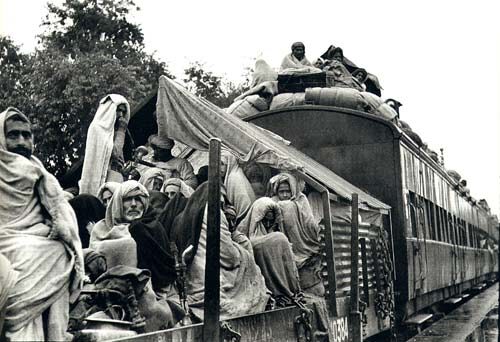
No one knows exactly how many died. The British estimate at the time was about 200,000. A later Indian estimate was 2 million.463 Many historians accept a figure of about a million. Others think it was nearer half a million.463,475 Somewhere between 12 and 20 million people were forced from their homes. It was one of the largest migrations, or movements of people, in human history.463
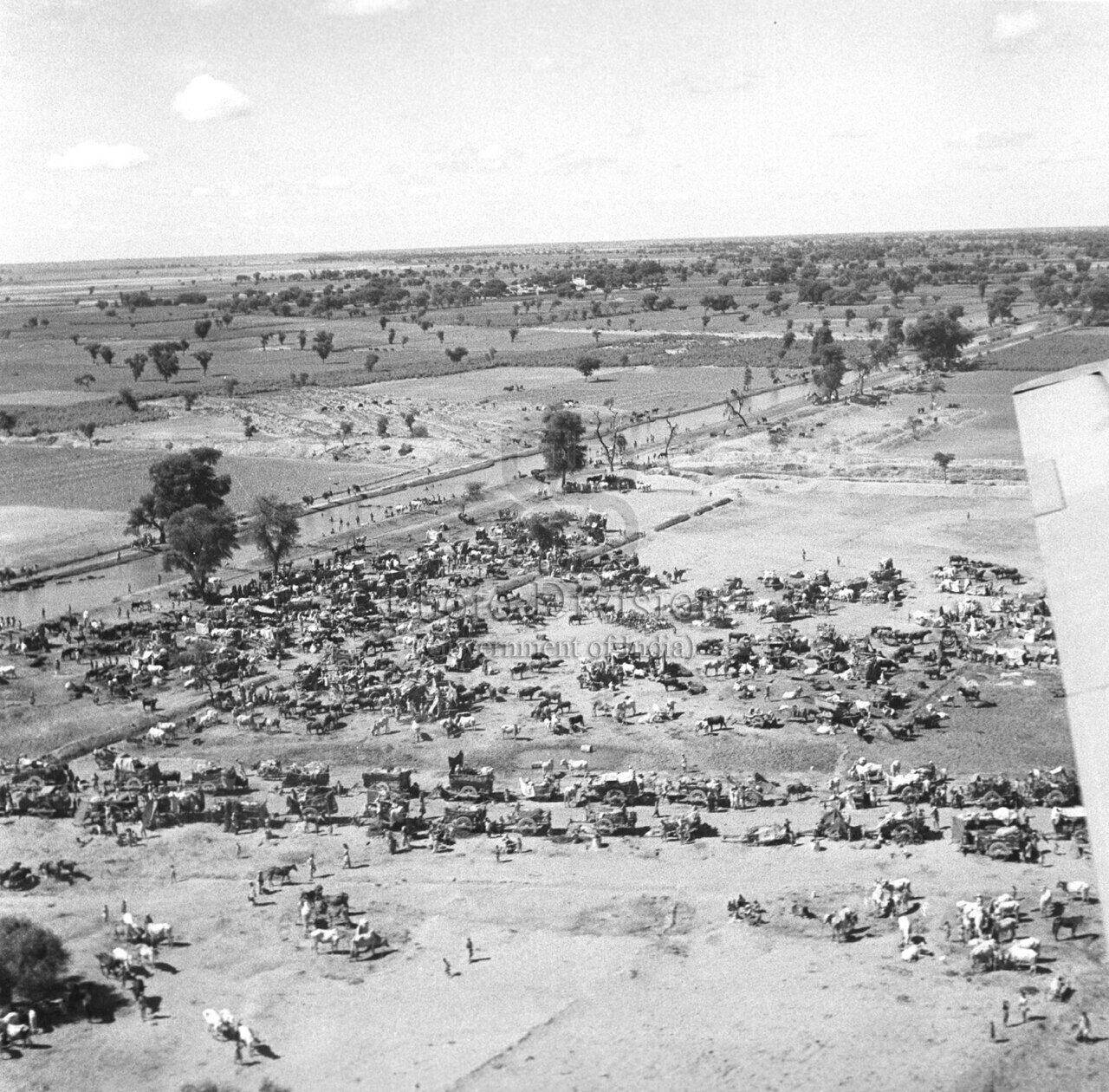
Honest history: this is hard to say, but it is true. Stories of what had been done to their families made many Sikh and Hindu refugees want revenge.470,473 In East Punjab, the Indian side, armed bands of Sikhs and Hindus also hunted and killed Muslim families who were trying to flee. Historians say some of these Sikh bands were well organized.472,473 A British railway magazine reported at the time that about 3,000 Muslim passengers were killed in one attack on a refugee train at Amritsar. Two days later, near Lahore, Muslim attackers killed 340 Hindus and Sikhs on another train.472,476 Those who did it broke every teaching of the Gurus, just as surely as those who killed Sikhs. A true history has to say both.
Light in the dark. All through Punjab, there were also Muslims who hid Sikh neighbors, and Sikhs who hid Muslim neighbors, at the risk of their own lives.477,478 And Malerkotla, the town of the Nawab who had spoken up for the Sahibzade (Guru Gobind Singh's sons), stayed largely peaceful.235,479 Sikhs say they had not forgotten him.235 Historians add that its ruler in 1947 worked hard to keep the peace.235,479 They also say that people of different faiths there all honored the same Sufi shrine, a holy place of a Muslim saint.235,479
This is a story my mom told me about my grandmother. She lived through 1947. Our family was in East Punjab, so we didn't have to move. But my grandmother hid a Muslim girl in our house. A gang of Sikh men found out and came to the house to find her. My grandmother picked up a pitchfork or a stick (I don't know which) and told the men they would have to kill her first to get to the girl. She saved her.
Starting over. Millions of Hindu and Sikh refugees, people forced to flee their homes, arrived in East Punjab, Delhi and other parts of India, many with nothing.464,480,481 The government gave refugee farmers land in place of what they had lost.464,482 Within a few years, many had rebuilt farms, shops and businesses from scratch.464,482
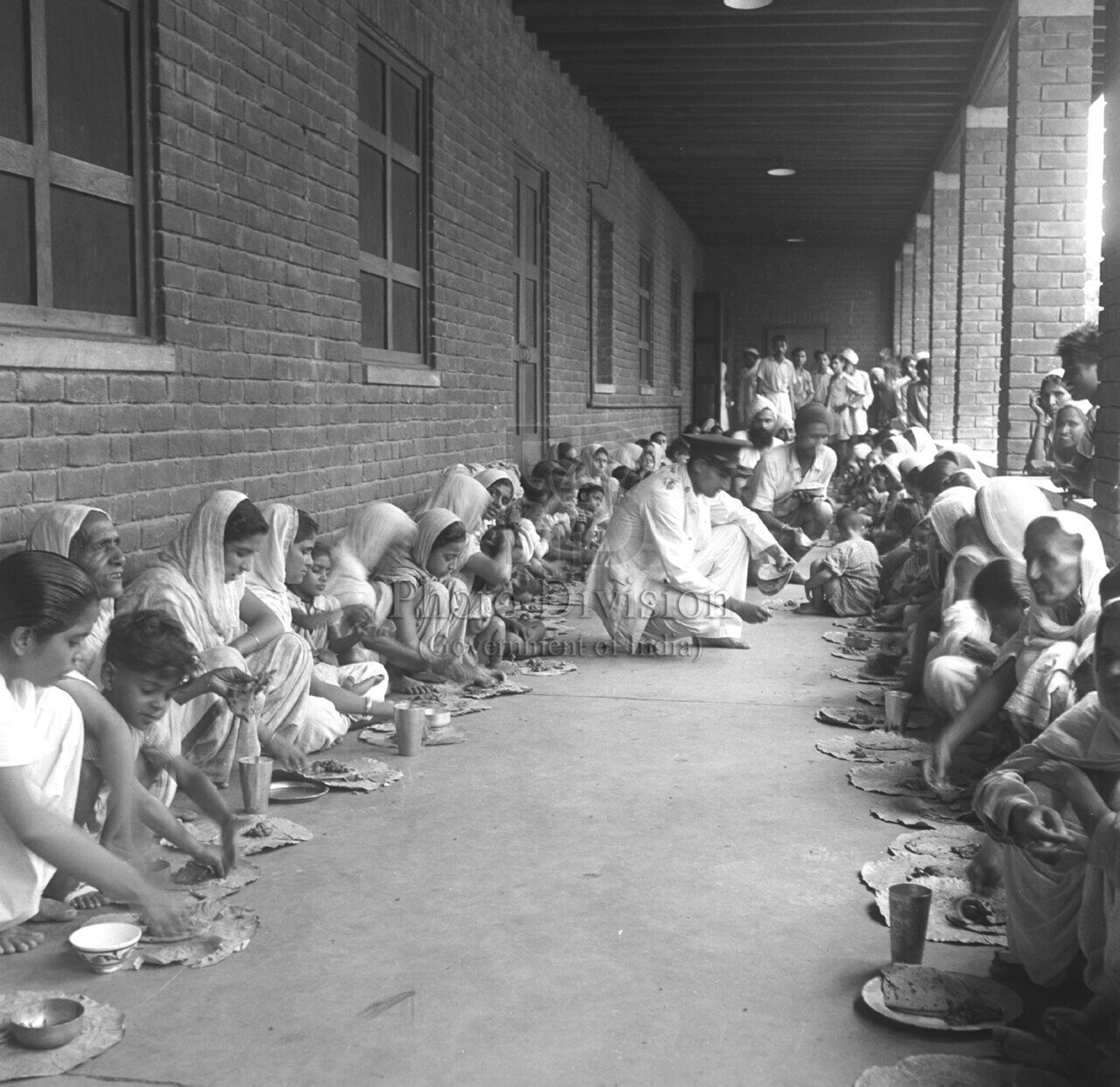
Milkha Singh. One of those refugees was a boy named Milkha Singh. His parents were killed in the Partition violence, and he escaped to India.483,484 He joined the army, discovered he could run, and became one of the fastest 400-meter runners in the world. At the 1960 Olympics he came fourth, just missing a medal.483,484 He became known as the Flying Sikh, a name he earned after beating Pakistan's best runner in 1960.484
Talk about it This is a good chapter to ask your grandparents or elders: where was our family in 1947? Did anyone have to leave their home?
Free India, and the Hardest Years
Building a New Punjab, and the Road to 1984
In the years after Partition, Sikhs rebuilt their lives, fed much of India, and defended its borders, while growing angrier that their concerns were being ignored.485,486
A state for the Punjabi language. In the 1950s, India redrew many of its states so that each major language had its own. But a government commission, a group chosen to study the question, refused to make a Punjabi-speaking state. It said Punjabi was not really a separate language, and that too few Hindus there wanted the new state.487 Some Hindu groups had urged Punjabi Hindus to tell census-takers, the people counting the population, that their language was Hindi.487
Sikh leaders, like Master Tara Singh and Sant Fateh Singh (Sant is a title for a holy man), led mostly peaceful protests for years.487 Tens of thousands of Sikhs went to jail.487 In 1966, Punjab was finally divided into a smaller Punjab, a new state called Haryana, and hill areas given to Himachal Pradesh.487 Many Sikhs felt cheated anyway: the capital city, Chandigarh, was shared with Haryana, and arguments began over who would get Punjab's river water.487,488
Feeding a nation. In the late 1960s, Punjab's farmers began using new seeds, tube wells (deep wells with pumps) and fertilizers in what was called the Green Revolution.485,489 Punjab covers less than 2 in every 100 acres of India's land.485,489 But it began growing a huge share of the wheat and rice that India stores to prevent famine, a time when there is not enough food.485,489 Honest history: it came with a cost. Punjab's underground water is running low, the soil is worn out from heavy use of chemicals, and many farmers fell into debt.485,489
Defending India. Sikh soldiers and officers have fought in India's wars (see Chapter 17). Arjan Singh led India's air force in the 1965 war. He is the only Indian Air Force officer ever given five-star rank, the very highest rank, as Marshal of the Indian Air Force.490 In 1971, Lieutenant General Jagjit Singh Aurora (a lieutenant general is one of the army's highest ranks) accepted the surrender of Pakistan's army in Dhaka. About 93,000 Pakistanis, soldiers and civilians, became prisoners, and Bangladesh's independence was won.491
Growing anger. By the 1970s, many Sikhs felt Punjab was being treated unfairly. They were upset over water, over Chandigarh, and over the power of states versus the central government. In 1973 the main Sikh political party, the Akali Dal, wrote the Anandpur Sahib Resolution.486 It asked for more power for states like Punjab, and for Chandigarh and other Punjabi-speaking areas to be joined to Punjab.486 The Akali Dal said it was about fairness inside India. Its president said Sikhs had "no designs to get away from India."486 Later, Indira Gandhi, India's Prime Minister, called it a step toward breaking away from India.486 By the 1980s there were several different versions of it, and each side pointed to the version that suited it.486
Standing up for democracy, 1975–1977. On 25 June 1975, India's government declared an "Emergency." For nearly two years, the government could lock up anyone it saw as a political threat.492 Thousands of people who opposed Prime Minister Indira Gandhi were jailed.492 Estimates say more than 100,000 people across India were arrested. Amnesty International, a group that works for human rights, counted about 140,000 held without trial.492,493
In July 1975, the Akali Dal launched the Save Democracy Morcha, a protest campaign, from the Akal Takht.493,494 Day after day, Sikh volunteers set out from the Harmandir Sahib complex, the buildings around the temple, and offered themselves for arrest. This is called "courting arrest."493,494 Akali leaders were among the first to go to jail.492,495,496 The campaign was led by Sant Harchand Singh Longowal, and it kept going until elections were called in 1977.492,495,496 One newspaper wrote that the Akali Dal was the only party in India to keep up a protest like this.496
How many? The historian J. S. Grewal wrote that nearly 40,000 Akalis courted arrest. A newspaper put it at 43,000.493,496 By some counts, about 3 in every 10 people arrested during the Emergency were Sikh protesters.493,494 Yet only about 2 in every 100 Indians were Sikh.493,494
When elections came in 1977, Indira Gandhi lost her own seat.492 For the first time, a party other than Congress came to power in Delhi.492 In Punjab, the Akalis and their partners won, and Parkash Singh Badal became Chief Minister, the head of Punjab's government.496 Badal later said that a messenger from Indira Gandhi had offered the Akalis a deal: they could rule Punjab if they did not oppose the Emergency.495 He said they refused.495
How sure are we? Some scholars think this mattered a lot later. One expert on Indian politics argued that Indira Gandhi kept a deep dislike of the Akalis, who had resisted her for so long during the Emergency.497 Some writers go further. They say her anger over it was where the troubles of the 1980s began.494
Bhindranwale. In these same years, a preacher named Jarnail Singh Bhindranwale became famous. In 1977 he became the head of the Damdami Taksal, a Sikh school of religious learning.498,499 He urged young Sikhs to give up alcohol and drugs and to take Amrit, which means joining the Khalsa. He also urged them to stand up against wrongs done to Sikhs, and he spoke about those wrongs fiercely. Thousands of people took his advice.498,499 Many Sikhs loved him as a fearless defender of the community.498,499
Bhindranwale first became widely known in 1978. On Vaisakhi that year, the Nirankaris, a group many Sikhs felt was insulting the Gurus, held a meeting in Amritsar. Bhindranwale and Fauja Singh, of a Sikh group called the Akhand Kirtani Jatha, led about 200 Sikhs to stop it. In the clash that followed, 13 Sikhs and 3 Nirankaris were killed.498,500 In 1980 a court freed the Nirankaris accused of the killings, saying they had acted in self-defense. That same year, the Nirankari leader was shot dead.500 The anger from those days fed years of killing.500
Politicians on more than one side tried to use him. Journalists and historians report that leaders of Indira Gandhi's own Congress party first helped raise him up, hoping to weaken the Akali Dal.499,501 Later, Akali leaders also made deals with him, hoping to use his popularity against the government.502 Many politicians thought they could use him, and none could control him.501
Honest history: the violence of 1981–1984. Punjab became more and more violent. Armed militants, fighters with guns, killed police officers and a well-known newspaper editor.503,504 They also killed Nirankaris, Sikhs who disagreed with them, and Hindu travelers who were pulled off buses and shot.503,505 (For the first of these bus killings, at Dhilwan in October 1983, no one was ever caught, and Bhindranwale condemned it.)505 At the same time, police killed some young Sikh men in staged "encounters" (fake gunfights) and tortured suspects.503,506 Each side's killings made the other side angrier.503
In 1981 Bhindranwale was arrested over that editor's murder. He was released a few weeks later, after the government told Parliament there was no evidence against him.498,504 In July 1982, Akali leaders invited him, and he and his armed followers moved into the Harmandir Sahib complex.499,502
Meanwhile, in August 1982, the Akalis began a huge, mostly peaceful protest, pressing the demands of the Anandpur Sahib Resolution. More than 25,000 Sikhs were arrested in the first two months alone, and far more over the next two years.494
In December 1983, Bhindranwale moved into the Akal Takht itself.501,502 In the months before June 1984, his followers, guided by a former army general, turned it into a fortress.501,502 Some militants called for Khalistan, a separate Sikh country.498 Bhindranwale himself said he was not asking for it, but would not refuse it.501 How sure are we? Writers disagree about what he really wanted. One account says he preached for a separate state.499 Others say he never openly demanded one.498
Sikhs, and historians, still disagree about Bhindranwale. In 2003 the Akal Takht formally honored him as a martyr, and many Sikhs see him as a fearless defender of the community.498,507,508 Many others, Sikh and non-Sikh, say his angry speeches encouraged killing.498,501 In April 1983 a senior police officer, A.S. Atwal, was shot dead on the steps of the Harmandir Sahib complex.502 The police believed his killer was hiding inside.509 Bhindranwale and the Akali leader Longowal condemned the killing and blamed the government, and it was never solved.502 India's government said that men wanted for murders were hiding with him inside the complex.509 Both views are held by sincere Sikhs, and it is worth hearing them out.
Talk about it When a community feels its complaints are being ignored, what are the right and wrong ways to fight for change?
Sikhs in Uniform: Two World Wars, Freedom and India's Borders
You met Sikh soldiers in Chapter 12. This chapter follows them into two world wars, a revolt against Britain, and free India's army.
World War I (1914–1918). Nearly 1.4 million men from India served in the war.510 Between about 100,000 and 130,000 of them were Sikhs.511,512 At the start of the war, Sikhs were about 1 in 5 of the Indian Army, the army Britain ran in India.510,512 They fought in Belgium and France.511 They also fought at Gallipoli in Turkey, in Mesopotamia (today's Iraq), in East Africa and in Palestine.511
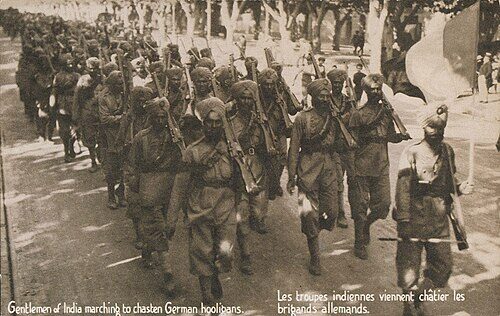
Manta Singh was a Sikh soldier.513 He was wounded at Neuve Chapelle, in France, in March 1915, and died weeks later in a hospital in Brighton, England.513 In April 1915, near Ypres in Belgium, a Sikh army unit called the 47th Sikhs lost 348 of its 444 men in one attack.514 At Gallipoli on 4 June 1915, another unit, the 14th Sikhs, lost 380 of their 514 men, killed or wounded.515,516 About 74,000 Indian Army soldiers died in the war.517 At least 8,000 of them were Sikhs.511
A hospital in a palace. In Brighton, a royal palace called the Royal Pavilion became a hospital for more than 2,300 Indian soldiers.518 It had nine kitchens, so men could eat food cooked by people of their own faith.518 It also had a gurdwara, a Sikh place of worship, in a tent.518 Sikhs and Hindus who died were cremated, or burned in a funeral fire, on the hills nearby.518 A memorial called the Chattri stands there today.518
Medals. Indian soldiers could not win Britain's highest bravery medal, the Victoria Cross, until 1911.519 Not every Singh was a Sikh. Badlu Singh, who won it in 1918, was a Hindu Jat (the Jats are a large farming community).520 The first Sikh to win it was Sepoy Ishar Singh, in 1921.521 (A sepoy is an ordinary soldier, the lowest rank.) He was a different man from the Ishar Singh of Saragarhi.521
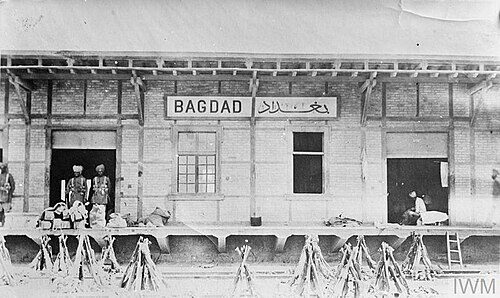
Remembering. The Neuve-Chapelle Memorial in France remembers Indian soldiers who have no known grave.517 Some of its words are carved in Gurmukhi, the letters used to write Punjabi, as well as in English, Hindi and Arabic.517 In November 2018, Britain's first full-size statue of a Sikh soldier was unveiled outside a gurdwara in Smethwick, England.522,523 It is called Lions of the Great War ("the Great War" was a name for World War I).522,523
World War II (1939–1945). More than 2 million men from India fought.524 It was the largest volunteer army in history.524 More than 87,700 people in India's forces died.517
Sikh soldiers trained in the North African desert.525 Indian divisions, big army groups of many thousands of soldiers, fought in Italy, including at Monte Cassino in 1944.526,527 When Singapore fell to Japan in February 1942, about 40,000 Indian soldiers were taken prisoner.528 In 1944, Indian and British troops defeated a Japanese army at Kohima and Imphal.529 It was a turning point of the war in Asia.529
Sikh soldiers won the Victoria Cross in Burma (today's Myanmar):
- Havildar Parkash Singh drove into heavy fire again and again in January 1943 to rescue trapped crews.530,531 (A havildar is a senior soldier who leads a small group.)
- Sepoy Nand Singh led the capture of Japanese trenches in March 1944, even though he was wounded.532
- Naik Gian Singh was also wounded.533 He charged Japanese positions alone in March 1945 and captured an anti-tank gun.533 (A naik is a soldier who leads a small team.)
Fighting the British: the INA. Mohan Singh was a Sikh captain, an army officer. He surrendered to the Japanese in Malaya (now part of Malaysia) in December 1941.534–536 Then he gathered Indian prisoners into the Indian National Army (INA) to fight British rule.534–536 The Encyclopaedia of Sikhism says most of the first volunteers were Sikhs, and that by September 1942 about 40,000 men had volunteered.534,535 They came from Indian prisoners taken across Malaya and Singapore.534 Mohan Singh came to distrust Japan, and Japan arrested him in December 1942.534 In 1943, Subhas Chandra Bose, an Indian freedom leader, took over.536
Honest history: the Japanese sent Indian prisoners to islands like New Guinea to work as laborers.528 Most of these prisoners were men who had refused to join the INA, and many died.528 Sikhs fought on both sides.
In late 1945 the British put three INA officers on trial at the Red Fort in Delhi.537,538 The three were a Hindu, Prem Sahgal; a Muslim, Shah Nawaz Khan; and a Sikh, Gurbaksh Singh Dhillon.537,538 People across India chanted Lal Qile se aayi awaaz, Sahgal, Dhillon, Shah Nawaz ("From the Red Fort comes the cry").538 The three were sentenced to be sent away for life.538,539 But after huge protests, General Claude Auchinleck freed them in January 1946.538,539 He was the British commander-in-chief in India, the head of the army there.538,539
Kala Pani.
How sure are we? You may hear that 4 out of 5 Indians whom the British hanged, or sent to the island prison of Kala Pani, were Sikhs. These numbers are said to come from Maulana Azad, a leader of the Congress party, the biggest party in India's fight for freedom.540 But this book found no record that proves them.
What we know: Government figures say 585 freedom fighters were held in the Cellular Jail in the Andaman Islands between 1909 and 1938.541,542 Of these, 398 were from Bengal, and 95 were from Punjab, the second-largest group.542 In the early years, 1909 to 1921, Punjabis were the largest group: 73 of about 130.541 These records cover only one prison and only those years, and they count people by province, not by religion.541,542 So they cannot tell us what share of everyone the British hanged or sent to Kala Pani were Sikhs. Most of the early Punjabi prisoners were Ghadar rebels, who had tried to rise up against British rule (you met them in Chapter 13).541,543 One of them, Bhan Singh, died there in 1917 after police torture.544
Defending free India (1947–1999). A hard part. Raiders from Pakistan invaded Kashmir.545,546 Then, on 27 October 1947, the 1st Battalion of the Sikh Regiment, "1 Sikh," were the first Indian troops flown into Srinagar.545,546 (A battalion is an army unit of about 800 soldiers. A regiment, like the Sikh Regiment, is a family of battalions that share a name and history.) Their commander, Lieutenant Colonel Dewan Ranjit Rai, was killed leading them.547,548 He was awarded the Maha Vir Chakra, India's second-highest military medal.547–549
Nand Singh, the Victoria Cross winner from Burma, was killed serving with 1 Sikh at Uri in December 1947.532,550 He was awarded the Maha Vir Chakra too.532,550 He was the only soldier to win both.532,550 In October 1948, Lance Naik Karam Singh of 1 Sikh was badly wounded.551 Even so, he helped hold Richhmar Gali, near Tithwal, against a heavy attack.551 (A lance naik is one step up from an ordinary soldier.) He won the Param Vir Chakra, India's highest wartime medal.552,553 He lived to 77.552,553
In the 1962 war with China, Subedar Joginder Singh of 1 Sikh held a ridge near Tongpen La, in today's Arunachal Pradesh.554 (A subedar is a senior soldier who has risen through the ranks.) According to the Indian government, his platoon, a small army group of usually about 30 soldiers, beat back two attacks.554 When a third attack came, the government says, he and his last men charged with bayonets, the blades fixed to their rifles, until they were overpowered.554 He died a prisoner, and China later returned his ashes with military honors.555,556 He received the Param Vir Chakra after his death.555,556
In 1965, Harbaksh Singh led the army's Western Command, the part of the army that covered the land from Ladakh to Punjab.557 He was a lieutenant general, one of the army's highest ranks, and came from a Sikh family near Sangrur.557
In 1971 (you met Jagjit Singh Aurora in Chapter 16), Pakistani tanks attacked the desert post of Longewala.558,559 About 120 men of a Sikh company, led by Major Kuldip Singh Chandpuri, held the post through the night of 4–5 December.558,559 The company belonged to the 23rd Punjab, a battalion of the Punjab Regiment.558,559 (A company is a smaller group inside a battalion.) At dawn, Indian Air Force jets destroyed many of the tanks.558,559 Chandpuri won the Maha Vir Chakra.558,559
How sure are we? The film Border turned the battle into a dramatic movie story.558,559 People still argue over how much credit goes to the soldiers and how much to the pilots.558,559
On 14 December 1971, Pakistani jets bombed Srinagar's air base.560,561 Flying Officer Nirmal Jit Singh Sekhon took off and fought them until he was shot down.560,561 (A flying officer is a junior officer in the air force.) He remains the Indian Air Force's only Param Vir Chakra winner.560,561
In the 1999 Kargil war, 8 Sikh fought alongside 18 Grenadiers to retake Tiger Hill on 4 July.562 (8 Sikh is the 8th Battalion of the Sikh Regiment. 18 Grenadiers is a battalion of the Grenadiers regiment.) The 8 Sikh battalion lost 35 men.563
Galwan, June 2020. A hard part. On 15 June 2020, Indian and Chinese soldiers fought in the icy Galwan Valley, in Ladakh.564,565 The valley is on a disputed border, a border the two countries disagree about.564,565 Twenty Indian soldiers were killed.564,565 It was the first time soldiers had died on that border in 45 years.566 No shots were fired.564,567 India said its soldiers carried guns but did not use them in face-offs, because of agreements from 1996 and 2005.564,567
Four of the twenty were from Punjab.565,568 Two were naib subedars (the rank just below subedar): Mandeep Singh and Satnam Singh.565,568 Two were sepoys, or ordinary soldiers: Gurtej Singh and Gurbinder Singh.565,568 Sepoy Gurtej Singh served in the 3rd Punjab, a battalion of the Punjab Regiment.569 He was awarded the Vir Chakra, a medal for bravery in war, after his death.569 His award says he kept fighting after he was seriously injured.570
How sure are we? Online posts claim that Gurtej Singh killed a dozen Chinese soldiers. So does one fact-check site, but it cited no evidence.571 This book found no official source for that.
In his village in Mansa, in Punjab, Gurtej Singh's father lit his funeral pyre after the Antim Ardas, the last prayer said for someone who has died.572
China said in February 2021 that four of its soldiers had died.573 Other estimates are higher: Indian officials, speaking without giving their names, estimated 25 to 40.573,574 Unconfirmed reports said up to 45.573,574 The two armies clashed again in December 2022, at Yangtse near Tawang.575 India said none of its soldiers were killed.575
More face-offs. Award citations are official write-ups of why a soldier won a medal. Army award citations made public in 2024 showed that Sikh soldiers had faced the Chinese army again after Galwan.576 On 7 January 2022, Chinese soldiers attacked an Indian post called Shankar Tekri.576 Sepoy Raman Singh drove them back.576 He served in the 8th Battalion of the Sikh Light Infantry, a Sikh regiment.576 (Infantry are soldiers who fight on foot.) His citation says he wounded four Chinese soldiers and took their guns.576 He was awarded the Sena Medal, an army medal, for gallantry, or bravery.576
In 2026, Indian and Chinese troops faced off again, this time at several places in Arunachal Pradesh, reportedly beginning in July.577,578 As of November 2026, no injuries had been officially reported.577,579 Many videos shared online as "new clashes" turned out to be old clips, footage from other countries, or computer fakes.578,579 The Indian Army warned people to check before sharing.578,579 That is a good habit for anyone reading the news: ask where a video really came from.
Honest history. The Sikh soldiers of both world wars were brave. They were also fighting for the British Empire, which ruled their own country.580 The empire used Indian troops to take and hold other lands, from Malaya to Africa to Mesopotamia.580 It also hired Sikhs as police in its other colonies, the lands it ruled.580 The "martial race" label from Chapter 12 was a British idea.581 It said that some peoples were born fighters. But Sikhs also used it to bargain for protection of their faith.581
A soldier's courage and whether a war was right are separate questions. You can honor the first and still ask hard questions about the second. The next chapter, about June 1984, shows why that matters.
Talk about it In this chapter, Sikhs fought for Britain, against Britain, and for India. If you could ask one of these soldiers a single question, who would it be, and what would you ask?
June 1984: The Army Storms the Harmandir Sahib Complex
In June 1984, the Indian Army stormed the Harmandir Sahib complex, the holiest place of the Sikhs.502 It wanted to remove armed militants, people who had taken up arms, from the complex.502 The militants had fortified it, turning it into a kind of fort.502 The army attacked while the complex was full of pilgrims, people who had come to pray.502
The timing. Prime Minister Indira Gandhi ordered the army to remove Bhindranwale and the armed militants from the Harmandir Sahib complex.502 (Jarnail Singh Bhindranwale was the preacher you met in Chapter 16.) The operation was called Operation Blue Star.502 It began in the first days of June, around the anniversary of Guru Arjan's martyrdom, the day Sikhs remember his death.502,582 That was one of the busiest days of the year.502,582 Thousands of ordinary pilgrims, including women and children, were inside the complex.502,582
Punjab was put under curfew, an order for everyone to stay indoors, and phones and travel were cut off.502 Journalists were sent out of the state, so almost no one outside could see what was happening.502,583
The battle. The militants' defenses were organized by Shabeg Singh, a former Indian Army general.584 He had played an important part in the 1971 war. Later he was dismissed from the army without a court martial, or military trial, a day before he was due to retire, over corruption charges.584 He fought the charges in court, and one 1984 account says a court cleared him of all of them that February.584 He had built strong defenses, and the militants fought back hard.584
During the night of 5–6 June, the army brought in tanks.502,582,585 Early on 6 June, the tanks fired their big guns at the Akal Takht, the seat of Sikh decisions, and badly wrecked it.502,582,585 Bhindranwale, Shabeg Singh and many of their followers were killed.502 The writer Khushwant Singh says the Harmandir Sahib itself was hit by more than 70 bullets.582
Two sides of the story. Major General K.S. Brar, a senior army officer, was the operation's commander on the ground.585 He says he told his soldiers again and again not to fire toward the Harmandir Sahib.585 Army officers' accounts say tanks were called in only after attacks on foot had failed and many soldiers had been killed.502
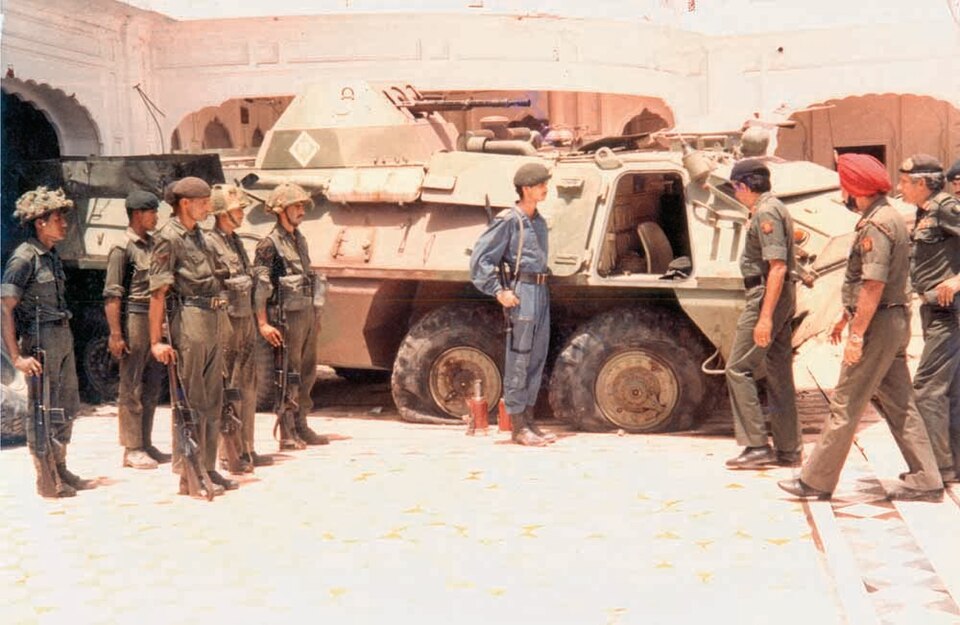
The government said the militants kept pilgrims inside as human shields, using them for protection. Others say the pilgrims were trapped because they had been allowed to gather inside without any warning of the attack.502 Critics, including the writer Khushwant Singh, say the attack was badly planned, on a day when huge crowds of pilgrims were expected.582
How many died? The Indian government's official report, its White Paper, said 83 soldiers and 493 militants and civilians died.502,586 (Civilians are people who are not fighters.) Remember who wrote that report: the same government that ordered the attack. The writer Khushwant Singh, a Member of Parliament at the time, later wrote that almost 5,000 men, women and children died.582 Brahma Chellaney, reporting for the Associated Press, was the only reporter for a foreign news agency who stayed in Amritsar.502 He reported at least 1,200 dead, including about 400 soldiers.502 The government said the number was 576, and called his reports false.502 The human-rights group Ensaaf says eyewitnesses spoke of 4,000 to 8,000.586,587 Human Rights Watch says thousands were believed killed, most of them Sikh pilgrims.588 There has never been a full, independent count.
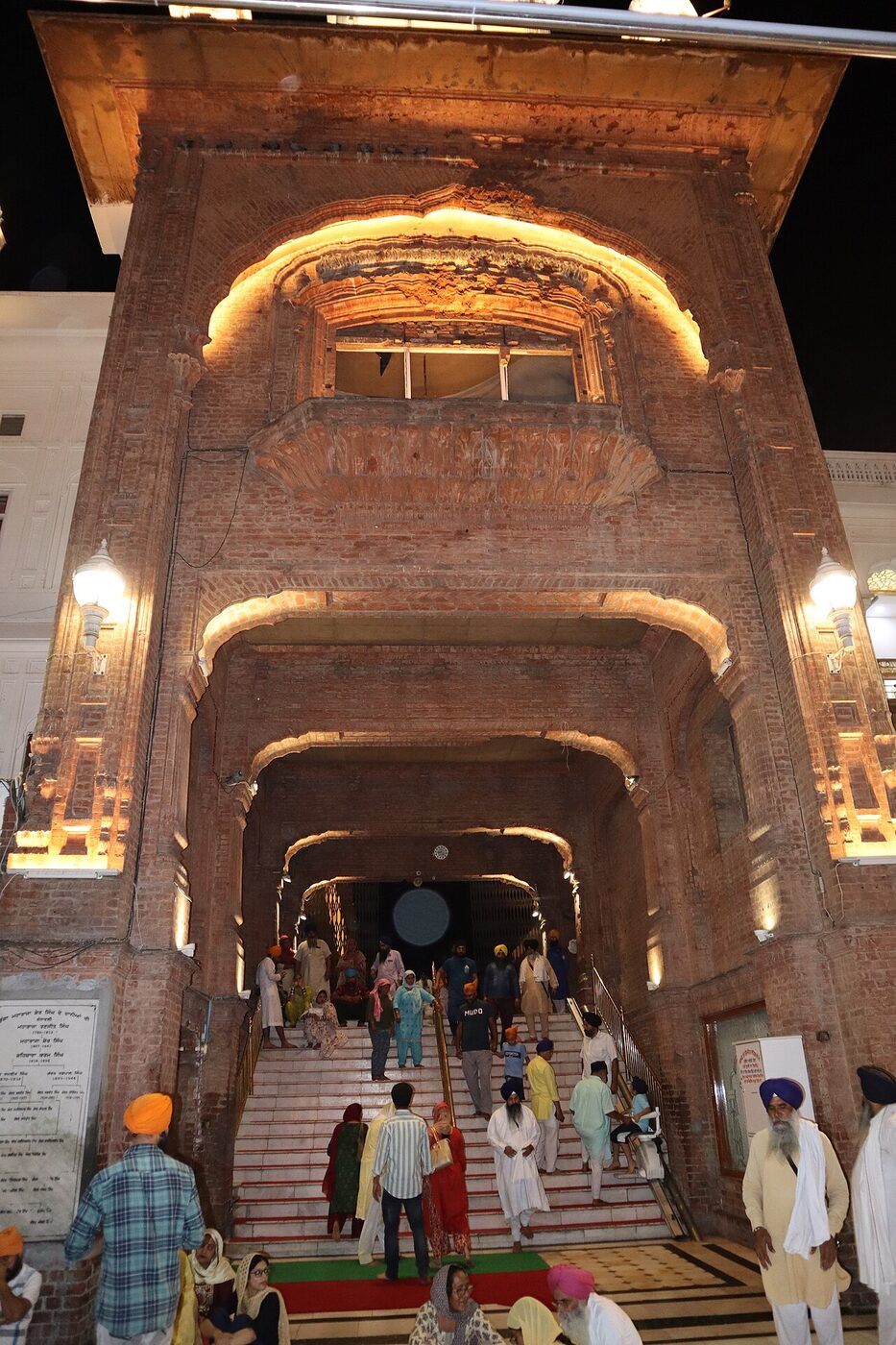
What was lost. Inside the complex stood the Sikh Reference Library. It held more than ten thousand books and hundreds of handwritten copies of the Guru Granth Sahib.589,590 It also held newspapers going back to the 1870s, and hukamnamas, letters sent out by the Gurus themselves.589,590 It was burned.589 The Toshakhana, the treasury where gifts offered over the centuries were kept, was badly damaged too.591
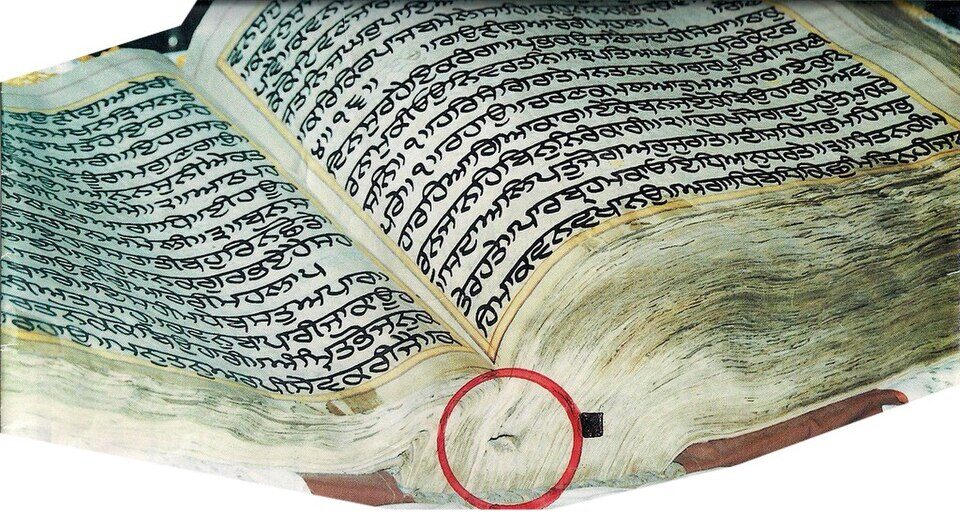
How sure are we? People still disagree about how the library burned. The government's White Paper said it caught fire during the fighting on the night of 5 June, and blamed the militants.589
But the library's head, Devinder Singh Duggal, told it differently.502 He said it was still standing on the night of 6 June, after the army had taken control, and burned the next day.502 A library worker, Hardeep Singh, said the same.592 A civil-liberties inquiry led by V. M. Tarkunde, a retired judge, also reported that it burned after the army took control.589 (Civil liberties are people's basic rights and freedoms.) The SGPC, the elected committee that runs the historic gurdwaras, says soldiers first carried much of the library away in sacks.589,590 Then, it says, the empty building was set on fire.589,590
What we know: the army did take material from the library and handed it to the CBI, India's federal police (the police of the national government).593 Some of it came back. In 2019 the SGPC counted what had been returned: 205 handwritten Guru Granth Sahibs, 807 rare handwritten books and one hukamnama.590 It said much more was still missing.590 The government says it has returned everything it held. The SGPC says it has not.589,592 More than forty years later, the question is still being argued in court.594
What many Sikhs believe: a people's memory lives in its old books, letters and buildings. Destroy them and you erase part of who that people is, and a people that loses its memory is easier to break. That is why many Sikhs count this loss among the worst things that happened in 1984, and why some call it a kind of cultural genocide. Nobody has proven that the burning was planned. But the loss is real, and much of what was lost can never be replaced.
The army also entered dozens of other gurdwaras, Sikh places of worship, across Punjab at the same time.502 In the months after, in an army operation called Woodrose, thousands of young Sikh men were detained (held by the army) and questioned, and many were tortured.595
A wound to every Sikh. Sikhs who had never supported Bhindranwale were heartbroken and furious. Khushwant Singh gave back the Padma Bhushan, the high honor India had given him.582 Many Sikhs call June 1984 the Teeja Ghallughara, the Third Massacre, after the two massacres of the 1700s.596
Soldiers who mutinied. When the news reached army camps, some Sikh soldiers mutinied: they broke army law, took weapons and set out for Amritsar.502 The biggest mutiny was at the Sikh Regimental Centre, the Sikh Regiment's home base, in Ramgarh, Bihar.502,597,598 Most of the men there were young recruits, new soldiers still in training.502,597,598 They shot dead their commander, Brigadier R.S. Puri, a senior officer.502,597,598 Most of the mutineers were stopped on the roads.502 Accounts say 55 were killed and 2,606 were captured.502
Army courts gave most of them short prison terms.599 The government later told Parliament that about 2,700 men had been charged, and that about 2,300 of them were kept in the army.599,600 One later account puts those thrown out at about 450.599 A peace accord, or agreement, in 1985 promised that "efforts will be made" to find work for those thrown out.601 Some got government jobs.600,602 But in 2019, Sikh leaders were still asking for the soldiers' records to be cleared.602 The men broke military law, and an officer was killed. Many Sikhs also remember them as young men acting out of shock, grief and anger at the attack.602
Rebuilding. Within weeks, the government had the damaged Akal Takht repaired by a private building company.156,603 Baba Santa Singh helped. He was a leader of the Nihangs, an order of Sikh warriors.156,603 Many Sikhs scorned the repair as sarkari seva, "government service," and the SGPC cast Santa Singh out of the community.156,603 In January 1986, the Damdami Taksal and militant groups called a Sarbat Khalsa.604 (The Damdami Taksal is a Sikh school of religious learning that Bhindranwale had led.) A Sarbat Khalsa is a gathering meant to speak for the whole community.604 Afterward, the government-repaired Akal Takht was pulled down. The Damdami Taksal began rebuilding it through kar seva, volunteer work.156,605
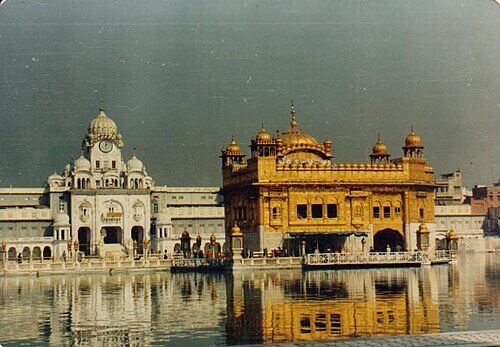
On 29 April 1986, militant leaders announced "Khalistan" (a separate Sikh country) from inside the Harmandir Sahib complex. The next day, police and commandos, specially trained fighters, stormed the complex, and in May 1988 security forces surrounded it again.606–610 The new Akal Takht was completed in 1995.156
Honest history: some of the loss came later, from Sikh hands. The beautiful old wall paintings inside the Akal Takht survived the attack. When the damaged building was pulled down in 1986 to be rebuilt through kar seva, the paintings were lost with it.156 Experts on Sikh art say today's Akal Takht has lost much of the old building's history.156 Other damaged parts of the complex have been kept on purpose, bullet marks and all, as evidence of 1984.611
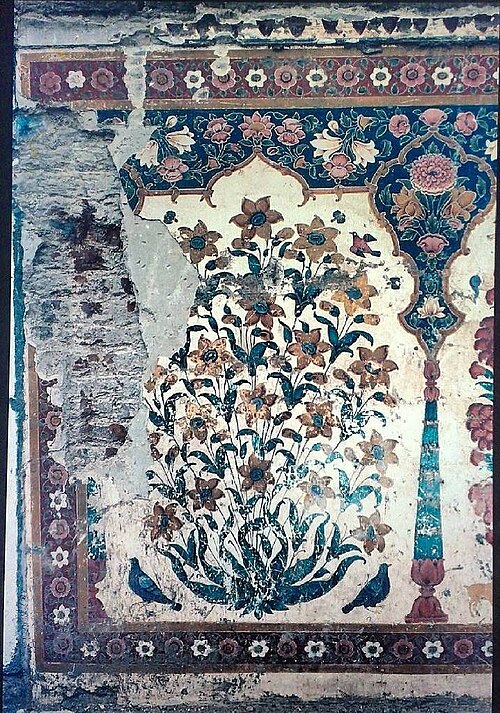
I was maybe five years old. I remember red flares going up in the night sky. At that time I thought those were bombs being launched, and I remember the loud explosion sounds. Now I think they were flares to light up the "battlefield," because they lit up the night sky. My head hurt and I was scared from the loud explosions.
I remember the curfew. It went on for days. My mom gave me Milkmaid (sweetened condensed milk). I loved it, but I think it was probably the only food.
I vaguely remember going to Darbar Sahib afterwards, when it was open. I remember an Indian Army soldier standing outside Harmandir Sahib wearing boots. It's a place of worship, and I was taught that shoes must be left outside, just like you are taught. I pointed it out to my mother, and she told me to ignore it. I remember the boots, and the smirk on the soldier's face.
I remember the kar seva. I could barely lift anything, but I do remember carrying broken bricks back and forth.
Talk about it Why do you think attacking on a holy day full of pilgrims hurt Sikhs even more than the attack itself?
November 1984: The Massacres, and the Neighbors Who Helped
For three days in November 1984, mobs hunted Sikhs through the streets of Delhi and other cities.612,613 In many places the police stood by, and some even joined in.612,613
31 October 1984. Two of Indira Gandhi's own bodyguards shot and killed her.614,615 They were Beant Singh and Satwant Singh, both Sikhs, and they did it in revenge for the attack on the Harmandir Sahib.614,615
The massacres. By that evening, crowds were attacking Sikhs in Delhi. Over the next three days, it became organized killing.612 Mobs came with iron rods, knives, clubs and fuel for fires. Some used voter lists, the official lists of who could vote and where they lived, to find which homes belonged to Sikhs.612 Sikh men and boys were dragged out, beaten, and burned alive. Women were attacked. Gurdwaras, homes and shops were set on fire.612,616 Many of the victims were poor working families in neighborhoods like Trilokpuri, Sultanpuri and Mangolpuri.612,617
Gauri Gill, “Jis Tann Lage Soee Jane”: portraits of survivors of November 1984
Photographs by Gauri Gill of survivors in Trilokpuri, Tilak Vihar and other Delhi neighborhoods, taken in 2005 and 2009. They are copyrighted, so they are linked, not copied. In a printed copy, scan the code with a phone to see them.
https://kafila.online/2014/11/01/jis-tann-lage-soee-jane-delhi-november-1984-30-years-after-gauri-gill/
What we know: official commissions, groups set up by the government to investigate, later found that Delhi's police failed to protect Sikhs.612,613 They found that in many places, police had even taken away the weapons Sikhs could have used to defend themselves.612,613 The Misra Commission found that if the army had been sent into the streets properly, at least 2,000 lives could have been saved.613 A later committee named 72 police officers for possible punishment.613 Not one of them was dismissed.618,619
Witnesses named local leaders of the ruling Congress party, the party in power, as leading mobs.613 The Misra Commission found that local Congress leaders and workers had stirred up or helped the mobs. But it cleared the party's senior leaders.613 A later inquiry, the Nanavati Commission, found that the attacks were organized.618 It said a senior Congress leader, Jagdish Tytler, had "very probably" had a hand in organizing attacks on Sikhs.612,620 Indira Gandhi's son, Rajiv Gandhi, became the new Prime Minister.621 A few weeks later, he said that when a big tree falls, the earth shakes.621 Many Sikhs have never forgotten those words.621
How many died? The government's official count is 2,733 killed in Delhi and about 3,325 across India.588,618 That count came from a committee led by a top Delhi official, set up on the Misra Commission's advice.613,618 At that time the Congress party still ran India's government. Witnesses had named local Congress leaders as leading the mobs.613 Human Rights Watch says civil-rights groups think the official count is too low.619 Human rights groups put the Delhi number nearer to 4,000.618 Some writers and reference books give much higher totals for all of India, from 8,000 to 17,000. These are estimates, not counts.612 Many Sikhs, and many human rights groups, call it a genocide or a pogrom, an organized massacre, and not a "riot."612 (A genocide is an attempt to wipe out a people, or part of a people, because of who they are.) Many survivors were moved to a new area of Delhi, Tilak Vihar, that people still call the Widows' Colony.617
The neighbors who helped. In the middle of all this, many Hindu and Muslim neighbors risked their own lives. They hid Sikh families in their homes, stood between the mobs and Sikh houses, and pulled Sikhs out of danger. Even in Trilokpuri, one of the worst-hit neighborhoods, a report by two Indian civil-rights groups, written in November 1984, roughly estimated that Hindus there saved at least 600 Sikhs.616,622 Some Sikh families survived only because of them. Remembering these neighbors is part of telling the truth too.
Justice, very slowly. Over the years India set up four commissions, nine committees and two special investigation teams.618 Out of 587 police cases, only 25 ended with anyone being found guilty.618 By 2014, only two Congress leaders had been found guilty: a former city councillor and a former lawmaker.619 The first conviction of a high-profile leader came in 2018, 34 years later.623
- In 2005, Dr. Manmohan Singh, India's first Sikh Prime Minister, stood up in Parliament and apologized "to not only the Sikh community but also to the nation."624
- In 2018, 34 years later, Sajjan Kumar, a former Congress Member of Parliament, was sentenced to life in prison.625 It was for his role in the killing of five Sikhs from one family.625
- In 2025, Sajjan Kumar received a second life sentence, for the murder of a father and son, Jaswant Singh and Tarundeep Singh.625
- Sajjan Kumar was cleared in some other cases.625,626 In one, in January 2026, a court said there was no reliable evidence, after so many years, that he had been at the scene.625,626
- Sajjan Kumar died in August 2026 while still serving his life sentence.625,627
For most families, no one was ever punished.618
Talk about it Why does it matter to remember the neighbors who saved Sikh lives, as well as the people who took them?
The Dark Decade
For more than ten years after 1984, Punjab lived through an armed uprising.588 The government fought it with a huge campaign of state violence, meaning violence by the government's own forces.588 Both sides killed innocent people. Human rights groups say the government's forces did it systematically, as a policy.588 Human Rights Watch says they detained, tortured, executed and "disappeared" tens of thousands of Sikhs.588 (To disappear someone means to take them away in secret, so they are never seen again.)
Why young men picked up guns. The Golden Temple (Harmandir Sahib) attack caused tremendous outrage among Sikhs, including many who had never supported the militants.588 Then came the massacres of November 1984, and for years no one was punished.618 Some young Sikhs joined armed groups fighting for Khalistan, a separate Sikh country.588 What Sikhs remember: many Sikhs remember that these young men had decided India would never give them justice. They also remember that many more joined after police tortured or killed someone in their own family.
A well-known Hindi film from 1996, Maachis, by the poet and director Gulzar, tells a made-up story like this.628 In it, a young man's innocent friend is tortured by the police. The courts give no justice, and the young man joins the militants.628
What to call them. The government called the militants terrorists. Some Sikhs called them freedom fighters, and some still honor them as martyrs.629 Words like these are chosen to make you feel a certain way. So this book uses a plainer word, militants: people who took up arms.
The crackdown. From 1987 to 1992, Punjab was ruled directly from Delhi, by India's national government.588 In November 1991 the army launched a new operation in Punjab, and the killings grew sharply.630 Under the police chief K.P.S. Gill, police were given cash rewards for capturing and killing militants.588,631 This led to more disappearances and killings.588,631 Police picked up young men, tortured them, and killed many in fake "encounters".588,632 In a fake encounter, police shot a prisoner and then said he had died in a gun battle.588,632
A study of these "encounters" found that most had a single person killed, and very few police were killed.630 The researchers say this pattern, along with what witnesses told them, shows that many of the gun battles were faked.630 Police also tortured the parents, wives and brothers of the young men they were hunting, and destroyed their crops, animals and homes.588 By far most of the people killed and disappeared were young Sikh men, between 18 and 45.630
Some police officers also kept secret helpers called "cats," former militants who worked for them in disguise.633 Some cats were later caught up in crimes for the officers who ran them: extortion (forcing people to pay money by threatening them), land grabbing and drug smuggling.633
The disappeared. Police often denied they had ever arrested the young men.632 They secretly cremated the bodies as "unidentified," so families never learned what happened.632 India's federal police, the CBI, confirmed 2,097 illegal cremations at just three cremation grounds in one district, Amritsar. India's Supreme Court called it "flagrant violations of human rights on a mass scale."634 In 2017, a Punjab human rights group said it had identified 8,257 people who disappeared between 1980 and 1995.635 Human Rights Watch reported that, even years later, the government had not successfully prosecuted anyone for these abuses.631 (To prosecute someone is to put them on trial in court.)
An election most Sikhs refused. In February 1992, Punjab voted for a new government. Most Sikh political parties boycotted, or refused to take part in, the election, and militant groups threatened anyone who took part.636,637 Officially, fewer than one voter in four voted (23.8 percent).637,638 Some reports put it closer to one in five.637,638 In the villages, fewer than one in six voted.637,638
The Congress party won, and Beant Singh became chief minister, the head of Punjab's government.637 He was a different man from the bodyguard who killed Indira Gandhi. An opposition member of Parliament, from a party not in power, said the vote seemed "aimed at foisting a puppet government" on Punjab.636 (A puppet government is one that is secretly controlled by someone else.) After 1992, Beant Singh was chief minister and K.P.S. Gill ran the police.588,637 The killings and disappearances had once been mostly in Amritsar district.630 Now they spread to almost every district of Punjab.630
When militants killed innocent people. Armed groups killed police officers and politicians. They also killed many ordinary people. Among them were Hindu bus passengers, journalists, government workers, and many Sikhs who disagreed with them.588,639,640 Some of their bombs killed crowds of civilians.588,639,640 In July 1985, the Akali leader Sant Harchand Singh Longowal signed a peace agreement with Prime Minister Rajiv Gandhi.641,642 (The Akali Dal is a Sikh political party.) Less than a month later, militants who opposed the agreement shot him dead.641,642
The deadliest attack was far from Punjab. On 23 June 1985, a bomb exploded on Air India Flight 182 over the Atlantic Ocean, near Ireland. All 329 people on board were killed, 268 of them Canadian citizens and more than 80 of them children.643 It is still the worst terrorist attack in Canada's history.644 Canadian police believed the plot was led by Talwinder Singh Parmar.645–647 He was a Sikh militant leader living in Canada, and he headed a group called Babbar Khalsa.645–647 Only one man was ever convicted, or found guilty in court: a man who helped make the bombs.643,645 Two others were found not guilty in 2005.643,645
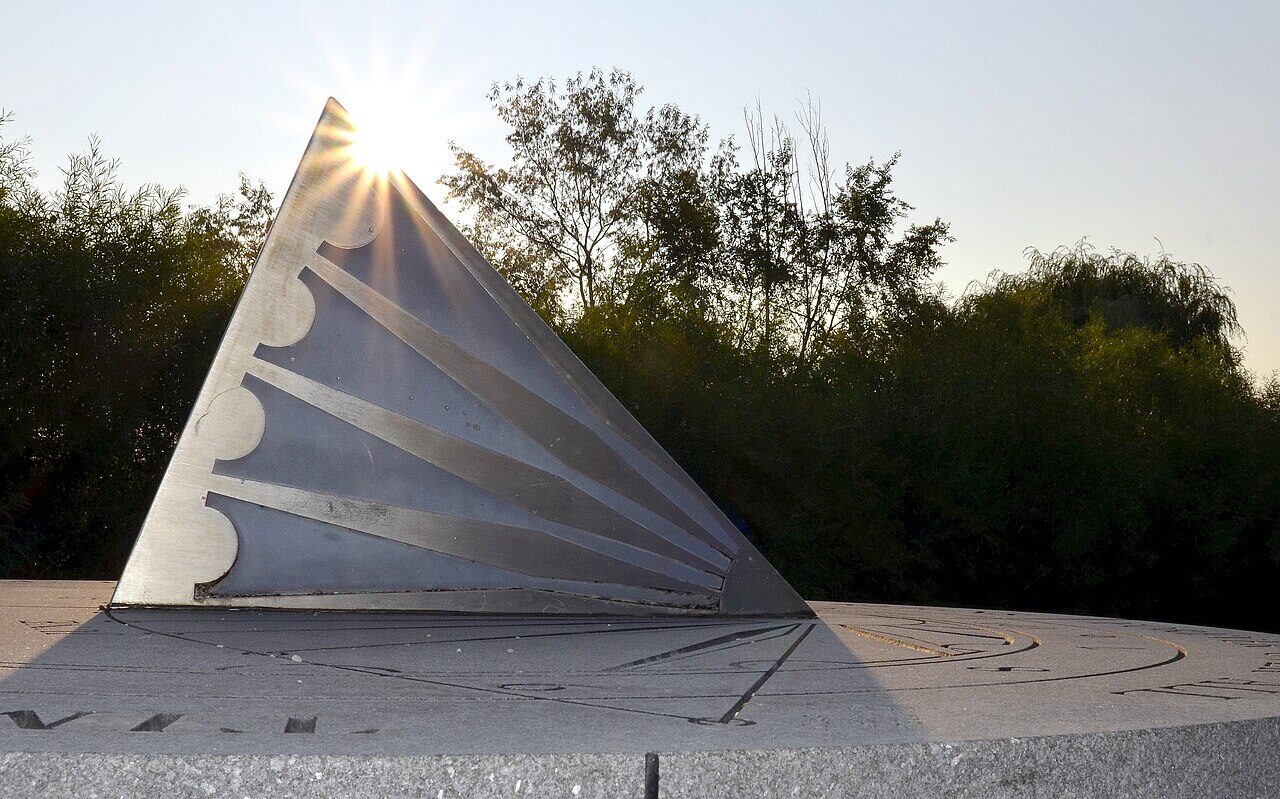
Beant Singh's death. On 31 August 1995, a former police constable named Dilawar Singh blew himself up beside Beant Singh outside the government offices in Chandigarh.629 The blast killed Beant Singh.629 (A constable is an ordinary police officer.) Seventeen other people died with him.648
In 2012 the Akal Takht declared Dilawar Singh a Qaumi Shaheed, a martyr of the community.629 In 2022 the SGPC hung his portrait in the Sikh museum at the Golden Temple.629 The SGPC said he had "put an end to the atrocities" against Sikhs.629 (Atrocities are acts of terrible cruelty.) A former SGPC official said that murder is "condemnable," but that "why it happened is worth pondering over."629 The seventeen others who died that day had families too, and they should be remembered as well.
Jaswant Singh Khalra. Jaswant Singh Khalra was a bank director in Amritsar.649,650 He was also a leader of the human rights wing of the Akali Dal, a Sikh political party.649,650 While searching for missing friends, he started looking through the city's cremation records. He found that police had brought in thousands of bodies, labeled them "unidentified," and cremated them in secret.650,651
In January 1995 he made the records public.651 On the morning of 6 September 1995, Punjab Police officers took him from outside his own home.649,651 They held and tortured him for nearly two months, then killed him and threw his body into a canal.651
What we know: India's Supreme Court ordered an investigation.651 The Central Bureau of Investigation (the CBI) confirmed 2,097 illegal cremations at just three cremation grounds in one district, Amritsar.651 In 2005, six police officers were convicted for kidnapping and killing Khalra.649,652 In 2011, the Supreme Court upheld, or kept in place, life sentences for four of them.649,652 But the most senior police officers were never put on trial.632,652 At the trial, a former special police officer spoke about K.P.S. Gill, the state's police chief. He said he saw Gill go into the room where Khalra was being held, a few days before Khalra was killed.653 Gill was never charged, and he died in 2017 without facing trial.651,652 His wife, Paramjit Kaur Khalra, kept fighting for justice for decades.649,651
In July 2026, a film about Khalra's life, Satluj, starring Diljit Dosanjh, was finally released.650 It had waited nearly three years for approval from India's film censors, who objected to how it showed the Punjab Police.650 (Film censors are officials who decide whether a film may be shown.) Two days after its release, it was taken off the streaming service in India.650
How many died? The government's official count says more than 20,000 people were killed in the conflict.588 By that count, about 11,700 were civilians, 1,700 were police and 7,900 were militants.588 The South Asia Terrorism Portal blames militants for almost all of those civilian deaths.654,655 This portal is the website of an institute set up and led by K.P.S. Gill, the former Punjab police chief.656,657 Human Rights Watch says these numbers are disputed.588 It says many more people are still missing, suspected victims of disappearances by security forces.588
The official count was kept by the same government whose forces were doing much of the killing.588 Human rights researchers say many reported "encounters," in which the dead were usually listed as militants, were faked.630 By the mid-1990s, the armed uprising had been crushed.654
A Sikh way to see it. The Gurus taught that you may use force only to protect the innocent, never to harm them. Many Sikhs say the militants who killed innocent people broke that teaching. They also say the police and soldiers who tortured, killed and disappeared thousands broke it on a far greater scale. Those police and soldiers, they say, had the full power of the government behind them, and almost none of them were ever punished. Both must be remembered honestly.
It was brutal and scary, although for the most part I was insulated. Much later, when I left Punjab and went to IIT, some of my professors sympathized with me because I came from a brutalized place. But to me it was just normal. I guess if you grow up like that, it's normal to you.
Once we were visiting my father's village, and we were leaving really early in the morning, around 4 or 5 am, to get home. As we pulled out of the house, there was a truck coming down the road. My brother, who was driving, stopped the car and turned off the headlights, because he didn't want to blind the other driver. Immediately the truck stopped, and about a dozen army soldiers jumped out with their guns pointed at us. Nothing happened, but it came pretty close.
My dad was a professor in a medical college, but for good or bad he loved farming. He would drag us out during school breaks to work on our farmland. It was a hobby to him, and he always lost money. When I was in high school, we were working in the fields one evening. Militants hid in the farms away from the villages, and police encounters happened there. I saw a helicopter fly over our farmland. We were in the trees, and the car was parked on the dirt lane. Fifteen minutes later, dozens of police jeeps and army trucks had surrounded the entire farm area, with guns pointed at us: just three kids, my mom and my dad. I still remember seeing my dad with his arms up, running and shouting at them not to fire. Another close call.
But my teenage years, from 1990 to 1998, were happy and uneventful. I felt safe, and I would ride around town by myself, even though it was in the middle of the crackdown. It felt normal to me.
Talk about it Jaswant Singh Khalra fought with records and the truth, not with weapons. Why was that so dangerous to people who had done wrong?
Sikhs in Your World (1995–2026)
Sikhs in America: Hate, Courage and Seva
Sikh Americans have faced hatred because of how they look, and have answered it, again and again, with courage and service.
A bigger community. In 1965, a new law ended old limits on immigrants from countries like India.658 (Immigrants are people who move to a new country.) After that, many more Sikh families came to the United States.658 Today there are hundreds of thousands of Sikhs in the U.S., and California has the most of all.659
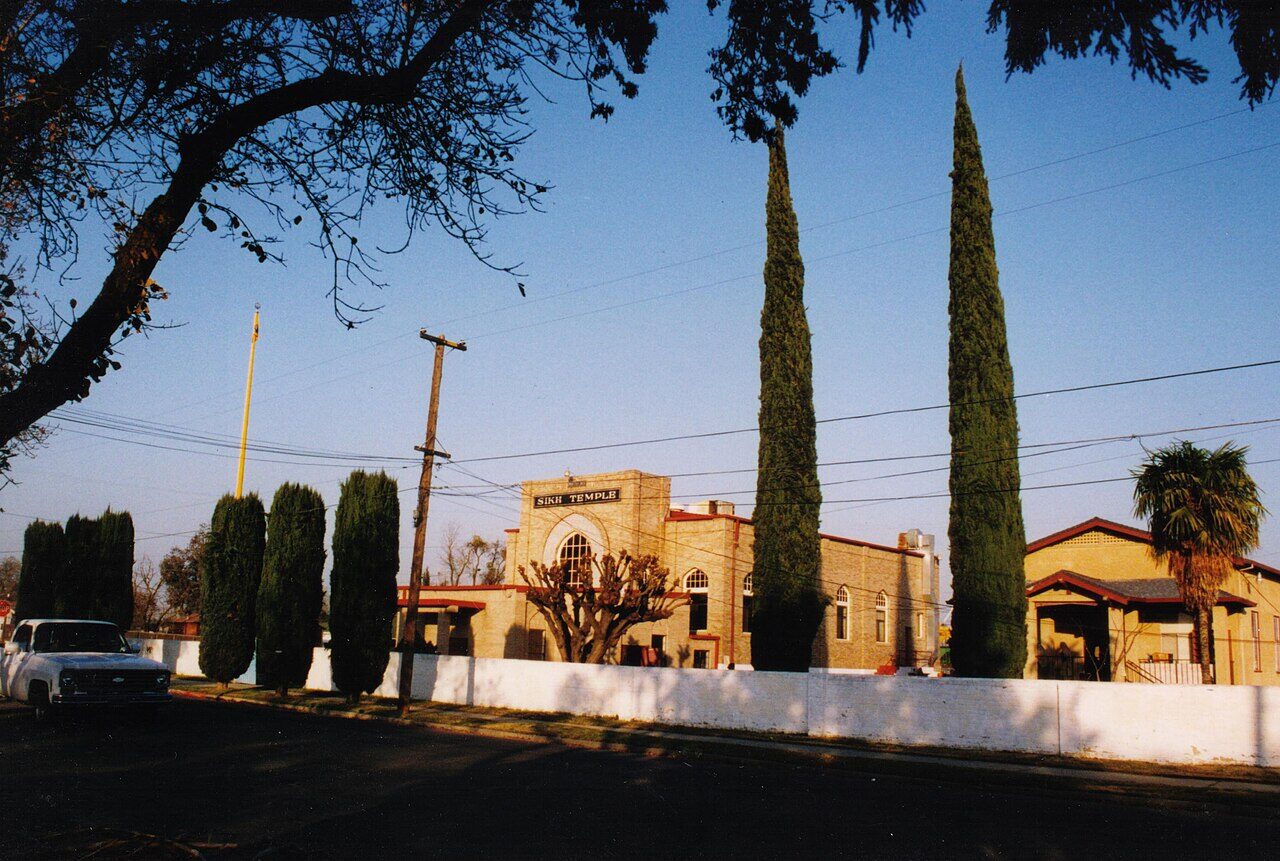
Balbir Singh Sodhi, 2001. After the terrorist attacks of 11 September 2001, some Americans who knew nothing about Sikhs saw turbans and beards and assumed the worst.660 On 15 September 2001, Balbir Singh Sodhi was planting flowers outside his gas station in Mesa, Arizona.660 A man shot and killed him because of how he looked.660 He is widely remembered as the first person murdered in the wave of hate that followed 9/11.660
Years later, Balbir's brother, Rana Singh Sodhi, spoke with the man who killed Balbir. The man said he was sorry. Rana chose to forgive him, and spent years teaching Americans about Sikhs.660
Oak Creek, 2012. On Sunday morning, 5 August 2012, people were cooking langar, the free community meal, at the gurdwara in Oak Creek, Wisconsin.661 A white supremacist walked in and opened fire.661 (A white supremacist is someone who believes white people are better than people of other races.) He killed six people.661,662 One was Satwant Singh Kaleka, the gurdwara's president, who fought him with only a small knife.661,662 The others were Paramjit Kaur, Prakash Singh, Sita Singh, Ranjit Singh and Suveg Singh.661,662 A police officer was badly wounded.661 Baba Punjab Singh was paralyzed, unable to move his body.661 He died of his injuries in 2020, the seventh victim.661
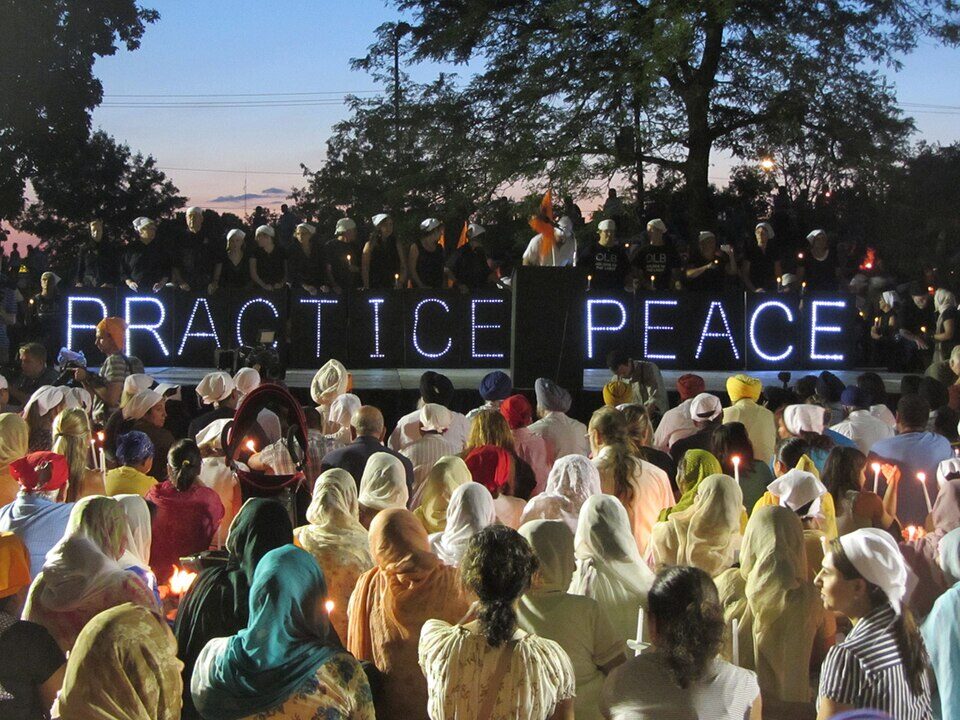
What happened next is the Sikh story in miniature, a small picture of the whole. Satwant Singh's son, Pardeep Kaleka, and Pardeep's brother started a group called Serve 2 Unite. A former white supremacist joined them, and together they teach young people to reject hate.663 Every year, the Oak Creek community holds a run to remember the victims, called the Chardi Kala (rising spirits) run.664
Seva everywhere. When disaster strikes, Sikhs cook. During the COVID-19 pandemic, gurdwaras across America cooked thousands of meals for health care workers, police officers and families in need.665
Turbans in uniform. Sikhs have served in the U.S. military since World War I.666,667 In the early 1980s, though, the Army changed its rules, and new Sikh recruits had to cut their hair and shave.667 In 2009, Captain Kamaljeet Singh Kalsi, an Army doctor, won permission to serve with his turban and beard.668 In 2016, Captain Simratpal Singh sued the Army, with lawyers from the Sikh Coalition, and won permission too.667,669 He was a graduate of West Point, the Army's college for officers, and had earned a Bronze Star, a U.S. military medal, in Afghanistan.667,669
In January 2017, the Army changed its policy so that Sikh soldiers could get permission more easily.667,670 In 2022, a federal appeals court ordered the Marines to let two Sikh recruits go through boot camp with their uncut hair and beards.671 (Boot camp is the first training for new recruits.) The order was to last while their case continued.671 In 2023, Jaskirat Singh became the first known Sikh to finish Marine boot camp with his articles of faith.670 (Articles of faith are the things a Sikh keeps or wears for their faith, such as uncut hair.)
That fight is not over. In 2025 and 2026, Defense Secretary Pete Hegseth, the head of the U.S. Department of Defense, ordered strict new rules on beards.672,673 Every service member who already had a religious exception must have it reviewed again.673,674 (A religious exception is permission to keep a beard because of one's faith.) They must also give sworn statements about their beliefs, statements they swear are true.673,674
Commanders must also weigh things like gas masks, helmets and upcoming deployments, times when troops are sent on missions.673,674 Sikh groups have pushed back, with help from members of Congress.674,675 They say they are prepared to fight for any Sikh soldier who is wrongly turned down.674,675
Firsts. Sikh Americans have become judges, mayors, police officers, doctors, business founders and leaders in more than one political party. In 2018, Gurbir Grewal became the first Sikh state attorney general, a state's top lawyer, in America.676 He served in New Jersey.676 The same year, Ravi Bhalla became the first Sikh mayor of Hoboken, New Jersey.677 Harmeet Dhillon, a Sikh American lawyer, led the Civil Rights Division at the U.S. Department of Justice from 2025.678 She stepped down in November 2026.678
Talk about it If a classmate asked, "Why do Sikhs wear turbans?" or "What's a gurdwara?", what would you say?
The World You Are Growing Up In
The Sikh story is still being written, and some of it is happening in the news right now.
A road to Kartarpur, 2019. Guru Nanak spent his last years at Kartarpur, where Gurdwara Darbar Sahib stands.679 For 72 years after Partition, when Punjab was split between India and Pakistan, the gurdwara stood less than 5 kilometers inside Pakistan.679 Many Sikhs in India could only look at it from across the border, some through binoculars on a viewing platform.680 In November 2019, for Guru Nanak's 550th birthday, India and Pakistan opened the Kartarpur Corridor.679,681 It is a short road that let Indian pilgrims cross without a visa, the paper that usually gives permission to enter another country.679,681
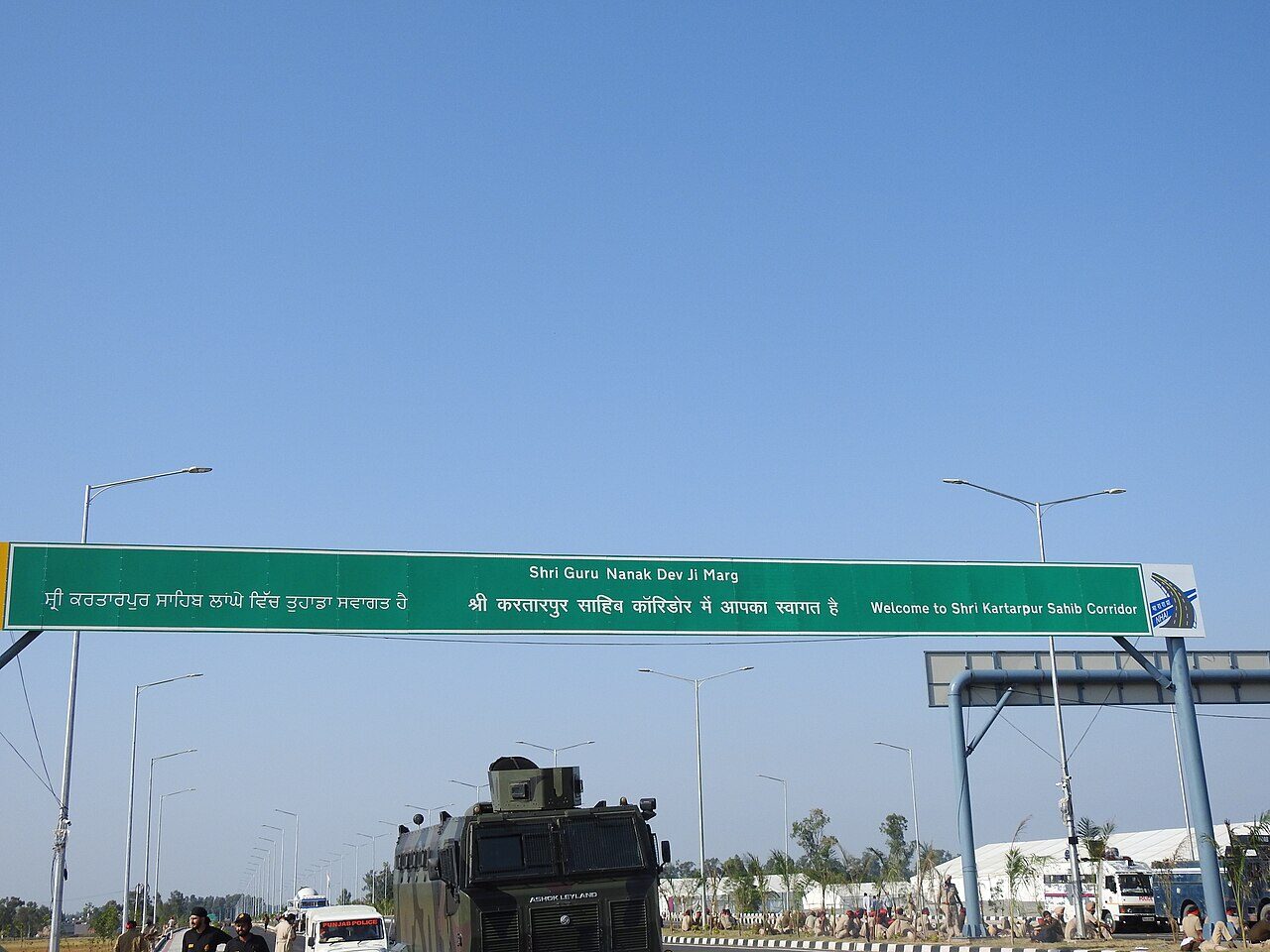
The road did not stay open. India closed the corridor in May 2025, during a military clash with Pakistan, and as of November 2026 it is still closed. India says it is for security reasons.681–683 Pakistan's government says it is ready to welcome pilgrims again.683,684
The farmers' protest, 2020–2021. In September 2020, India's Parliament passed three new farm laws. The government said the laws would give farmers more freedom to sell their crops.685 Farmers feared the laws would end the guaranteed prices and markets they depended on.685,686 Most of these farmers came from Punjab, a state where most people are Sikh, and from Haryana.685,686 From November 2020, they drove their tractors to the edges of Delhi.686,687 They camped on the highways for a whole year, through a freezing winter, a burning summer and a pandemic.686,687
They ran giant langars that fed everyone who came, even the police.688 Farmers' groups counted more than 700 protesters who died during the long protest.689 The government said it had no record of the deaths.689
There were dark moments too. On 26 January 2021, some protesters clashed with police, broke into Delhi's Red Fort and raised a Sikh flag there.690
In October 2021, a group of Nihangs, members of an order of Sikh warriors, killed a poor laborer, Lakhbir Singh, at the protest site.691 They accused him of disrespecting a holy book. The farmers' leaders condemned the killing, saying it was wrong.691 But most of the protest stayed peaceful. In November 2021, the government cancelled all three laws.687
Oxygen langar. In 2021, during a terrible wave of COVID-19 in India, gurdwaras in and around Delhi set up oxygen langar, giving free oxygen to patients who needed it.692
Hard news from abroad. Some of the news about Sikhs in recent years is about violence against Sikh activists who campaign for Khalistan, a separate Sikh country. (Activists are people who campaign for a cause.) Here are the facts as of November 2026.
Canada. Hardeep Singh Nijjar was the president of a gurdwara in Surrey, British Columbia, in Canada. He also campaigned for Khalistan.693,694 On 18 June 2023, he was shot dead in the gurdwara's parking lot.693,694
What we know: India's government had called Nijjar a terrorist, which he denied.693,695 Four Indian men are charged with his murder. Their trial is expected to start in 2027.694,696 In July 2026, the United States charged Lawrence Bishnoi, a jailed gang leader, and his deputy with ordering the killing.695
How sure are we? It is not yet settled whether India's government was involved. Here is who has said what:
- In September 2023, Canada's Prime Minister said there were credible allegations linking agents of India's government to the killing.693,694 (Credible allegations are serious, believable claims that have not been proven.)
- India strongly denied it, and both countries expelled diplomats, sending home the officials who represent the other country.693,694
- In 2024, Canada's police said Indian government agents had worked with a criminal gang led by Lawrence Bishnoi.697
- In July 2026, after the U.S. charges, a senior Canadian police official said the investigation into Bishnoi's gang had found no evidence linking India's government.696,697
- But Canada says its own investigation of the killing is still open.696,697
The full truth is still being decided in court.
New York. Gurpatwant Singh Pannun is an American citizen and a Khalistan campaigner.698 U.S. prosecutors, the government lawyers who bring criminal cases, say a man working for India's government, Vikash Yadav, directed a plot to kill Pannun in New York City.698 India's government calls Pannun a terrorist and has banned his group, Sikhs for Justice.699 The plot was stopped because the "hitman" was really an undercover U.S. agent.698 (A hitman is someone paid to kill. An undercover agent secretly works for the police.) In February 2026, an Indian man named Nikhil Gupta pleaded guilty to his part in the plot.698,700 He is due to be sentenced on 20 November 2026.698,700
Yadav, a former Indian intelligence officer, has been charged in the U.S. but not arrested on those charges.698,701 (An intelligence officer works for a country's spy service.) India's government said such a plot was "contrary to government policy," meaning it was not something the government allowed.701,702 An Indian government panel recommended legal action against one person.701,702
Sikhs, like any people, disagree with each other about Khalistan. Some support it, many do not. In a large survey in 2019 and 2020, 95 out of 100 Sikhs living in India said they were proud to be Indian.703,704 The survey asked about pride in India, not about Khalistan, and it did not include Sikhs living in other countries.704 But a simple rule holds no matter what you think: no one should be killed for what they believe or say.
2025: floods and remembering. In late August 2025, Punjab suffered its worst floods since 1988. More than 1,400 villages went underwater, and huge areas of farmland were flooded.705 Sikh charities such as Khalsa Aid brought food, clean water, medicine and animal feed to the flooded villages.705 That November, Sikhs marked 350 years since Guru Tegh Bahadur's martyrdom.195 In Srinagar, Kashmiri Pandit (Hindu) families joined in; one newspaper counted more than 400 families (Chapter 5 tells what Sikhs remember about him and the Hindus of Kashmir).195,706
Talk about it The farmers at Delhi fed even the police who were blocking them. Why do you think they did that?
Your Place in the Story
You have just read 557 years of history, and you are part of the next page.
Four hundred years, never broken. From Guru Nanak's birth in 1469 to 2026 is 557 years. For the first 137 of those years, the young Sikh community grew mostly in peace. Then, in 1606, Guru Arjan was killed. In the four hundred years since, Sikhs have been hunted, attacked or betrayed again and again by people with far more power. Here are the biggest of those times, and how Sikhs answered.
| When | Who held the power | What happened to Sikhs | How Sikhs answered |
|---|---|---|---|
| 1606 | Emperor Jahangir | Guru Arjan arrested and killed in Lahore128 | Guru Hargobind took up two swords and built the Akal Takht (Chapters 3–4)156 |
| 1675 | Emperor Aurangzeb | Guru Tegh Bahadur beheaded in Delhi14 | Guru Gobind Singh created the Khalsa in 1699 (Chapters 5–6)212 |
| 1704–05 | Wazir Khan of Sirhind, the armies of the Mughal emperors, and hill kings | Anandpur besieged; the Guru's four sons and his mother died17,221 | The Forty of Muktsar; the Guru Granth Sahib became the Guru (Chapter 7)239 |
| 1716 | The Mughal emperor in Delhi | Banda Singh and hundreds of Sikhs executed260,272 | Sikhs hid in forests and deserts, and regrouped (Chapters 8–9)273 |
| 1720s–1750s | Mughal governors of Lahore | Prices on Sikh heads; Bhai Mani Singh and Bhai Taru Singh killed; the Small Massacre; women and children in the Lahore prison274,275,292 | The Dal Khalsa (the army of the Khalsa) and the misls (Sikh groups, each led by a chief); two riders saved Harmandir Sahib's honor (Chapters 9–10)273,287 |
| 1750s–1760s | Ahmad Shah Abdali, king of Afghanistan | The Great Massacre of 1762; Harmandir Sahib blown up246,298 | Rebuilt it, and took Lahore in 1765 (Chapters 9–10)133 |
| 1849–1947 | The British Empire | The Sikh kingdom taken; Jallianwala Bagh; police beatings of peaceful marchers at Guru ka Bagh342,423,434 | Peaceful morchas (protest campaigns) won back the gurdwaras (Chapters 11–14)443 |
| 1947 | Partition, as the British left | Punjab cut in two; Sikhs lost homes, land and Nankana Sahib463 | Started over, and pray in every Ardas to reach the lost gurdwaras (Chapter 15 and The Ardas)707 |
| 1975–77 | Prime Minister Indira Gandhi's Emergency | Opponents of the government jailed across India492 | Tens of thousands of Akalis (members of the Akali Dal party) courted arrest: they offered themselves for arrest (Chapter 16)493,496 |
| 1984 | The Indian government; mobs in Delhi | June: the army attack on Harmandir Sahib. November: the massacres of Sikhs502,612 | Neighbors hid Sikhs; Sikhs rebuilt the Akal Takht with volunteer work (Chapters 18–19)156,616 |
| 1984–95 | Punjab police and security forces, and armed militants | Thousands disappeared or killed in fake encounters (killings made to look like gunfights)630,631; militants also killed many630,631 | Jaswant Singh Khalra counted the disappeared (Chapter 20)649 |
| 2001–today | Hate in America | Balbir Singh Sodhi killed in 2001; the Oak Creek gurdwara attacked in 2012660,661 | Courage, seva (selfless service) and forgiveness (Chapter 21)662 |
A map of the hard years. Here is another way to see it. Each square below is one year, from Guru Nanak's birth in 1469 to 2026.
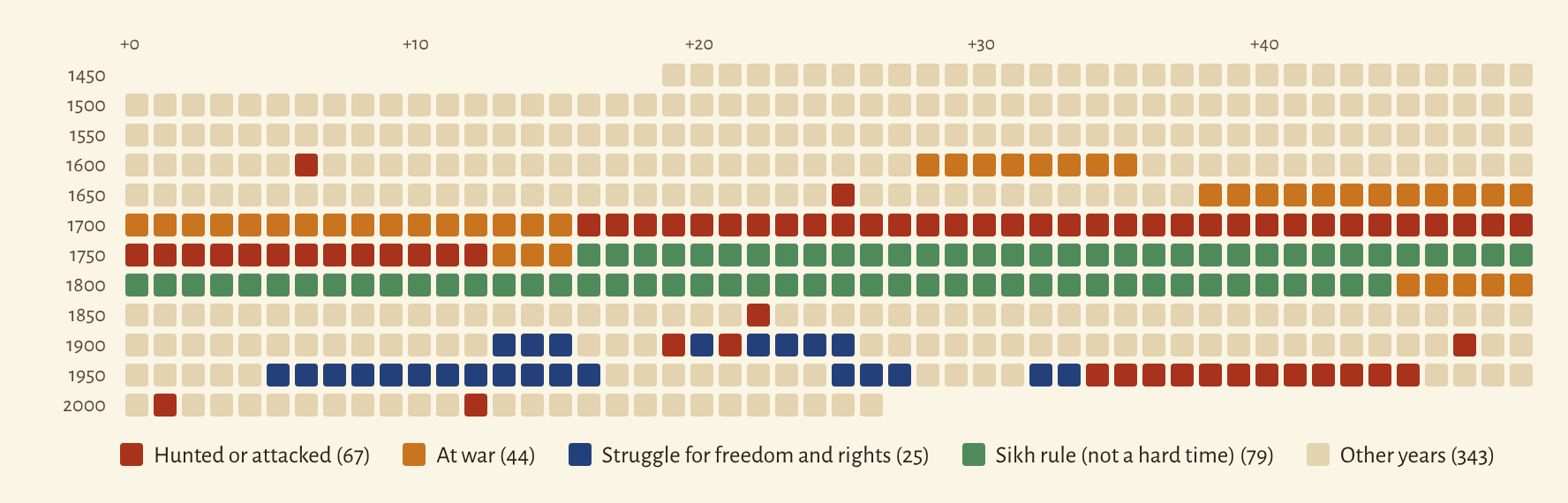
How we counted. A square is colored if, in that year, this book tells of Sikhs being hunted or attacked, or at war. It is also colored if this book tells of Sikhs in a big struggle for their freedom or rights that year, peaceful or armed. The green squares are not hard years. They show the years Sikhs ruled Punjab. That time ran from the misls until the wars with the British that ended the Sikh kingdom.
Some of these are judgment calls. For example, every year from 1688 to 1715 is counted as a war year, though not every one of them had a battle. The years 1763 to 1765, when Sikhs went on the attack and took Lahore, count as war years. Wars that Sikh soldiers fought in British or Indian armies (Chapter 17) are not counted. The Sikh kingdom's own wars of conquest, fought to win new land, are not counted either. But its two wars against the British (1845–49), which ended the kingdom, are counted.
Also not counted are a few single attacks, like Bellingham in 1907 or Amritsar in 1978. And the fight for justice for 1984, which still goes on, is not counted. Other people might count differently. Counted this way, about 136 of the years from 1606 to 2026 were hard years, roughly one in three.
Again and again, people far stronger than the Sikhs tried to break them. Sometimes Sikhs fought back with swords, and sometimes with peaceful protest. Many times they lost. But even after living through so much pain and suffering, the Sikh spirit was not broken. The faith survived, and Sikhs thrived. They kept the langar fires burning, and in every Ardas they kept praying for sarbat da bhala, the good of all, even of the people who hurt them. Today there are about 25 to 30 million Sikhs around the world.659 Every Ardas ends by asking for chardi kala, rising spirits (see "The Ardas" near the end of the book). In the author's words, Sikhs "will keep thriving as long as Sikhs stay in chardi kala."
Two more things are true. Not everyone with power was an enemy, and in many of these stories someone of another faith risked their life to help Sikhs (Chapters 7 and 19).231,616 And when Sikhs held power themselves, they did wrong too (Chapter 10).322
What never changed. Through every chapter, the same things kept showing up:
- Langar. From Guru Nanak's fields at Kartarpur to the highways outside Delhi in 2021, Sikhs fed whoever came, friend or stranger.18,688
- Standing up for others. Sikhs remember that Guru Tegh Bahadur died for the freedom of people of another faith.177 Sikhs believe the Khalsa, the community of initiated Sikhs, was made to protect anyone being treated unfairly.
- Equality. The Khalsa was open to people of every caste, who became one family.212 The Gurus taught that women and men are equal, a lesson Sikhs are still working to live up to.
- Remembering, not hating. Sikhs remember their martyrs in every Ardas, the prayer said at the end of Sikh services. They also remember Pir Buddhu Shah, Nabi Khan and Ghani Khan, Sher Muhammad Khan, Todar Mal, and the neighbors of 1984.224,616
- Chardi kala. After every massacre, Sikhs rebuilt, often within months.156,292
Honest history: Sikhs haven't always lived up to the Gurus. The Gurus taught that caste, the old system of ranking families by birth, does not matter.708 But some Sikh communities still divide by caste, and many villages even have separate gurdwaras for different castes.708 The Gurus taught that girls are equal. But in Punjab, for many years, fewer girls were born than boys, because some families wanted sons more. In 2001, Punjab had fewer than 800 young girls for every 1,000 young boys.709
Drugs have hurt many young people in Punjab. A 2015 study estimated that more than 230,000 people there were addicted to opioid drugs, strong drugs such as heroin.710 Knowing this is not shameful. It is part of loving a community enough to want it to be better.
The Sikhs today. There are about 25 to 30 million Sikhs in the world.659 Sikhi, the Sikh faith, is often counted among the ten largest religions on Earth.659 Most Sikhs live in Punjab.659 There are large communities in Canada, the United Kingdom, the United States, Australia, Italy and Malaysia, and smaller, older ones in East Africa.659
Things you can do.
- Learn to read Gurmukhi, the letters Guru Angad helped shape for everyone.711
- Learn what the Ardas says, so you can hear the history inside it.
- Do seva: help in langar, or anywhere people need help.
- Ask your grandparents and elders for their stories, and write them down. They are history too.
- Visit the gurdwara in Stockton, the first in America.407 One day, visit Harmandir Sahib, and walk down the steps.119
- When you see someone being treated unfairly, remember who you are named after.
Your name is Kaur. What Sikhs remember: Guru Gobind Singh gave the name Kaur to women in 1699, so that no one could tell them they were less. What we know: the writings that survive from that time don't clearly show this. Many historians think the name slowly spread, and Sikh reformers made it the name of every Sikh woman about 100 years ago.217,712
Sikh women have carried the name Kaur for generations. It connects you to Mata Khivi, who fed everyone at Khadur Sahib long before Sikh women carried the name.713 It connects you to Mata Gujri, Mai Bhago, Sada Kaur and Maharani Jind Kaur. It connects you to the women in the Lahore prison, to Paramjit Kaur Khalra, and now to you.
Nanak naam chardi kala, tere bhane sarbat da bhala.
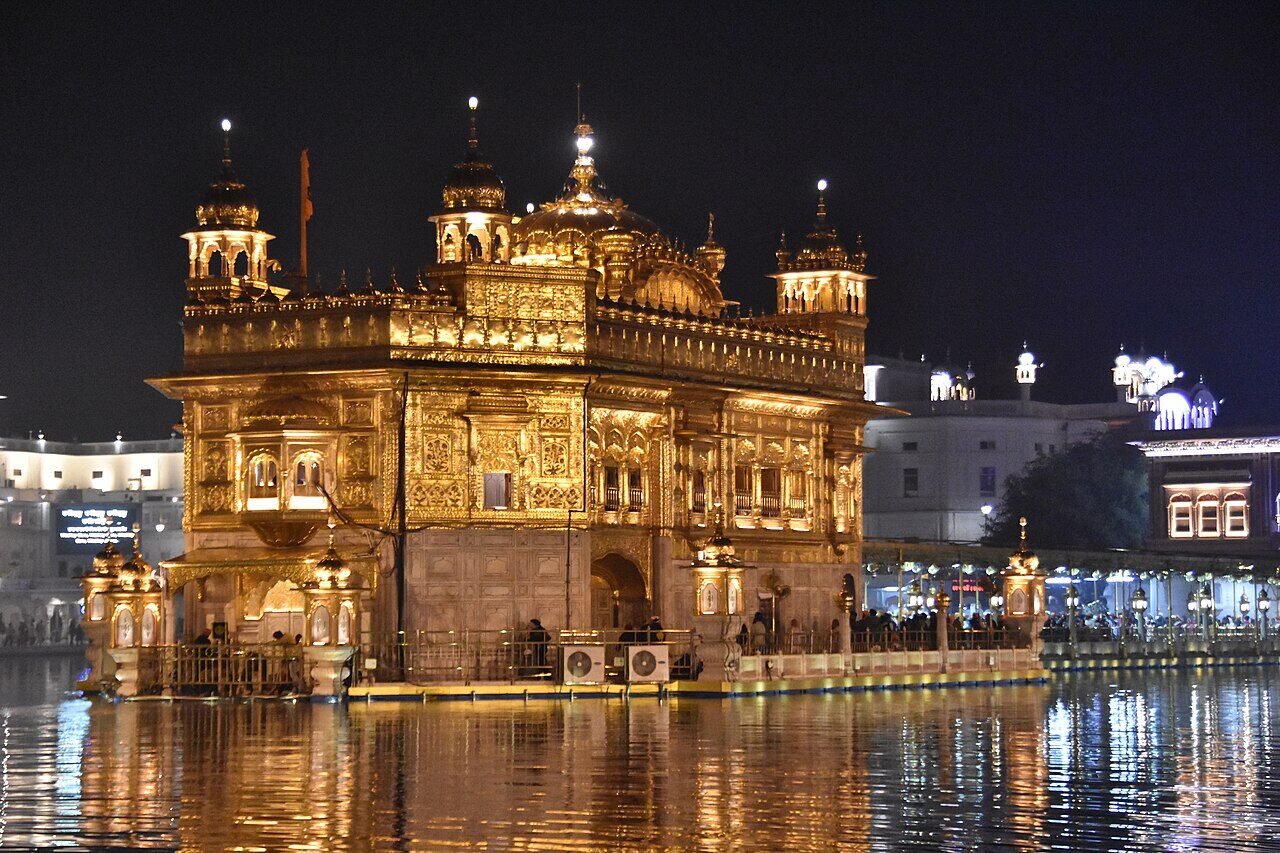
May your spirits always rise, and may everyone, everywhere, be well.
Faith in Practice
Two things you will meet in every gurdwara are the music of kirtan and the Ardas prayer. These pages tell where they come from and what they mean.
Kirtan: Why the Gurus Sang
Walk into a gurdwara, a Sikh place of worship, and you will probably hear music before you hear anyone speak. The Guru Granth Sahib is poetry, and Sikhs sing it. Singing its hymns is called kirtan.714 As Harvard's Pluralism Project puts it, "The full spirit and power of the word is in the singing of it."714
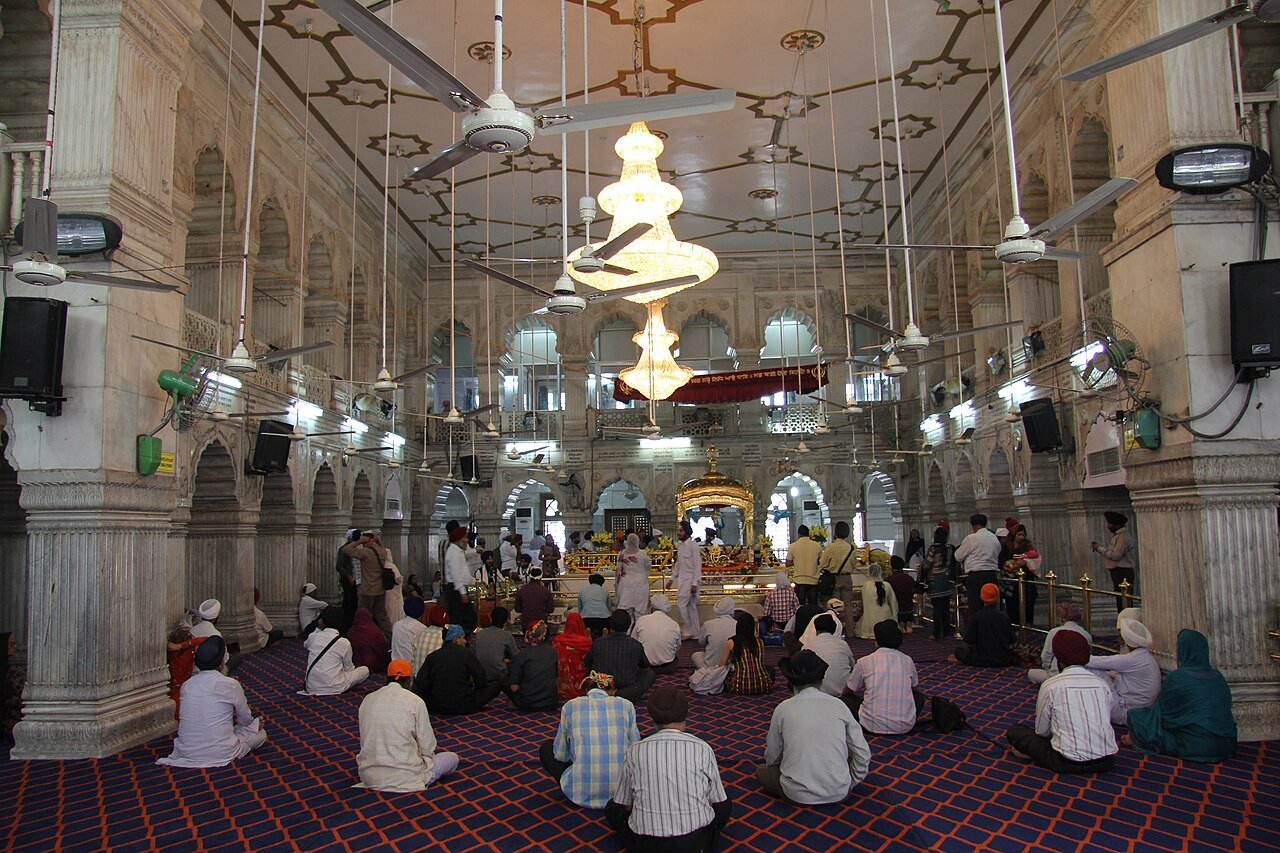
It began with a song. Guru Nanak did not teach by giving lectures. He sang.715,716 His friend Bhai Mardana, a Muslim musician, played the rabab, a string instrument that is plucked (Chapter 1).715,716 What Sikhs remember: when a new hymn came to him, Guru Nanak would call out, "Mardaneya, rabab chhed, bani aayee hai!" "Mardana, play the rabab, the Word has come!"716
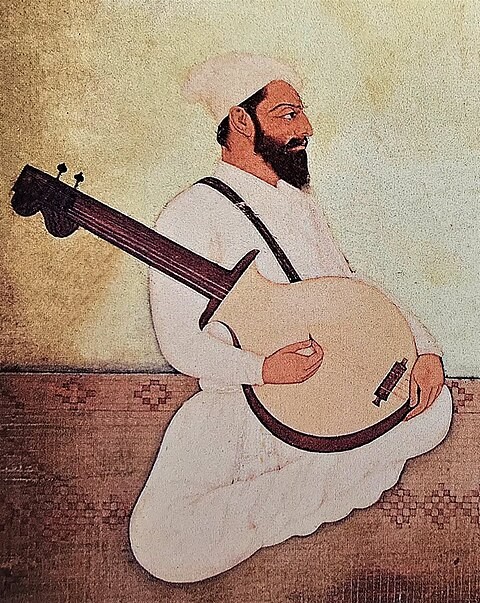
Why sing? Sikh teachers and scholars give several reasons.
- Music carries the words inside you. Sung slowly, with a melody, a hymn's message sinks in. It also makes a calm, peaceful setting for prayer.715
- Everyone can join in. The whole sangat, the people gathered for worship, can sing along.714,715 In many gurdwaras, children and other members of the sangat lead the singing too.714,715
- Each raga has a mood. A raga is a set of rules for building a melody.715 Each raga is meant to create a feeling in the singers and the listeners.715 That is why Guru Arjan arranged most of the scripture by raga (Chapter 3).130,714 The scripture itself says it this way: Dhan su raag surangrhe, aalaapat sabh tikh jaae, "Blessed are those beautiful ragas, which, when sung, take away all thirst."715
- The rahao. Many hymns have one line marked rahao. It works like a chorus, sung again and again, and it usually carries the hymn's main message.715 Next time you hear kirtan, listen for the line that keeps coming back.
The Gurus treated kirtan as the heart of worship. Guru Arjan wrote that in this age, singing God's praises is the most important practice of all.717
Each Guru added something. Guru Angad made it a custom to sing the hymn Asa ki Var early every morning.715 Guru Amar Das made the Anand Sahib the closing hymn (Chapter 2).715 Guru Arjan is credited with setting up sessions of kirtan through the day at Harmandir Sahib, the Golden Temple in Amritsar.715 What Sikhs remember: the Gurus brought new instruments too. Sikh tradition links the saranda with Guru Arjan, the peacock-shaped taus with Guru Hargobind, and the dilruba with Guru Gobind Singh.715,718
Baba Nanak's own musicians. After Mardana died, his descendants, the members of his family in the generations after him, kept playing for the Gurus.716 Other Muslim singers and musicians did too. Two of them, Satta and Balwand, sang for Guru Arjan, and their hymn is in the Guru Granth Sahib (Chapter 3).96,716 These Muslim musicians were called rababis. Sikhs called them Babe ke: "those of Baba Nanak."716 (Baba Nanak is a loving name for Guru Nanak.)
Songs of courage. Music was not only for prayer. Guru Hargobind, the Guru who wore two swords (Chapter 4), welcomed the dhadis.719 Dhadis are ballad singers, who sing songs that tell stories. They play the dhadd drum and the sarangi, a string instrument played with a bow.719
What Sikhs remember: two dhadis first sang for Guru Hargobind in 1606, at the Akal Takht, the seat of Sikh authority in Amritsar.719,720 They were Bhai Abdulla, a Muslim, and Bhai Natha.719,720 They stayed on in Amritsar, singing of the brave deeds of heroes.719,720 Their ballads, called vaars, were meant to "fill the army with warrior's spirit."719 Dhadi groups still sing today, and Sikh history is one of the things they sing about.719
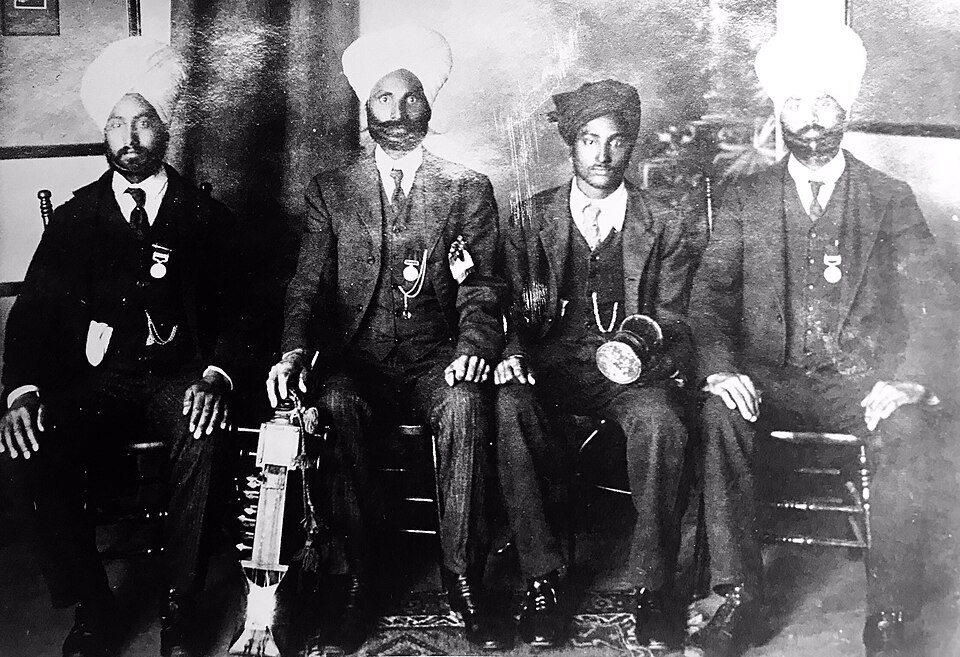
Honest history: what was lost. For more than four hundred years, Muslim rababis sang kirtan for Sikhs. Before 1947 they still sang at Harmandir Sahib.716,721 Then, in 1947, came Partition (Chapter 15), when Punjab was split between India and Pakistan. It separated the rababis from the Sikhs, and many rababi families moved to Pakistan.716,718
One of the last of them was Bhai Ghulam Mohammad Chand. Pakistan's Dawn newspaper told his story. He was born near Amritsar in 1927. As a boy he sang kirtan with his father and uncle across Punjab.721 After 1947 he lived quietly in Lahore and sang other kinds of music. In 2005 he visited India and received an award named after Bhai Mardana. But he was not allowed to sing at Harmandir Sahib, because he was not a Sikh. He died in Lahore in 2015.721
The harmonium. Today most kirtan is sung with a harmonium, a small keyboard with hand-pumped bellows. It is not an old Sikh instrument. It came into use in India in the 1800s, under British rule.715,718 It spread because it is easy to learn and easy to carry.715,718 But it cannot play the tiny slides between notes that raga music needs.715
Since the 1930s, Sikhs have tried again and again to bring back the Gurus' string instruments, the tanti saaz. It is hard, because few musicians learn them, and each takes years to master.718 In 2022 the Akal Takht pushed for the string instruments to return to Harmandir Sahib, but the harmonium was not removed.718
Talk about it Why do you think the Gurus wanted their teachings sung, and not only read? Is there a song you know by heart? How did you learn it?
The Ardas: A History in a Prayer
At the end of every Sikh service, everyone stands, folds their hands, and listens while one person says the Ardas.722 Listen closely and you will notice something. The Ardas is a prayer, but it is also a short history of the Sikhs.278,707 It is said out loud every day, and it has been passed down since the 1700s.278,707
What is the Ardas? The word comes from a Persian word for a humble request, the kind you make to someone much greater than you.4,278 Sikhs say it in the morning and evening, at the end of every service, and at the start and end of family and community events.278,722 It is said when a baby is named, and when a loved one who has died is cremated (their body is burned). A Sikh can also say a short Ardas before something important, and ask for help with it.4 Any Sikh, woman or man, can lead it.723 The person leading faces the Guru Granth Sahib, if it is there.722
A prayer that grew. The Ardas is not written in the Guru Granth Sahib.278 What Sikhs remember: its opening lines come from a poem by Guru Gobind Singh, Var Sri Bhagauti Ji Ki, also called Chandi di Var.4,278 What we know: after that, the Sikh community kept adding to it, generation after generation, as new things happened to them.278,707
The SGPC is the committee that runs the historic gurdwaras, the Sikh places of worship (Chapter 14).4,724 In 1936 the SGPC approved a Sikh code of conduct, a set of rules for Sikh life and worship, called the Sikh Rehat Maryada.4,724 Its final changes came in 1945. It includes an approved Ardas.4,724 The code says the opening and the closing must never be changed.722 The person leading also adds words for that day: a new baby's name, a family's thanks, someone who needs help.4,278
Here is the Ardas, part by part, in order.
1. First God, then the Gurus. It begins: Pritham Bhagauti simar kai, Gur Nanak lain dhiae. In Gurmukhi, the alphabet used to write Punjabi:
ਪ੍ਰਿਥਮ ਭਗੌਤੀ ਸਿਮਰਿ ਕੈ ਗੁਰ ਨਾਨਕ ਲਈਂ ਧਿਆਇ॥725
It means: first remember God's power, then remember Guru Nanak.722 Then it names each Guru in turn, from Guru Angad to Guru Tegh Bahadur.278,722 Chapters 1 to 5 tell their stories.
2. Guru Gobind Singh and the Guru Granth Sahib. Next comes Guru Gobind Singh, who comes to help wherever he is needed.722 Then comes the Guru Granth Sahib, which carries the light of all ten Gurus.722 Here is a clue that the prayer grew. The poem named only the first nine Gurus. The community added Guru Gobind Singh's name later, and the Guru Granth Sahib too.278 Chapter 6 tells about Guru Gobind Singh. Chapter 3 tells how the holy book was first gathered, and Chapter 7 tells how it became the Guru.
3. The Five, the Four and the Forty. Then it remembers the panjan pyarian, chauhan sahibzadian, chalian muktian: the Panj Pyare, the Guru's four sons, and the Forty Liberated Ones.722,725 Chapter 6 tells the story of the Panj Pyare, the Five Beloved Ones. Chapter 7 tells of the four Sahibzade, the Guru's sons, and of the Chali Mukte, the Forty, at Muktsar.
4. The martyrs. A hard part. Next, the Ardas remembers Sikh men and women who gave their lives for their faith. It says they were band band katae, cut apart joint by joint; khoprian luhaian, had their scalps taken off; charkhrian te charhe, were put on spiked wheels; and arian naal chirae gae, were sawn apart.722,725 The Ardas does not name them one by one, and it does not name the people who killed them.723
But you have met some of them. Sikhs remember that Bhai Mati Das was sawn apart in Delhi in 1675, just before Guru Tegh Bahadur was killed (Chapter 5).726 Bhai Mani Singh was cut apart in Lahore in the 1730s.277 Bhai Taru Singh's scalp was cut off in 1745, because he would not cut his hair (Chapter 9).280 Chapter 9 also tells of the women in the Lahore prison.
5. The gurdwara reformers. The same part remembers those who made sacrifices gurdwarian di seva lai, for the service of the gurdwaras.722,725 These are the martyrs of the gurdwara reform movement of the 1920s, a campaign to change how the gurdwaras were run.278 Chapter 14 tells their story, from Nankana Sahib to Guru ka Bagh.
6. The five Takhts. Then the Ardas asks the whole Khalsa, the community of initiated Sikhs, to remember Waheguru, a Sikh name for God.722,725 It asks them to think of the panjan takhtan, sarbat gurdwarian: the five Takhts and all the gurdwaras.722,725 A Takht, or "throne," is a seat of Sikh authority.722 The five are:727
- Akal Takht, Amritsar, facing the Harmandir Sahib, founded by Guru Hargobind (Chapter 4). Chapter 18 tells what happened to it in 1984.
- Takht Patna Sahib, in Bihar, where Guru Gobind Singh was born (Chapter 6).
- Takht Kesgarh Sahib, Anandpur Sahib, where the Khalsa was created in 1699 (Chapter 6).
- Takht Hazur Sahib, Nanded, where Guru Gobind Singh died in 1708 (Chapter 7).
- Takht Damdama Sahib, Talwandi Sabo, where Guru Gobind Singh stayed in 1706 (Chapter 7).245
Damdama Sahib was the last to be made official. The SGPC recognized it as a Takht in 1966.244,245 The SGPC asked Sikhs to keep it in mind in their Ardas, as they had in the past.244,245
7. Protection, gifts and Amritsar. Next comes jahan jahan Khalsa ji sahib, tahan tahan rachhia riait: wherever the Khalsa is, may God protect them.722,725 It asks for Sikhan nu Sikhi daan, kes daan: the gift of Sikhi, the gift of uncut hair.722,725 (Sikhi is the Sikh way of life.) At the end of a long list, it asks for a dip in the holy pool at Amritsar.722,725
These lines carry history too. Sikh scholars explain that the prayer for protection wherever Sikhs are points back to the early 1700s, when Sikhs were outlawed, or treated as criminals.278 The wish to bathe at Amritsar, they say, points back to the years when Sikhs were banned from the Harmandir Sahib and its pool.278 Chapters 8 and 9 tell about those years. Then the Ardas asks that the Khalsa be humble and wise.722
8. The gurdwaras we cannot reach. Then the Ardas asks for khulle darshan didar: the freedom to visit, and to care for, Nankana Sahib and the other gurdwaras the Panth has been separated from.722,725 (The Panth is the whole Sikh community.) This line was added because of Partition, the splitting of Punjab between India and Pakistan.728 Partition left those gurdwaras in Pakistan in 1947.728 One Sikh source says the Akal Takht asked all Sikhs to add the line on 25 January 1952.707
Chapter 1 tells about Nankana Sahib, Chapter 15 tells about Partition, and Chapter 22 tells about the Kartarpur Corridor. For more than seventy years, Sikhs everywhere have prayed for this every day.707,728 Your grandparents have prayed for it. So can you.
9. The closing. The Ardas asks for forgiveness for mistakes and for the company of good people.722 Then it ends the way it always ends: Nanak naam chardi kala, tere bhane sarbat da bhala. In Gurmukhi:
ਨਾਨਕ ਨਾਮ ਚੜ੍ਹਦੀ ਕਲਾ, ਤੇਰੇ ਭਾਣੇ ਸਰਬੱਤ ਦਾ ਭਲਾ॥725
Through the Name, may our spirits always rise, and by Your will, may everyone everywhere be well.4,722 This is where this book gets its name, Chardi Kala. Notice the word everyone. After remembering so much suffering, the Ardas does not ask for revenge. It always ends by praying for the good of all people.278
Then everyone bows to the Guru Granth Sahib, stands again, and calls out Waheguru ji ka Khalsa, Waheguru ji ki Fateh.278,722 Then comes Jo bole so nihal! and everyone answers Sat Sri Akal!278,722
The Jaikara: the shout at the end. That call-and-answer shout is called a jaikara, a cry of victory.729,730 One person calls out the first half. Everyone answers the second half together, in one long, loud shout.731
- Jo bole so nihal means "whoever says this will be blessed": happy and fulfilled.730,731
- Sat Sri Akal means "True is the Great Timeless One," which is God.731 Sat means true and lasting forever. Sri is a word of honor and glory. Akal means timeless, beyond time. Kal, time, is also a word linked with death, so Akal is also the One beyond death.731
Older than the Khalsa. The words were not new. Sat and Akal are both in Guru Nanak's Mul Mantar, the opening lines of the Guru Granth Sahib.731 Bhai Gurdas, an early Sikh writer, also wrote of the Akal.731
But it was Guru Gobind Singh who put the Timeless One at the center of his teaching. Sikhs credit him with a great hymn of praise called Akal Ustat, "Praise of the Timeless." He is also credited with first making the jaikara popular.731 What Sikhs remember: after the first Sikhs took amrit, joining the Khalsa, at Anandpur in 1699 (Chapter 6), the air rang with cries of "Akal, Akal!" A Mughal news writer is said to have reported this.731 (The Mughals were the emperors who ruled much of India then.)
A cry in battle. Ever since the Khalsa began, the jaikara has been its cry in battle.731 The Akali Nihangs, an order of Sikh warriors, took their name from Akal.731 Sikh chiefs used seals, stamps pressed onto letters and papers. They stamped their seals with Akal Sahai, "with the help of the Timeless One."731 The same words were cut into old Sikh weapons, on the blade or inside the hand guard.729 In the 1920s, the gurdwara reformers called themselves Akalis too (Chapter 14).731
When Sikhs joined the British army, the jaikara went with them, to battlefields in "Afghanistan, Europe, Africa and Myanmar," as one Indian newspaper put it.732 At Saragarhi in 1897, the signaler, the soldier who sent messages, was Gurmukh Singh.387 He is said to have shouted it as he died (Chapter 12).387
Today Jo bole so nihal, Sat Sri Akal is the official war cry of the Indian Army's Sikh Regiment and Sikh Light Infantry (Chapter 17).732,733 (A regiment is a family of army units that share a name and history.) The Punjab Regiment, which has both Sikh and Hindu soldiers, has two war cries, and this is one of them.732,734 The other is Bol Jawala Ma ki jai, "Victory to Mother Jawala," a Hindu goddess.732,734
More than a war cry. Gurinder Singh Sacha is a writer with the Sikh Missionary Society in Britain.735 He argues that "war cry" was a British label.735 He says the jaikara is first of all a cry of praise.735 The jaikara says that every victory belongs to God, not to the fighter.730,731 So the same shout can mean joy, a call to act, or a plea for God's help.731 You hear it on a battlefield, at the end of every Ardas, and on happy days.
And as hello? Many Sikhs today also say Sat Sri Akal simply to say hello.729 That came later, and no one seems to know exactly when. Sacha writes that Guru Nanak's Sikhs greeted each other with Sat Kartar.735 The Sikh code of conduct asks Sikhs to greet each other with Waheguru ji ka Khalsa, Waheguru ji ki Fateh.729,735 It means: the Khalsa belongs to God, and victory belongs to God.729,735 Sacha still thinks Sat Sri Akal is a good greeting for anyone, because all it says is that God is truth.735
Talk about it The Ardas remembers terrible suffering, but it never names an enemy, and it ends by praying for everyone in the world. Why do you think Sikhs chose to pray that way? Next time you stand for the Ardas, listen for one part whose story you now know.
Reference
Pages for looking things up: a timeline, words to know, questions to talk about, books to read next, and the sources behind every fact in this book.
Timeline: 1469–2026 at a Glance
The whole story on one page, oldest first.
| Year | What happened |
|---|---|
| 1469 | Guru Nanak is born in Talwandi (Nankana Sahib)18 |
| 1520s | Guru Nanak settles at Kartarpur; langar for all18 |
| 1539 | Guru Angad becomes Guru; Gurmukhi script spreads711 |
| 1552 | Guru Amar Das becomes Guru; pangat before sangat711 |
| 1574 | Guru Ram Das becomes Guru and soon begins the town that becomes Amritsar711 |
| 1604 | Guru Arjan completes the Adi Granth and installs it in Harmandir Sahib119,127 |
| 1606 | Guru Arjan martyred in Lahore; Guru Hargobind builds the Akal Takht127,156 |
| 1664 | Guru Har Krishan dies of smallpox in Delhi, about age 7170 |
| 1675 | Guru Tegh Bahadur martyred in Delhi177 |
| 1699 | Vaisakhi: the Khalsa is born at Anandpur Sahib212 |
| 1704–05 | Guru Gobind Singh leaves Anandpur; Chamkaur; the four Sahibzade are killed and Mata Gujri dies; Muktsar196,224 |
| 1708 | Guru Granth Sahib becomes the eternal Guru196 |
| 1710 | Banda Singh's army captures Sirhind260 |
| 1716 | Banda Singh and hundreds of Sikh prisoners executed in Delhi260 |
| 1746 | Chhota Ghallughara (Small Massacre)292 |
| 1762 | Vadda Ghallughara (Great Massacre); Harmandir Sahib blown up246 |
| 1765 | Sikhs take Lahore711 |
| 1799 | Ranjit Singh takes Lahore; Maharaja from 1801318 |
| 1849 | British take Punjab; Duleep Singh, age 10, removed357 |
| 1872 | About 65 Kukas blown from cannons by British officials381 |
| 1897 | Battle of Saragarhi387 |
| 1912 | First U.S. gurdwara founded in Stockton, California407 |
| 1913 | Ghadar Party founded in Oregon and San Francisco736 |
| 1914 | Komagata Maru turned away from Canada737 |
| 1914–18 | Between about 100,000 and 130,000 Sikhs serve in World War I511,512 |
| 1919 | Jallianwala Bagh massacre on Vaisakhi423 |
| 1921 | Nankana Sahib massacre438 |
| 1925 | Sikh Gurdwaras Act: Sikhs control their historic gurdwaras738 |
| 1931 | Bhagat Singh, Sukhdev and Rajguru hanged in Lahore452 |
| 1939–45 | Sikhs serve in World War II; Sikh soldiers win the Victoria Cross in Burma531–533 |
| 1945–46 | INA trials at the Red Fort; Gurbaksh Singh Dhillon is one of the three accused538 |
| 1947 | Partition of Punjab; 1 Sikh flown in to defend Srinagar463,545 |
| 1956 | Dalip Singh Saund elected to U.S. Congress420 |
| 1962 | Subedar Joginder Singh holds a ridge in the war with China; wounded and captured, he dies a prisoner555 |
| 1966 | New Punjabi-speaking Punjab state created487 |
| 1971 | Battle of Longewala; Jagjit Singh Aurora accepts Pakistan's surrender in Dhaka491,558 |
| 1984 | Operation Blue Star (June); Sikh soldiers mutiny; Indira Gandhi killed; massacres of Sikhs (November)502,612,614 |
| 1985 | Air India Flight 182 bombing; Punjab Accord signed; Sant Longowal killed641,643 |
| 1986 | Kar seva to rebuild the Akal Takht begins; police and commandos storm the Golden Temple complex156,609 |
| 1995 | Jaswant Singh Khalra abducted and killed; Chief Minister Beant Singh killed651,739 |
| 2001 | Balbir Singh Sodhi killed in Arizona660 |
| 2005 | Prime Minister Manmohan Singh apologizes for 1984624 |
| 2011 | Supreme Court upholds life sentences for Khalra's killers650 |
| 2012 | Oak Creek gurdwara shooting661 |
| 2017 | U.S. Army makes it easier for Sikhs to serve with turban and beard667 |
| 2018 | Sajjan Kumar sentenced to life; Gurbir Grewal becomes first Sikh state attorney general625,676 |
| 2019 | Kartarpur Corridor opens for Guru Nanak's 550th birthday681 |
| 2020 | Galwan clash with China: 20 Indian soldiers killed, four from Punjab565,568 |
| 2020–21 | Farmers' protest; farm laws cancelled687 |
| 2023 | Hardeep Singh Nijjar killed in Canada; Pannun plot stopped in New York694,702 |
| 2025 | Kartarpur Corridor closed; Punjab floods; 350 years since Guru Tegh Bahadur's martyrdom195,682,705 |
| 2026 | Indian and Chinese troops face off in Arunachal Pradesh; Nikhil Gupta pleads guilty; stricter U.S. military beard rules; Sajjan Kumar dies while serving life sentence577,625,673,698 |
Words to Know
| Word | What it means |
|---|---|
| Akal Takht | "Throne of the Timeless One," facing Harmandir Sahib; the seat of Sikh decisions |
| Akali | From Akal, the Timeless One; used for the Akali Nihang warriors, the 1920s movement that took back the gurdwaras peacefully, and the Akali Dal, a Sikh political party |
| Amrit | Sweetened water stirred with a khanda; drinking it means joining the Khalsa |
| Ang | A page of the Guru Granth Sahib, which has 1,430 angs |
| Ardas | The prayer said standing at the end of Sikh services; it remembers the martyrs |
| Chardi kala | Rising spirits; staying hopeful even in the hardest times |
| Dal Khalsa | The army of the Khalsa, formed when most of the misls joined together |
| Ghallughara | A massacre, a wholesale killing. The Vadda (Great) Ghallughara was in 1762 and the Chhota (Small) Ghallughara in 1746 |
| Granthi | The person who reads the Guru Granth Sahib in a gurdwara |
| Gurbani | The Gurus' hymns, gathered in the Guru Granth Sahib |
| Gurdwara | "Door of the Guru"; a Sikh place of worship, open to everyone |
| Gurmukhi | The alphabet used to write Punjabi and the Guru Granth Sahib |
| Guru Granth Sahib | The Sikh holy book, which Sikhs treat as their living, eternal Guru |
| Harmandir Sahib | "Temple of God" in Amritsar, also called the Golden Temple |
| Hukamnama | A letter of instruction, like the letters the Gurus sent to Sikhs |
| Ik Onkar (ੴ) | There is One Creator; the first words of the Guru Granth Sahib |
| Jaikara | The Sikh shout of victory: one person calls "Jo bole so nihal!" and everyone answers "Sat Sri Akal!" |
| Janamsakhi | "Birth story"; a life-story of Guru Nanak written by his followers after his death |
| Jatha | A band or group of Sikhs, like the riding bands of the 1700s or the volunteer groups of the 1920s |
| Kar seva | Volunteer work to build or repair a gurdwara |
| Kaur / Singh | Names shared by Sikh women (Kaur) and men (Singh), meant to set caste aside |
| Khalistan | The name some Sikhs use for a hoped-for separate Sikh country |
| Khalsa | The community of initiated Sikhs, founded in 1699 |
| Kirtan | Singing the hymns of the Guru Granth Sahib |
| Langar | The free community kitchen where everyone eats together |
| Martyr (Shaheed) | Someone killed for refusing to give up their faith or principles |
| Militant | Someone who takes up arms for a cause; this book's plain word instead of "terrorist" or "freedom fighter" |
| Miri and Piri | Worldly duty and spiritual life, held together |
| Misl | One of about a dozen Sikh bands of the 1700s, each led by a chief |
| Morcha | A protest campaign, like the Jaito morcha of the 1920s |
| Mughal | The empire founded by Babur, whose emperors ruled much of India in the Gurus' time |
| Nihang | A member of an order of Sikh warriors, also called Akali Nihangs |
| Pangat | Sitting together in rows, as equals, to eat langar |
| Panj Pyare | The Five Beloved Ones of 1699 |
| Panth | The Sikh community; the Khalsa Panth is the community of the Khalsa |
| Raga | The musical measure a hymn is meant to be sung in; the Guru Granth Sahib is arranged mainly by raga |
| Sahibzade | The four sons of Guru Gobind Singh |
| Sakhi | "Testimony"; a story told about Guru Nanak or another Guru |
| Sangat | The community gathered together |
| Sarbat da bhala | The good of everyone, everywhere |
| Sarbat Khalsa | A gathering of Sikhs meant to speak for the whole community |
| Seva | Selfless service, done without expecting anything back |
| SGPC | The committee, elected by Sikhs, that runs the historic gurdwaras; formed in 1920 |
| Shabad | A hymn of the Gurus |
| Vaisakhi | The spring harvest festival; the Khalsa was born on Vaisakhi in 1699 |
Questions to Talk About Together
- Which person in this book do you most want to remember? Why?
- Which chapter was the hardest to read? What did you feel?
- Sikhs kept getting attacked, and kept rebuilding. Where do you think that strength came from?
- This book shows Sikhs who did wrong things, too. Why is it important to tell those parts?
- Many people who helped Sikhs in this book were not Sikh. Who were they?
- What does chardi kala look like at your school, or in your life?
- What is one thing from Sikh history you'd want your friends to know?
Further Reading
- J. S. Grewal, The Sikhs of the Punjab (Cambridge University Press)
- Khushwant Singh, A History of the Sikhs, volumes 1 and 2 (Oxford University Press)
- Harbans Singh, ed., The Encyclopaedia of Sikhism (Punjabi University), free online at eos.learnpunjabi.org
- Ganda Singh, Life of Banda Singh Bahadur and Early European Accounts of the Sikhs
- Pashaura Singh and Louis Fenech, eds., The Oxford Handbook of Sikh Studies
- Mark Tully and Satish Jacob, Amritsar: Mrs Gandhi's Last Battle
- Karen Leonard, Making Ethnic Choices: California's Punjabi Mexican Americans
- Valarie Kaur, See No Stranger
- Human Rights Watch and Ensaaf, Protecting the Killers: A Policy of Impunity in Punjab, India (2007), free online at hrw.org
- The Sikh Coalition, for Sikh American civil rights today: sikhcoalition.org
- For younger readers: Simran Jeet Singh, Fauja Singh Keeps Going (picture book)
References
Each small number in the book points to a source below. Web pages were checked in November 2026.
- Britannica. "Guru Nanak." Encyclopaedia Britannica. britannica.com/biography/Guru-Nanak
- DAG. "Depicting Baba Nanak: Images from the Janamsakhi tradition." DAG. dagworld.com
- ThePrint. "After row over Punjabi film, SGPC announces blanket ban on portrayal of Sikh Gurus, their kin." ThePrint, 2022. theprint.in
- Wikipedia. "Ardās." Wikipedia. en.wikipedia.org/wiki/Ardās
- Wikipedia. "Sikh gurus." Wikipedia. en.wikipedia.org/wiki/Sikh_gurus
- Britannica. "Guru Angad." Encyclopaedia Britannica. britannica.com/biography/Angad
- Harbans Singh, ed. "Amar Das, Guru (1479–1574)." The Encyclopaedia of Sikhism, Punjabi University, Patiala. eos.learnpunjabi.org
- Britannica. "Ram Das." Encyclopaedia Britannica. britannica.com/biography/Ram-Das
- Britannica. "Arjan." Encyclopaedia Britannica. britannica.com/biography/Arjan
- Britannica. "Guru Hargobind." Encyclopaedia Britannica. britannica.com/biography/Guru-Hargobind
- Britannica. "Har Rai." Encyclopaedia Britannica. britannica.com/biography/Har-Rai
- Wikipedia. "Guru Har Rai." Wikipedia. en.wikipedia.org/wiki/Guru_Har_Rai
- Harbans Singh, ed. "Har Krishan, Guru (1656–1664)." The Encyclopaedia of Sikhism, Punjabi University, Patiala. eos.learnpunjabi.org
- Harbans Singh, ed. "Tegh Bahadur, Guru (1621–1675)." The Encyclopaedia of Sikhism, Punjabi University, Patiala. eos.learnpunjabi.org
- Britannica. "Guru Tegh Bahadur." Encyclopaedia Britannica. britannica.com/biography/Guru-Tegh-Bahadur
- Encyclopaedia Britannica. "Gobind Singh." Britannica. britannica.com
- Harbans Singh, ed. "Gobind Singh, Guru (1666–1708)." The Encyclopaedia of Sikhism, Punjabi University, Patiala. eos.learnpunjabi.org
- Wikipedia. "Guru Nanak." Wikipedia. en.wikipedia.org/wiki/Guru_Nanak
- Harbans Singh, ed. "Kartarpur." The Encyclopaedia of Sikhism, Punjabi University, Patiala. eos.learnpunjabi.org
- Wikipedia. "Ik Onkar." Wikipedia. en.wikipedia.org/wiki/Ik_Onkar
- Wikipedia. "Japji Sahib." Wikipedia. en.wikipedia.org/wiki/Japji_Sahib
- Wikipedia. "Bahlul Khan Lodi." Wikipedia. en.wikipedia.org/wiki/Bahlul_Khan_Lodi
- Harbans Singh, ed. "Untouchability." The Encyclopaedia of Sikhism, Punjabi University, Patiala. eos.learnpunjabi.org
- Wikipedia. "Kabir." Wikipedia. en.wikipedia.org/wiki/Kabir
- Britannica. "Sati (suttee)." Britannica Students. kids.britannica.com
- Harbans Singh, ed. "Daulat Khan Lodhi, Nawab." The Encyclopaedia of Sikhism, Punjabi University, Patiala. eos.learnpunjabi.org
- Harbans Singh, ed. "Sri Chand, Baba (1494–1629)." The Encyclopaedia of Sikhism, Punjabi University, Patiala. eos.learnpunjabi.org
- Wikipedia. "Bhai Mardana." Wikipedia. en.wikipedia.org/wiki/Bhai_Mardana
- Harbans Singh, ed. "Puratan Janam Sakhi." The Encyclopaedia of Sikhism, Punjabi University, Patiala. eos.learnpunjabi.org
- "Index Bhai Gurdas vaar 1" (titles of each pauri: 39, Sivratri fair at Batala; 40, discussion with the siddhs; 41, miracles by the siddhs; 43, grandeur of the true name). SikhiWiki. sikhiwiki.org
- Bhai Gurdas. "Vaar 1" (Gurmukhi text; Pauris 32, 33, 38, 39 and 43 cited). SikhiWiki. sikhiwiki.org
- Wikipedia. "Varan Bhai Gurdas." Wikipedia. en.wikipedia.org/wiki/Varan_Bhai_Gurdas
- Wikipedia. "Babur." Wikipedia. en.wikipedia.org/wiki/Babur
- Harbans Singh, ed. "Babarvani (Babar's command or sway)." The Encyclopaedia of Sikhism, Punjabi University, Patiala. eos.learnpunjabi.org
- Guru Nanak. "Asa Mahalla 1" (Babarvani). Sri Guru Granth Sahib, Ang 360. SikhNet. sikhnet.com
- Wikipedia. "Gurdwara Darbar Sahib Kartarpur." Wikipedia. en.wikipedia.org/wiki/Gurdwara_Darbar_Sahib_Kartarpur
- Guru Nanak. "Asa di Var, Salok Mahalla 1." Sri Guru Granth Sahib, Ang 473. SearchGurbani. searchgurbani.com/guru-granth-sahib/ang/473
- Guru Nanak. "Sri Raag Mahalla 1." Sri Guru Granth Sahib, Ang 15. iGurbani. igurbani.com
- SadhSangat.com. "SGGS pp 1–2, Japji Paurris 1–5" (Mool Mantar and Japji with translation). Sri Guru Granth Sahib, Ang 1. sadhsangat.com
- The Pluralism Project, Harvard University. "Japji; Japji Sahib." The Pluralism Project. pluralism.org
- SikhiWiki. "Asa di Var." SikhiWiki. sikhiwiki.org
- Wikipedia. "Guru Angad." Wikipedia. en.wikipedia.org/wiki/Guru_Angad
- Harbans Singh, ed. "Angad Dev, Guru (1504–1552)." The Encyclopaedia of Sikhism, Punjabi University, Patiala. eos.learnpunjabi.org
- Rai Balwand and Satta. "Ramkali ki Vaar." Sri Guru Granth Sahib, Ang 966. iGurbani. igurbani.com
- SikhiWiki. "Satta and Balwand." SikhiWiki. sikhiwiki.org
- Dawn. "NAROWAL: Housing a Samadhi and a grave." Dawn, 2004. dawn.com/news/374963
- Wikipedia. "Janamsakhis." Wikipedia. en.wikipedia.org/wiki/Janamsakhis
- Harbans Singh, ed. "Janam Sakhi." The Encyclopaedia of Sikhism, Punjabi University, Patiala. eos.learnpunjabi.org
- Guru Nam Singh. "The Sacred Thread." SikhNet, 23 December 2015. sikhnet.com
- Guru Nanak. "Asa di Var, Salok Mahalla 1" (the janeu salok). Sri Guru Granth Sahib, Ang 471. iGurbani. igurbani.com
- Harbans Singh, ed. "Sachcha Sauda, Gurdwara." The Encyclopaedia of Sikhism, Punjabi University, Patiala. eos.learnpunjabi.org
- Naqoosh-e-Javidan. "Sucha Sauda." Architecture, History and Heritage of Pakistan. pakheritage.org
- Harbans Singh, ed. "Sultanpur Lodhi." The Encyclopaedia of Sikhism, Punjabi University, Patiala. eos.learnpunjabi.org
- Sikh Missionary Society U.K. "Guru Nanak for Children, Chapter 4." Sikh Missionary Society, 2004. sikhmissionarysociety.org
- Sikhs.org. "Bani Concerning Islam" (Angs 140–141 in translation). Sikhs.org. sikhs.org
- Wikipedia. "Humour in Sikhism." Wikipedia. en.wikipedia.org/wiki/Humour_in_Sikhism
- AllAboutSikhs. "Gurudwara Nanakwara, Haridwar" (tradition). AllAboutSikhs. allaboutsikhs.com
- Harbans Singh, ed. "Thanesar (Kurukshetra)." The Encyclopaedia of Sikhism, Punjabi University, Patiala. eos.learnpunjabi.org
- Guru Nanak. "Vaar Malhaar ki, Salok Mahalla 1." Sri Guru Granth Sahib, Ang 1289. iGurbani. igurbani.com
- Sandeep Singh Brar. "Misconceptions About Eating Meat." Sikhs.org, 2011. sikhs.org
- SikhiWiki. "Guru Nanak in Kurukshetra" (tradition). SikhiWiki. sikhiwiki.org
- Harbans Singh, ed. "Arati." The Encyclopaedia of Sikhism, Punjabi University, Patiala. eos.learnpunjabi.org
- Guru Nanak. "Dhanasari Mahalla 1" (Aarti). Sri Guru Granth Sahib, Ang 663. iGurbani. igurbani.com
- SadhSangat.com. "SGGS pages 12–13: Sohila" (text and translation). Sri Guru Granth Sahib, Angs 12–13. sadhsangat.com
- Wikipedia. "Kirtan Sohila." Wikipedia. en.wikipedia.org/wiki/Kirtan_Sohila
- Rupinder S. Brar. "The First Sikh: Book Review" (review of Nikky-Guninder Kaur Singh, The First Sikh, 2019). The Sikh Foundation. sikhfoundation.org
- Harbans Singh. Guru Nanak and Origins of the Sikh Faith. Bombay: Asia Publishing House, 1969 (© Punjabi University, Patiala), pp. 21–24. library.gurmat.info
- Harbans Singh, ed. "Varan Bhai Gurdas." The Encyclopaedia of Sikhism, Punjabi University, Patiala. eos.learnpunjabi.org
- Harbans Singh, ed. "Lalo, Bhai." The Encyclopaedia of Sikhism, Punjabi University, Patiala. eos.learnpunjabi.org
- Harbans Singh, ed. "Bhago, Malik." The Encyclopaedia of Sikhism, Punjabi University, Patiala. eos.learnpunjabi.org
- Guru Nanak. "Tilang Mahalla 1." Sri Guru Granth Sahib, Ang 722. iGurbani. igurbani.com
- Harbans Singh, ed. "Rukn ud-Din, Qazi." The Encyclopaedia of Sikhism, Punjabi University, Patiala. eos.learnpunjabi.org
- V.L. Ménage. "The 'Gurū Nānak' inscription at Baghdad." Journal of the Royal Asiatic Society 111, no. 1, 1979, pp. 16–21. cambridge.org
- Wikipedia. "Baba Nanak Shrine." Wikipedia. en.wikipedia.org/wiki/Baba_Nanak_Shrine
- Harbans Singh, ed. "Wali Qandhari (lit. Saint of Qandahar)." The Encyclopaedia of Sikhism, Punjabi University, Patiala. eos.learnpunjabi.org
- Wikipedia. "Gurdwara Panja Sahib." Wikipedia. en.wikipedia.org/wiki/Gurdwara_Panja_Sahib
- Britannica. "Janam-sakhi." Encyclopaedia Britannica. britannica.com/topic/janam-sakhi
- "Hassan Abdal." The Indian Antiquary, vol. 2, April 1873, ed. James Burgess (reprinted from Indian Public Opinion). jainqq.org
- Shiromani Gurdwara Parbandhak Committee. "Gurdwara Panja Sahib, Hasan Abdal (Pakistan)." SGPC (older site). old.sgpc.net
- Xuanzang. Si-Yu-Ki: Buddhist Records of the Western World, translated by Samuel Beal (London, 1884), "Country of Ta-ch'a-shi-lo (Takshashila)", with Beal's note: "Cunningham identifies the tank of Elapatra with the fountain of Hassan Abdal called Baba-wali." wisdomlib.org
- Shiromani Gurdwara Parbandhak Committee. "Gurdwara Panja Sahib, Hasan Abdal (Pakistan)." SGPC. sgpc.net
- Harbans Singh, ed. "Bala Janam Sakhi." The Encyclopaedia of Sikhism, Punjabi University, Patiala. eos.learnpunjabi.org
- Wikipedia. "W. H. McLeod." Wikipedia. en.wikipedia.org/wiki/W._H._McLeod
- J.S. Grewal. "W.H. McLeod and Sikh Studies." Journal of Punjab Studies 17, nos. 1–2. punjab.global.ucsb.edu
- Wikipedia. "The Encyclopaedia of Sikhism." Wikipedia. en.wikipedia.org/wiki/The_Encyclopaedia_of_Sikhism
- Harbans Singh, ed. "Khivi, Mata (d. 1582)." The Encyclopaedia of Sikhism, Punjabi University, Patiala. eos.learnpunjabi.org
- Wikipedia. "Amritsar." Wikipedia. en.wikipedia.org/wiki/Amritsar
- Britannica. "Gurmukhi alphabet." Encyclopaedia Britannica. britannica.com/topic/Gurmukhi-alphabet
- Harbans Singh, ed. "Khadur Sahib." The Encyclopaedia of Sikhism, Punjabi University, Patiala. eos.learnpunjabi.org
- Sikhs.org. "Sri Guru Granth Sahib Authors & Contributors." Sikhs.org. sikhs.org
- Harbans Singh, ed. "Ramkali ki Var." The Encyclopaedia of Sikhism, Punjabi University, Patiala. eos.learnpunjabi.org
- Wikipedia. "Gurmukhi." Wikipedia. en.wikipedia.org/wiki/Gurmukhi
- Harbans Singh, ed. "Pothian Baba Mohan Valian." The Encyclopaedia of Sikhism, Punjabi University, Patiala. eos.learnpunjabi.org
- Rai Balvand and Satta. "Ramkali ki Vaar." Sri Guru Granth Sahib, Ang 967. iGurbani. igurbani.com/shabad/g2pa
- Wikipedia. "Khivi." Wikipedia. en.wikipedia.org/wiki/Khivi
- Wikipedia. "Writers of the Guru Granth Sahib." Wikipedia. en.wikipedia.org/wiki/Writers_of_the_Guru_Granth_Sahib
- Wikipedia. "Guru Amar Das." Wikipedia. en.wikipedia.org/wiki/Guru_Amar_Das
- Britannica. "Guru Amar Das." Encyclopaedia Britannica. britannica.com/biography/Amar-Das
- Harbans Singh, ed. "Pangat." The Encyclopaedia of Sikhism, Punjabi University, Patiala. eos.learnpunjabi.org
- Harbans Singh, ed. "Manji." The Encyclopaedia of Sikhism, Punjabi University, Patiala. eos.learnpunjabi.org
- Harbans Singh, ed. "Goindval." The Encyclopaedia of Sikhism, Punjabi University, Patiala. eos.learnpunjabi.org
- Harbans Singh, ed. "Anandu." The Encyclopaedia of Sikhism, Punjabi University, Patiala. eos.learnpunjabi.org
- Wikipedia. "Goindwal." Wikipedia. en.wikipedia.org/wiki/Goindwal
- Gurumustuk Singh Khalsa. "Goindwal Sahib and the 84 steps - Guru Amar Das ji." SikhNet, 5 December 2019. sikhnet.com
- Encyclopedia.com. "Untouchables." The Concise Oxford Dictionary of World Religions. encyclopedia.com
- Discover Sikhism. "Construction of a Baoli." DiscoverSikhism.com. discoversikhism.com
- Shiromani Gurdwara Parbandhak Committee. "Historical Gurdwaras of Punjab dedicated to Guru Amardas Sahib." SGPC. old.sgpc.net
- Sukhmandir Khalsa. "The History Behind Sikh Shrine Goindwal Baoli." Learn Religions, 28 August 2020. learnreligions.com
- Harbans Singh, ed. "Datu, Baba (1537–1628)." The Encyclopaedia of Sikhism, Punjabi University, Patiala. eos.learnpunjabi.org
- Guru Amar Das. "Vaar Suhi, Saloks of Mahalla 3." Sri Guru Granth Sahib, Ang 787. SikhNet translation. sikhnet.com
- Guru Amar Das. "Raag Ramkali, Anand." Sri Guru Granth Sahib, Ang 917. iGurbani. igurbani.com/shabad/xqdh
- Sawan Singh Gogia. "Anand Saahib and its Significance." SikhNet, 20 April 2017. sikhnet.com
- Wikipedia. "Anand Sahib." Wikipedia. en.wikipedia.org/wiki/Anand_Sahib
- Guru Amar Das. "Raag Bhairao, Mahalla 3." Sri Guru Granth Sahib, Ang 1127. iGurbani. igurbani.com/shabad/ldju
- SearchGurbani. "Jaati Kaa Garbu Na Kareehu Koee." SearchGurbani.com. searchgurbani.com
- Harbans Singh, ed. "Ram Das, Guru (1534–1581)." The Encyclopaedia of Sikhism, Punjabi University, Patiala. eos.learnpunjabi.org
- Wikipedia. "Guru Ram Das." Wikipedia. en.wikipedia.org/wiki/Guru_Ram_Das
- Wikipedia. "Anand Karaj." Wikipedia. en.wikipedia.org/wiki/Anand_Karaj
- Wikipedia. "Golden Temple." Wikipedia. en.wikipedia.org/wiki/Golden_Temple
- Wikipedia. "Masand." Wikipedia. en.wikipedia.org/wiki/Masand
- Wikipedia. "Bhai Gurdas." Wikipedia. en.wikipedia.org/wiki/Bhai_Gurdas
- Britannica. "Sikhism: Guru Gobind Singh and the founding of the Khalsa." Encyclopaedia Britannica. britannica.com
- Mohinder Singh. "Masands." The Encyclopaedia of Sikhism, Harbans Singh (ed.), Punjabi University, Patiala. eos.learnpunjabi.org
- Wikipedia. "Laavaan." Wikipedia. en.wikipedia.org/wiki/Laavaan
- Guru Ram Das. "Gauri ki Vaar, Mahalla 4." Sri Guru Granth Sahib, Ang 305. iGurbani. igurbani.com/shabad/z8w4
- SikhNet. "gur satgur kaa jo sikh akhaa-ay so bhalkay uth har naam Dhi-aavai." SikhNet Gurbani Kirtan translations. sikhnet.com
- Wikipedia. "Guru Arjan." Wikipedia. en.wikipedia.org/wiki/Guru_Arjan
- Harbans Singh, ed. "Arjan Dev, Guru (1563–1606)." The Encyclopaedia of Sikhism, Punjabi University, Patiala. eos.learnpunjabi.org
- Britannica. "Guru Arjan." Encyclopaedia Britannica. britannica.com/biography/Guru-Arjan
- Wikipedia. "Guru Granth Sahib." Wikipedia. en.wikipedia.org/wiki/Guru_Granth_Sahib
- Harbans Singh, ed. "Sukhmani." The Encyclopaedia of Sikhism, Punjabi University, Patiala. eos.learnpunjabi.org
- Wikipedia. "Mian Mir." Wikipedia. en.wikipedia.org/wiki/Mian_Mir
- Harbans Singh, ed. "Harimandar." The Encyclopaedia of Sikhism, Punjabi University, Patiala. eos.learnpunjabi.org
- Wikipedia. "Baba Buddha." Wikipedia. en.wikipedia.org/wiki/Baba_Buddha
- Wikipedia. "Dasvandh." Wikipedia. en.wikipedia.org/wiki/Dasvandh
- Harbans Singh, ed. "Tarn Taran." The Encyclopaedia of Sikhism, Punjabi University, Patiala. eos.learnpunjabi.org
- Wikipedia. "Gurdwara Sri Tarn Taran Sahib." Wikipedia. en.wikipedia.org/wiki/Gurdwara_Sri_Tarn_Taran_Sahib
- Britannica. "Leprosy: History." Encyclopaedia Britannica. britannica.com/science/leprosy/History
- Kulbir Kaur. "Sukhmani Sahib: Psalm of peace." SikhNet, 21 October 2011. sikhnet.com
- Wikipedia. "Sukhmani Sahib." Wikipedia. en.wikipedia.org/wiki/Sukhmani_Sahib
- Sikhs.org. "History of Sri Guru Granth Sahib." Sikhs.org. sikhs.org
- Wikipedia. "Sikh scriptures." Wikipedia. en.wikipedia.org/wiki/Sikh_scriptures
- Harbans Singh, ed. "Mohan, Baba (b. 1536)." The Encyclopaedia of Sikhism, Punjabi University, Patiala. eos.learnpunjabi.org
- Wikipedia. "Ravidas." Wikipedia. en.wikipedia.org/wiki/Ravidas
- Guru Arjan. "Raag Kanara, Mahalla 5." Sri Guru Granth Sahib, Ang 1299. iGurbani. igurbani.com/shabad/kraa
- T. Singh. "No One Is My Enemy." Gurbani.org. gurbani.org
- Harbans Singh, ed. "Tuzuk-i-Jahangiri." The Encyclopaedia of Sikhism, Punjabi University, Patiala. eos.learnpunjabi.org
- Wikipedia. "Chandu Shah." Wikipedia (citing Pashaura Singh and Jerome Xavier's letter). en.wikipedia.org/wiki/Chandu_Shah
- Preeti K McCarthy. "Significance of 'Chabeel': Remembering Guru Arjan Dev on his martyrdom day." SBS Punjabi, 2016. sbs.com.au
- SikhiWiki. "Martyrdom of Guru Arjan." SikhiWiki. sikhiwiki.org
- World Gurudwara. "Hazrat Mian Mir." World Gurudwara. worldgurudwara.com
- iGurbani. "Sri Guru Granth Sahib, Ang 394, Raag Asa, Mahalla 5." iGurbani. igurbani.com
- Wikipedia. "Sant Sipahi." Wikipedia. en.wikipedia.org/wiki/Sant_Sipahi
- Harbans Singh, ed. "Hargobind, Guru (1595–1644)." The Encyclopaedia of Sikhism, Punjabi University, Patiala. eos.learnpunjabi.org
- Wikipedia. "Guru Hargobind." Wikipedia. en.wikipedia.org/wiki/Guru_Hargobind
- Wikipedia. "Akal Takht." Wikipedia. en.wikipedia.org/wiki/Akal_Takht
- Wikipedia. "Dabestan-e Mazaheb." Wikipedia. en.wikipedia.org/wiki/Dabestan-e_Mazaheb
- Wikipedia. "Bandi Chhor Divas." Wikipedia. en.wikipedia.org/wiki/Bandi_Chhor_Divas
- "Shah Jahan." Wikipedia. en.wikipedia.org
- Wikipedia. "Kiratpur Sahib." Wikipedia. en.wikipedia.org/wiki/Kiratpur_Sahib
- Harbans Singh, ed. "Har Rai, Guru (1630–1661)." The Encyclopaedia of Sikhism, Punjabi University, Patiala. eos.learnpunjabi.org
- Harbans Singh, ed. "Har Krishan, Guru (1656–1664)." The Encyclopaedia of Sikhism, Punjabi University, Patiala. eos.learnpunjabi.org
- EcoSikh. "Sikhs reviving historical Naulakha Bagh of Guru Har Rai on his 383rd birth anniversary." EcoSikh, 2013. ecosikh.org
- Amarpreet Singh Munde. "In the Guru's Footsteps: Guru Har Rai." Sikh Missionary Society (U.K.), 2004. sikhmissionarysociety.org
- Wikipedia. "Dara Shikoh." Wikipedia. en.wikipedia.org/wiki/Dara_Shikoh
- Harbans Singh, ed. "Ram Rai (1646-1687)." The Encyclopaedia of Sikhism, Punjabi University, Patiala. eos.learnpunjabi.org
- Wikipedia. "Ramraiya." Wikipedia. en.wikipedia.org/wiki/Ramraiya
- Harbans Singh, ed. "Asa ki Var." The Encyclopaedia of Sikhism, Punjabi University, Patiala. eos.learnpunjabi.org
- Guru Nanak. Salok, Sri Guru Granth Sahib, Ang 466 (English rendering: "...alone knows whether it is better to burn or bury"). Sikhs.org mirror. sikhs.tulwar.com
- Wikipedia. "Guru Har Krishan." Wikipedia. en.wikipedia.org/wiki/Guru_Har_Krishan
- Shiromani Gurdwara Parbandhak Committee. "Sri Guru Har Krishan Ji." SGPC. sgpc.net
- History Hit. "Gurudwara Bangla Sahib - History and Facts." History Hit. historyhit.com
- Manya Gupta. "Bangla Sahib, the 17th-century haveli-turned-gurdwara has sheltered Delhi through every crisis." ThePrint, 24 July 2026. theprint.in
- The Tribune. "DSGMC observes 'Jyoti Jyot Diwas' of Guru Har Krishan." The Tribune, 23 April 2024. tribuneindia.com
- Wikipedia. "Gurdwara Bangla Sahib." Wikipedia. en.wikipedia.org/wiki/Bangla_Sahib
- Asia Samachar. "Sikh Rehat Maryada – English translation." Asia Samachar, 2017. asiasamachar.com
- Wikipedia. "Guru Tegh Bahadur." Wikipedia. en.wikipedia.org/wiki/Guru_Tegh_Bahadur
- Siftpreet Kaur. "Guru Tegh Bahadur: The Saint-Martyr Who Defended Freedom of Faith." Deccan Chronicle, 2025. deccanchronicle.com
- Wikipedia. "Anandpur Sahib." Wikipedia. en.wikipedia.org/wiki/Anandpur_Sahib
- Wikipedia. "Jaijaivanti." Wikipedia. en.wikipedia.org/wiki/Jaijaivanti
- Sikh Research Institute. "Rag Jaijavanti." SikhRI. sikhri.org
- Sadh Sangat. "SGGS p 1426–1427" (Salok Mahalla 9, salok 16). SadhSangat.com. sadhsangat.com
- Wikipedia. "Aurangzeb." Wikipedia. en.wikipedia.org/wiki/Aurangzeb
- Britannica. "India: Aurangzeb." Encyclopaedia Britannica. britannica.com/place/India/Aurangzeb
- Inderjeet Singh. "Understanding the Martyrdom of Guru Tegh Bahadar Using 17th and 18th Century Sources." Sikh Missionary Society. sikhmissionarysociety.org
- Sikh Dharma International. "Sweet Sloks of Guru Teg Bahadur." Sikh Dharma International. sikhdharma.org
- Sadh Sangat. "SGGS p 1429" (Salok Mahalla 9, saloks 53–54). SadhSangat.com. sadhsangat.com
- Manglacharan. "Salok M10." Manglacharan. manglacharan.com
- Wikipedia. "Bhai Sati Das." Wikipedia. en.wikipedia.org/wiki/Bhai_Sati_Das
- Harbans Singh, ed. "Bachitra Natak." The Encyclopaedia of Sikhism, Punjabi University, Patiala. eos.learnpunjabi.org
- Outlook India. "Remembering The Legacy Of Bhai Jaita On The 350th Anniversary Of Guru Tegh Bahadur Martyrdom." Outlook India. outlookindia.com
- Wikipedia. "Bhai Jiwan Singh." Wikipedia. en.wikipedia.org/wiki/Bhai_Jiwan_Singh
- Wikipedia. "Gurdwara Rakab Ganj Sahib." Wikipedia. en.wikipedia.org/wiki/Gurdwara_Rakab_Ganj_Sahib
- Wikipedia. "Gurdwara Sis Ganj Sahib." Wikipedia. en.wikipedia.org/wiki/Gurdwara_Sis_Ganj_Sahib
- Taruni Gandhi. "Kashmiri Pandits honour Guru Tegh Bahadur's supreme sacrifice." The Sunday Guardian, 2025. sundayguardianlive.com
- "Guru Gobind Singh." Wikipedia. en.wikipedia.org
- Jagjit Singh. "Paonta Sahib." The Encyclopaedia of Sikhism, Harbans Singh (ed.), Punjabi University, Patiala. eos.learnpunjabi.org
- Britannica. "Adi Granth." Encyclopaedia Britannica. britannica.com/topic/Adi-Granth-Sikh-sacred-scripture
- Piara Singh Padam. "Bhikhan Shah." The Encyclopaedia of Sikhism, Harbans Singh (ed.), Punjabi University, Patiala. eos.learnpunjabi.org
- Harbans Singh, ed. "Santokh Singh, Bhai (1787–1843)." The Encyclopaedia of Sikhism, Punjabi University, Patiala. eos.learnpunjabi.org
- Wikipedia. "Second siege of Anandpur." Wikipedia. en.wikipedia.org/wiki/Second_siege_of_Anandpur
- Harbans Singh, ed. "Bavanja Kavi." The Encyclopaedia of Sikhism, Punjabi University, Patiala. eos.learnpunjabi.org
- Wikipedia. "Dasam Granth." Wikipedia. en.wikipedia.org/wiki/Dasam_Granth
- Gurbachan Singh Talib. "Nand Lal, Bhai (c. 1633–1713)." The Encyclopaedia of Sikhism, Harbans Singh (ed.), Punjabi University, Patiala. eos.learnpunjabi.org
- "Bahadur Shah I." Wikipedia. en.wikipedia.org
- "Chandi di Var." Wikipedia. en.wikipedia.org
- The Sikh Encyclopedia (based on The Encyclopaedia of Sikhism, Punjabi University, Patiala). "Dasam Granth." thesikhencyclopedia.com
- Britannica. "Dasam Granth." Encyclopaedia Britannica. britannica.com/topic/Dasam-Granth
- Shiromani Gurdwara Parbandhak Committee. "Amrit Sanskar." SGPC. old.sgpc.net
- Harbans Singh, ed. "Sadhaura." The Encyclopaedia of Sikhism, Punjabi University, Patiala. eos.learnpunjabi.org
- Wikipedia. "Battle of Bhangani." Wikipedia. en.wikipedia.org/wiki/Battle_of_Bhangani
- Wikipedia. "Khalsa." Wikipedia. en.wikipedia.org/wiki/Khalsa
- Harbans Singh, ed. "Panj Piare (lit. the five beloved)." The Encyclopaedia of Sikhism, Punjabi University, Patiala. eos.learnpunjabi.org
- Wikipedia. "Panj Pyare." Wikipedia. en.wikipedia.org/wiki/Panj_Pyare
- Harbans Singh, ed. "Pahul." The Encyclopaedia of Sikhism, Punjabi University, Patiala. eos.learnpunjabi.org
- Wikipedia. "Mata Sahib Devan." Wikipedia. en.wikipedia.org/wiki/Mata_Sahib_Devan
- Wikipedia. "Kaur." Wikipedia. en.wikipedia.org/wiki/Kaur
- Wikipedia. "Five Ks." Wikipedia. en.wikipedia.org/wiki/Five_Ks
- Parminder Singh Kairo. "The evolution of the 'five Ks' within Sikh texts." M.Res. thesis, University of Birmingham, 2015. etheses.bham.ac.uk/5771
- Wikipedia. "Patit." Wikipedia (on the four kurahits of the Sikh Rehat Maryada). en.wikipedia.org/wiki/Patit
- Harbans Singh, ed. "Zorawar Singh (1696–1705)." The Encyclopaedia of Sikhism, Punjabi University, Patiala. eos.learnpunjabi.org
- Harbans Singh, ed. "Ajit Singh, Sahibzada (1687–1705)." The Encyclopaedia of Sikhism, Punjabi University, Patiala. eos.learnpunjabi.org
- Wikipedia. "Battle of Sarsa." Wikipedia. en.wikipedia.org/wiki/Battle_of_Sarsa
- Wikipedia. "Battle of Chamkaur." Wikipedia. en.wikipedia.org/wiki/Battle_of_Chamkaur
- Harbans Singh, ed. "Jujhar Singh, Sahibzada (1691–1705)." The Encyclopaedia of Sikhism, Punjabi University, Patiala. eos.learnpunjabi.org
- Gurmukh Singh (Maj., Retd.). "Machhivara." The Encyclopaedia of Sikhism, Harbans Singh (ed.), Punjabi University, Patiala. eos.learnpunjabi.org
- "Machhiwara." Wikipedia. en.wikipedia.org
- Shiromani Gurdwara Parbandhak Committee. "Historical Gurdwaras: Guru Gobind Singh" (Machhiwara; Gurdwara Raikot). SGPC. old.sgpc.net
- "Mittar Pyare nu." Wikipedia. en.wikipedia.org
- "Shabad Hazare." Wikipedia (citing Rattan Singh Jaggi and Surjit Singh Gandhi, 2007). Gurmukhi text as printed in Sikh gutkas under Khial Patshahi 10. en.wikipedia.org
- Harbans Singh, ed. "Ghani Khan." The Encyclopaedia of Sikhism, Punjabi University, Patiala. eos.learnpunjabi.org
- Wikipedia. "Machhiwara forest." Wikipedia. en.wikipedia.org/wiki/Machhiwara_forest
- Wikipedia. "Saka Sirhind." Wikipedia. en.wikipedia.org/wiki/Saka_Sirhind
- Harbans Singh, ed. "Fatehgarh Sahib Gurdwara." The Encyclopaedia of Sikhism, Punjabi University, Patiala. eos.learnpunjabi.org
- Wikipedia. "Malerkotla." Wikipedia. en.wikipedia.org/wiki/Malerkotla
- Wikipedia. "Gurdwara Fatehgarh Sahib." Wikipedia. en.wikipedia.org/wiki/Gurdwara_Fatehgarh_Sahib
- Anna Bigelow. "Saved by the Saint: Refusing and Reversing Partition in Muslim North India." The Journal of Asian Studies 68, no. 2, 2009, pp. 435–464. cambridge.org
- Harbans Singh, ed. "Bhago, Mai." The Encyclopaedia of Sikhism, Punjabi University, Patiala. eos.learnpunjabi.org
- Harbans Singh, ed. "Muktsar." The Encyclopaedia of Sikhism, Punjabi University, Patiala. eos.learnpunjabi.org
- Harbans Singh, ed. "Zafarnamah." The Encyclopaedia of Sikhism, Punjabi University, Patiala. eos.learnpunjabi.org
- Wikipedia. "Zafarnama (letter)." Wikipedia (citing A. C. Banerjee and Christopher Shackle). en.wikipedia.org/wiki/Zafarnama_(letter)
- Wikipedia. "Daya Singh." Wikipedia. en.wikipedia.org/wiki/Daya_Singh
- Shiromani Gurdwara Parbandhak Committee. "Takhat Sri Damdama Sahib, Guru Kanshi, Sabo Ki Talwandi." SGPC. sgpc.net
- Wikipedia. "Takht Sri Damdama Sahib." Wikipedia. en.wikipedia.org/wiki/Takht_Sri_Damdama_Sahib
- Harbans Singh, ed. "Damdama Sahib." The Encyclopaedia of Sikhism, Punjabi University, Patiala. eos.learnpunjabi.org
- Wikipedia. "Vadda Ghallughara." Wikipedia. en.wikipedia.org/wiki/Vadda_Ghallughara
- Sikhs.org. "Sri Guru Granth Sahib Arrangement & Layout." Sikhs.org. sikhs.org
- SikhiWiki. "Structure of Guru Granth Sahib." SikhiWiki. sikhiwiki.org
- Ravneet Kaur. "A sacred compilation: Diverse contributors to Guru Granth Sahib." The Tribune, 23 December 2025. tribuneindia.com
- SikhMuseum.com. "Kartarpur Bir." SikhMuseum.com. sikhmuseum.com
- Sikh Missionary Society (U.K.). Essay on the authenticity of the Kartarpuri Bir (PDF). Sikh Missionary Society. sikhmissionarysociety.org
- Daljeet Singh. "McLeod's book again: Casual, vague, generalised work." World Sikh News, 29 September 1989, reposted by Sikh Heritage Education. sikhheritageeducation.com
- Amar Singh (Panjabi University, Patiala). "Kartarpur to the Damdami Recension of Sikh Scripture." Global Sikh Studies. globalsikhstudies.com
- Sikh Museum. "Baba Deep Singh Bir." SikhMuseum.com. sikhmuseum.com
- Harbans Singh, ed. "Dip Singh Shahid." The Encyclopaedia of Sikhism (via The Sikh Encyclopedia). thesikhencyclopedia.com
- Shiromani Gurdwara Parbandhak Committee. "Sikh Reht Maryada, Section Three, Chapter IV: Joining the Congregation" (Article V). SGPC. old.sgpc.net
- "Sikh Reht Maryada, Section Three" (Articles VII–VIII: taking the Hukam; who may read). Sikhs.org. sikhs.org
- Shiromani Gurdwara Parbandhak Committee. "Sikh Reht Maryada, Section Three, Chapter V" (Articles VIII–XI: reading the Guru Granth Sahib and the Akhand Path). SGPC. old.sgpc.net
- Encyclopaedia Britannica. "Sikhism: The 18th and 19th centuries." Britannica. britannica.com
- Harbans Singh (ed.). "Banda Singh Bahadur (1670-1716)." The Encyclopaedia of Sikhism, Punjabi University, Patiala. learnpunjabi.org
- Encyclopaedia Britannica. "Banda Singh Bahadur." Britannica. britannica.com
- "Banda Singh Bahadur." Wikipedia. en.wikipedia.org
- "Battle of Chappar Chiri." Wikipedia. en.wikipedia.org
- "Siege of Sirhind." Wikipedia. en.wikipedia.org
- Harbans Singh (ed.). "Sirhind." The Encyclopaedia of Sikhism, Punjabi University, Patiala. eos.learnpunjabi.org
- Harbans Singh (ed.). "Muntakhab ul-Lubab." The Encyclopaedia of Sikhism, Punjabi University, Patiala. eos.learnpunjabi.org
- Harbans Singh (ed.). "Ibratnamah." The Encyclopaedia of Sikhism, Punjabi University, Patiala. eos.learnpunjabi.org
- Ganda Singh. Life of Banda Singh Bahadur, Based on Contemporary and Original Records. 1935; Punjabi University reprint, 1999. pp. 43–48. archive.org
- Harbans Singh (ed.). "Prachin Panth Prakash." The Encyclopaedia of Sikhism, Punjabi University, Patiala. eos.learnpunjabi.org
- Indu Banga. "J.S. Grewal on Sikh History, Historiography and Recent Debates." Journal of Punjab Studies 20, nos. 1–2. punjab.global.ucsb.edu
- Harbans Singh (ed.). "Sikh Coins." The Encyclopaedia of Sikhism, Punjabi University, Patiala. eos.learnpunjabi.org
- C.R. Wilson. Account of the 1716 entry into Delhi and the executions, based on William Irvine's work, quoted in the introductory note to the Surman–Stephenson letter. In Ganda Singh (ed.), Early European Accounts of the Sikhs. Calcutta, 1962. sikhroots.com
- Harbans Singh (ed.). "Dal Khalsa." The Encyclopaedia of Sikhism, Punjabi University, Patiala. eos.learnpunjabi.org
- Harbans Singh (ed.). "Zakariya Khan (d. 1745)." The Encyclopaedia of Sikhism, Punjabi University, Patiala. eos.learnpunjabi.org
- Harbans Singh (ed.). "Muin ul-Mulk (d. 1753)." The Encyclopaedia of Sikhism, Punjabi University, Patiala. eos.learnpunjabi.org
- Harbans Singh (ed.). "Tahmasnamah." The Encyclopaedia of Sikhism, Punjabi University, Patiala. eos.learnpunjabi.org
- Harbans Singh (ed.). "Mani Singh, Bhai (d. 1737)." The Encyclopaedia of Sikhism, Punjabi University, Patiala. eos.learnpunjabi.org
- Harbans Singh (ed.). "Ardas." The Encyclopaedia of Sikhism, Punjabi University, Patiala. eos.learnpunjabi.org
- Harbans Singh (ed.). "Taru Singh, Bhai (1720-45)." The Encyclopaedia of Sikhism, Punjabi University, Patiala. eos.learnpunjabi.org
- "Bhai Taru Singh." Wikipedia. en.wikipedia.org
- "Gurdwara Shahid Ganj Singh Singhania." Wikipedia. en.wikipedia.org
- Shiromani Gurdwara Parbandhak Committee. "Gurdwaras in Pakistan: Shahid Ganj & Bhai Mani Singh." SGPC. sgpc.net
- "Sikh Women in Mir Mannu's Prison." SikhiWiki. sikhiwiki.org
- Gurdev Singh Deol. "Masse Khan Ranghar (d. 1740)." The Encyclopaedia of Sikhism (ed. Harbans Singh), Punjabi University, Patiala. eos.learnpunjabi.org
- "Massa Ranghar." Wikipedia. en.wikipedia.org
- "Gurudwara Buddha Johad." Wikipedia. en.wikipedia.org
- Gurdev Singh Deol. "Matab Singh (d. 1745)." The Encyclopaedia of Sikhism (ed. Harbans Singh), Punjabi University, Patiala. eos.learnpunjabi.org
- Sardar Singh Bhatia. "Sukkha Singh (d. 1752)." The Encyclopaedia of Sikhism (ed. Harbans Singh), Punjabi University, Patiala. eos.learnpunjabi.org
- "Ratan Singh Bhangu." Wikipedia. en.wikipedia.org
- "Massa Rangarh." SikhiWiki. sikhiwiki.org
- "Mehtab Singh Bhangu." Wikipedia. en.wikipedia.org
- Harbans Singh (ed.). "Chhota Ghallughara." The Encyclopaedia of Sikhism, Punjabi University, Patiala. eos.learnpunjabi.org
- "Lakhpat Rai." Wikipedia. en.wikipedia.org
- "Chhota Ghallughara." Wikipedia. en.wikipedia.org
- Sikh Research Institute. "Chhota Ghallughara: Remembering 1746." SikhRI. sikhri.org
- Harbans Singh (ed.). "Dip Singh Shahid, Baba (1682-1757)." The Encyclopaedia of Sikhism, Punjabi University, Patiala. eos.learnpunjabi.org
- Encyclopaedia Britannica. "Dip Singh." Britannica. britannica.com
- Harbans Singh (ed.). "Vadda Ghallughara." The Encyclopaedia of Sikhism, Punjabi University, Patiala. eos.learnpunjabi.org
- "Battle of Kup." Wikipedia. en.wikipedia.org
- Hari Ram Gupta. History of the Sikhs, Vol. II: Evolution of Sikh Confederacies (1708–1769). Munshiram Manoharlal. Ch. 1 (Delhi executions, 1716), Ch. 11 'Ghallughara and Sikh Retaliation, 1762' (text: 'about 20,000 Sikhs lost their lives'; footnote listing Miskin 25,000, Khazana-e-Amira 29,000, Siyar 20,000, Tarikh-e-Muzaffari 22,000, Ali-ud-din 30,000, Ratan Singh 30,000/50,000, Gian Singh 13,000, Karam Singh 15–20,000, a Marathi letter 5–7,000), Ch. 12 (Kasur 1763; Sirhind, 14 January 1764). apnaorg.com
- Harinder Singh. "Ghallugharas & Raj: Exterminations to Sovereignty" (quoting Ratan Singh Bhangu's Sri Gur Panth Prakash). Sikh Research Institute. sikhri.org
- Harbans Singh (ed.). "Jassa Singh Ahluvalia (1718-1783)." The Encyclopaedia of Sikhism, Punjabi University, Patiala. eos.learnpunjabi.org
- Sumant Dhamija. "The lion-hearted warrior." The Tribune (Spectrum), 2005. tribuneindia.com
- Sadh Sangat. "SGGS p 1105" (Salok Kabir, Raag Maru). SadhSangat.com. sadhsangat.com
- "Sack of Kasur (1763)." Wikipedia. en.wikipedia.org
- Harbans Singh (ed.). "Hari Singh Bhangi (d. 1765)." The Encyclopaedia of Sikhism, Punjabi University, Patiala. eos.learnpunjabi.org
- Harbans Singh (ed.). "Zain Khan (d. 1764)." The Encyclopaedia of Sikhism, Punjabi University, Patiala. eos.learnpunjabi.org
- Encyclopaedia Britannica. "Ranjit Singh." Britannica. britannica.com
- Harbans Singh (ed.). "Misls." The Encyclopaedia of Sikhism, Punjabi University, Patiala. eos.learnpunjabi.org
- "Ahluwalia (caste)." Wikipedia. en.wikipedia.org
- Harbans Singh (ed.). "Jassa Singh Ramgarhia (1723-1803)." The Encyclopaedia of Sikhism, Punjabi University, Patiala. eos.learnpunjabi.org
- "Sikhism and caste." Wikipedia. en.wikipedia.org
- Harbans Singh (ed.). "Baghel Singh (d. 1802)." The Encyclopaedia of Sikhism, Punjabi University, Patiala. eos.learnpunjabi.org
- Harbans Singh (ed.). "Sada Kaur, Sardarni (1762-1832)." The Encyclopaedia of Sikhism, Punjabi University, Patiala. eos.learnpunjabi.org
- "Mehtab Kaur." Wikipedia. en.wikipedia.org
- Haroon Khalid. "How a valiant Sikh woman ruler helped Ranjit Singh rise from a chieftain to the Maharaja of Punjab." Dawn, 3 July 2018. dawn.com
- "Kanhaiya Misl." Wikipedia. en.wikipedia.org
- "Ranjit Singh." Wikipedia. en.wikipedia.org
- "Sada Kaur." Wikipedia. en.wikipedia.org
- "Sikh Empire." Wikipedia. en.wikipedia.org
- Harbans Singh (ed.). "Hari Singh Nalva (1791-1837)." The Encyclopaedia of Sikhism, Punjabi University, Patiala. eos.learnpunjabi.org
- "Siege of Multan (1818)." Wikipedia (citing Hari Ram Gupta, Bikrama Jit Hasrat and others). en.wikipedia.org
- "How the Sikhs Freed Multan" (retelling Ghulam Jilani's Jang-i-Multan). SikhiWiki. sikhiwiki.org
- "Zamzama." Wikipedia (citing Hari Ram Gupta, History of the Sikhs, vol. V, 1991, and Subhash Parihar, "The legendary Zamzama," The Tribune, 1998). en.wikipedia.org
- "Bhangian di Top." The Encyclopaedia of Sikhism, Harbans Singh (ed.), Punjabi University, Patiala. eos.learnpunjabi.org
- Harbans Singh (ed.). "Sadhu Singh Akali (d. 1818)." The Encyclopaedia of Sikhism, Punjabi University, Patiala. eos.learnpunjabi.org
- Khushwant Singh. A History of the Sikhs, Vol. 1: 1469–1839. Oxford University Press. Chapter on Ranjit Singh's conquests (Multan 1818, with footnote quoting Ghulam Jilani's Jang-i-Multan; Sada Kaur; Koh-i-noor). library.gurmat.info
- Ajmer Singh. Military Campaigns of Maharaja Ranjit Singh and under His Successors. PhD thesis, Panjab University, Chandigarh, 1997. pp. 117–120 (p. 119 n. 5 quotes Ghulam Jilani via Khushwant Singh). gurmatveechar.com
- "Invasion of Multan." SikhiWiki. sikhiwiki.org
- Bikrama Jit Hasrat. Life and Times of Ranjit Singh. 1977. pp. 95–96 (quoting Lepel Griffin, Ranjit Singh, and Syad Muhammad Latif, History of the Panjab, 1891, p. 412). apnaorg.com
- "Hari Singh Nalwa." Wikipedia. en.wikipedia.org
- Majid Sheikh. "Harking back: Nalwa's ashes remind of a restless spirit wrestling with destiny." Dawn (Lahore), 5 June 2016; reposted by the Academy of the Punjab in North America. apnaorg.com
- "Kashi Vishwanath Temple." Wikipedia. en.wikipedia.org
- "Akali Phula Singh." Wikipedia. en.wikipedia.org
- Harbans Singh (ed.). "Phula Singh, Akali (1761-1823)." The Encyclopaedia of Sikhism, Punjabi University, Patiala. eos.learnpunjabi.org
- "Sher Singh's famine." Wikipedia. en.wikipedia.org
- Carl von Hügel (speech after his 1835 visit, edited). "Kashmir 1835." Kashmir Life. kashmirlife.net
- "Jamia Masjid, Srinagar." Wikipedia. en.wikipedia.org
- "The Legend of Jamia Masjid" (quoting historian Shams-ur-Rehman). Kashmir Life, 2012. kashmirlife.net
- Parvez Mahmood. "Lahore As It Once Was: The Fort-Mosque Complex" (citing Col. H.R. Goulding, Old Lahore). The Friday Times, 9 October 2024. thefridaytimes.com
- Harbans Singh (ed.). "Hira Singh Dogra (1816-1844)." The Encyclopaedia of Sikhism, Punjabi University, Patiala. eos.learnpunjabi.org
- Harbans Singh (ed.). "Duleep Singh, Maharaja (1838-1893)." The Encyclopaedia of Sikhism, Punjabi University, Patiala. eos.learnpunjabi.org
- "Jind Kaur, Maharani." The Sikh Encyclopedia. thesikhencyclopedia.com
- "Jind Kaur." Wikipedia. en.wikipedia.org
- Sikh Museum Initiative (annotated by Gurinder Singh Mann). "Maharani Jindan Kaur – The Queen with the 'only manly understanding in the Punjab.'" Sikh Museum Initiative, 2019. sikhmuseum.org.uk
- "Punjab Province (British India)." Wikipedia. en.wikipedia.org
- National Army Museum. "First Sikh War." National Army Museum. nam.ac.uk
- Harbans Singh (ed.). "Gough, Sir Hugh (1779-1869)." The Encyclopaedia of Sikhism, Punjabi University, Patiala. eos.learnpunjabi.org
- The Spectator. "The Sikhs and the Sikh Wars" (review of General Sir Charles Gough and Arthur D. Innes, The Sikhs and the Sikh Wars, quoting Sir Hugh Gough). The Spectator, 28 August 1897. archive.spectator.co.uk
- Joseph Davey Cunningham. A History of the Sikhs, from the Origin of the Nation to the Battles of the Sutlej. London: John Murray, 1849. Ch. IX, 'The War with the English, 1845–6.' archive.org
- "Lal Singh." Wikipedia. en.wikipedia.org
- SikhCoins.in. "Betrayal and Reward." SikhCoins.in. sikhcoins.in
- The Wallace Collection. "Anglo-Sikh Wars" (The Sikh Empire: The Lahore Durbar). Wallace Collection. wallacecollection.org
- "Battle of Sobraon." Wikipedia. en.wikipedia.org
- "Joseph Davey Cunningham." Wikipedia. en.wikipedia.org
- "Battle of Sobraon." British Battles. britishbattles.com
- "Duleep Singh." Wikipedia. en.wikipedia.org
- M. L. Ahluwalia. "Maharaj Singh, Bhai (d. 1856)." The Encyclopaedia of Sikhism (ed. Harbans Singh), Punjabi University, Patiala. eos.learnpunjabi.org
- "Bhai Maharaj Singh." Wikipedia. en.wikipedia.org
- Tharman Shanmugaratnam. "President Tharman Shanmugaratnam at the 100th Anniversary Celebrations of the Silat Road Sikh Temple." The Istana, Singapore, 6 July 2024. istana.gov.sg
- Lee Kuan Yew. "Speech by Minister Mentor Lee Kuan Yew on the Occasion of the Opening of the Bhai Maharaj Singh Memorial." Prime Minister's Office, Singapore, 3 July 2010. pmo.gov.sg
- Balbindar Kaur Dhaliwal. "Gurdwara Sahib Silat Road (Silat Road Sikh Temple)." Singapore Infopedia, National Library Board, Singapore. eresources.nlb.gov.sg
- SG101, Government of Singapore. "Silat Road Sikh Temple." SG101. sg101.gov.sg
- National Heritage Board, Singapore. "Former Bhai Maharaj Singh Ji Memorial." Roots.gov.sg (Sepoy Lines Trail). roots.gov.sg
- Encyclopaedia Britannica. "Koh-i-noor." Britannica. britannica.com
- Priya Atwal. "How Duleep Singh handed it to the Queen." The Tribune, 2016. tribuneindia.com
- Royal Collection Trust. "Queen Elizabeth The Queen Mother's Crown." Royal Collection Trust. rct.uk
- Gillian Duncan. "Koh-i-noor diamond described as a 'symbol of conquest' in new display of Crown Jewels." The National, 2023. thenationalnews.com
- English Heritage. "Sophia Duleep Singh." English Heritage Blue Plaques. english-heritage.org.uk
- "Sophia Duleep Singh." Wikipedia. en.wikipedia.org
- The National Archives (UK). "Sophia Duleep Singh." The National Archives. nationalarchives.gov.uk
- "Women's Tax Resistance League." Wikipedia. en.wikipedia.org
- The National Archives (UK). "Suffragettes and the Black Friday protests: 18 November 1910." The National Archives Blog. blog.nationalarchives.gov.uk
- "Martial race." Wikipedia. en.wikipedia.org/wiki/Martial_race
- "Indian Rebellion of 1857." Wikipedia. en.wikipedia.org/wiki/Indian_Rebellion_of_1857
- UK Punjab Heritage Association. "Did You Know: War." Empire, Faith & War, 2016. empirefaithwar.com
- UK Parliament. "India and Protected States (Races)." Hansard, Written Answers, 14 November 1916. api.parliament.uk
- "Ram Singh, Baba (1816–1885)." The Encyclopaedia of Sikhism, Punjabi University Patiala. eos.learnpunjabi.org
- Encyclopaedia Britannica. "Ram Singh." Britannica. britannica.com
- The Tribune. "Namdhari Shaheedi Diwas: 66 Kukas executed by cannon." The Tribune (India). tribuneindia.com
- UK Parliament. "HC Deb 29 February 1872, vol 209, cc1157–9 (Question on the Kooka executions)." Hansard, 1872. api.parliament.uk
- History Today. "India's Kuka Revolt Ends in Death." History Today. historytoday.com
- "Mr. Cowan, a Deputy Commissioner in the Loodiana District…" The Spectator, 10 February 1872, p. 2. archive.spectator.co.uk
- Mathew Lyons. "A Sikh uprising against the British Empire: the Kuka Revolt of 1872." mathewlyons.co.uk, 9 April 2024 (extended version of his History Today piece). mathewlyons.co.uk
- "Singh Sabha Movement." The Encyclopaedia of Sikhism, Punjabi University Patiala. eos.learnpunjabi.org
- "Singh Sabha Movement." Wikipedia. en.wikipedia.org/wiki/Singh_Sabha
- "Battle of Saragarhi." Wikipedia. en.wikipedia.org/wiki/Battle_of_Saragarhi
- Encyclopaedia Britannica. "Tirah." Britannica. britannica.com
- Lt Gen H. S. Panag (retd). "What Akshay Kumar's Kesari won't tell you: The real military account of Battle of Saragarhi." ThePrint, 28 March 2019. theprint.in
- HistoryNet. "When 21 Sikh Soldiers Fought the Odds Against 10,000 Pashtun Warriors." HistoryNet. historynet.com
- Maj Gen Dhruv C. Katoch (retd). "Saragarhi." Scholar Warrior, Centre for Land Warfare Studies, Spring 2012. claws.co.in
- Jaisal Singh. "The 21 Sikhs of Saragarhi." Business Standard, 13 September 2014. business-standard.com
- British Army. "Famous last stand commemorated by Sikh soldiers." army.mod.uk, 2024. army.mod.uk
- "Saragarhi Day: A lesson in raw courage, when 22 men put up the greatest last stand." Hindustan Times (Amritsar edition), 12 September 2017. pressreader.com
- "Indian Order of Merit." Wikipedia. en.wikipedia.org
- Shikha Kumar. "British documentary wants to ensure that the epic Battle of Saragarhi is not forgotten." Scroll.in, 12 September 2017. scroll.in
- "Brave last stand: Saragarhi martyrs finally get applause in British House." Hindustan Times (Bathinda edition), 17 November 2017. pressreader.com
- Javier Murcia. "Betrayal crushed Sparta's last stand at the Battle of Thermopylae." National Geographic History, 27 January 2022. nationalgeographic.com
- Jona Lendering. "Thermopylae (480 BCE)." Livius.org. livius.org
- City of Wolverhampton Council. "Memorial to Sikh soldiers to be created in Wednesfield." 19 November 2020. wolverhampton.gov.uk
- GlobalSecurity.org. "Pathan Revolt, 1897." globalsecurity.org
- UC Davis Punjabi and Sikh Diaspora Digital Archive. "Contributions: Overview." University of California, Davis. punjabidiaspora.ucdavis.edu
- Oregon Historical Society. "East Indians of Oregon and the Ghadar Party." The Oregon Encyclopedia. oregonencyclopedia.org
- Coquitlam Heritage. "Working the Green Chain." Coquitlam Heritage, 2023. coquitlamheritage.ca
- Emily Lieb. "White workingmen attack Bellingham's East Indian millworkers on September 4, 1907." HistoryLink.org, 2006. historylink.org
- David Cahn. "The 1907 Riots in Bellingham in Historical Context." Seattle Civil Rights and Labor History Project, University of Washington. depts.washington.edu
- UC Davis Punjabi and Sikh Diaspora Digital Archive. "Stockton Gurdwara." University of California, Davis. punjabidiaspora.ucdavis.edu
- "Ghadar Movement." Wikipedia. en.wikipedia.org/wiki/Ghadar_Movement
- Consulate General of India, San Francisco. "Gadar Memorial Hall." cgisf.gov.in. cgisf.gov.in
- "Kartar Singh Sarabha." Wikipedia. en.wikipedia.org/wiki/Kartar_Singh_Sarabha
- "Kartar Singh Sarabha (1896–1915)." The Encyclopaedia of Sikhism, Punjabi University Patiala. eos.learnpunjabi.org
- "Komagata Maru." The Canadian Encyclopedia. thecanadianencyclopedia.ca
- "Komagata Maru incident." Wikipedia. en.wikipedia.org/wiki/Komagata_Maru_incident
- Prime Minister of Canada. "Komagata Maru apology in the House of Commons." pm.gc.ca, 2016. pm.gc.ca
- "Bhagat Singh Thind." Wikipedia. en.wikipedia.org/wiki/Bhagat_Singh_Thind
- South Asian American Digital Archive. "Part I: United States v. Bhagat Singh Thind." SAADA. saada.org
- U.S. National Park Service. "Anti-Asian Laws and Policies." nps.gov. nps.gov
- UC Davis Punjabi and Sikh Diaspora Digital Archive. "Mexican-American Wives of Punjabi Pioneers." University of California, Davis. punjabidiaspora.ucdavis.edu
- "Punjabi Mexican Americans." Wikipedia. en.wikipedia.org/wiki/Punjabi_Mexican_Americans
- "Dalip Singh Saund." Wikipedia. en.wikipedia.org/wiki/Dalip_Singh_Saund
- U.S. House of Representatives, Office of the Historian. "Representative Dalip Saund of California." History, Art & Archives. history.house.gov
- "Akali movement." Wikipedia. en.wikipedia.org/wiki/Akali_movement
- "Jallianwala Bagh massacre." Wikipedia. en.wikipedia.org/wiki/Jallianwala_Bagh_massacre
- The Week. "Jallianwala Bagh 100: How many people actually died? A numbers tale." The Week, 2019. theweek.in
- The Tribune. "Blood on that Baisakhi." The Tribune, Spectrum, 5 June 2005. tribuneindia.com
- William Dalrymple. "Bloodbath in the Punjab" (review of Kim A. Wagner, Amritsar 1919). The Spectator. spectator.com
- "Reginald Dyer." Wikipedia. en.wikipedia.org/wiki/Reginald_Dyer
- The Open University. "Udham Singh." Making Britain: Discover how South Asians shaped the nation, 1870–1950. open.ac.uk
- "Udham Singh." Wikipedia. en.wikipedia.org/wiki/Udham_Singh
- The Tribune. "78 years after his martyrdom, Udham Singh myths are still alive." The Tribune, 2018. tribuneindia.com
- Francis P. Sempa. "Anita Anand's 'The Patient Assassin' remembers the man who avenged the Jallianwala massacre." Scroll.in (first published in Asian Review of Books). scroll.in
- "Michael O'Dwyer." Wikipedia. en.wikipedia.org/wiki/Michael_O'Dwyer
- The Canadian Bazaar. "Indian martyr Udham Singh called himself Mohamed Singh Azad." The Canadian Bazaar. thecanadianbazaar.com
- "Guru ka Bagh Morcha." The Encyclopaedia of Sikhism, Punjabi University Patiala. eos.learnpunjabi.org
- "Arur Singh, Sardar Bahadur Sir (1865–1926)." The Encyclopaedia of Sikhism, Punjabi University Patiala. eos.learnpunjabi.org
- The Tribune. "Simranjit Singh Mann defends grandfather who honoured General Reginald Dyer." The Tribune. tribuneindia.com
- The Sikh Encyclopedia. "Nankana Sahib Massacre." thesikhencyclopedia.com. thesikhencyclopedia.com
- "Nankana massacre." Wikipedia. en.wikipedia.org/wiki/Nankana_massacre
- The Tribune. "Saka Nankana: SGPC begins research to identify massacred Sikhs." The Tribune. tribuneindia.com
- The Tribune. "Recounting tragedy at Nankana Sahib." The Tribune. tribuneindia.com
- SikhNet. "Revisiting a Revolutionary Event from Sikh Tawarikh." SikhNet. sikhnet.com
- The Sikh Encyclopedia. "Morcha Chabian." thesikhencyclopedia.com. thesikhencyclopedia.com
- "Baba Kharak Singh." Wikipedia. en.wikipedia.org/wiki/Baba_Kharak_Singh
- Mohinder Singh. "Jaito Morcha." The Encyclopaedia of Sikhism, Punjabi University Patiala. eos.learnpunjabi.org
- The Tribune. "The magnificent rebel Maharaja" (book review; page lists Roopinder Singh). The Tribune. tribuneindia.com
- "Jaito (30º 26'N, 74º 53'E)." The Encyclopaedia of Sikhism, Punjabi University Patiala (entry credited to Maj. Gurmukh Singh, Retd.). eos.learnpunjabi.org
- "Akhand Path." The Encyclopaedia of Sikhism, Punjabi University Patiala. eos.learnpunjabi.org
- The Tribune. "A 100-year-old story of British brutality & Sikh sacrifice." The Tribune, 21 February 2024. tribuneindia.com
- Balwant Garg. "Jail where Nehru was kept in 1923 collapses in heavy rain." The Tribune, 18 July 2019. tribuneindia.com
- "Ripudaman Singh." Wikipedia. en.wikipedia.org/wiki/Ripudaman_Singh
- "Bhagat Singh (1907–1931)." The Encyclopaedia of Sikhism, Punjabi University Patiala. eos.learnpunjabi.org
- "Bhagat Singh." Wikipedia. en.wikipedia.org/wiki/Bhagat_Singh
- "John P. Saunders." Wikipedia. en.wikipedia.org/wiki/John_P._Saunders
- Hindustan Socialist Republican Association. Leaflet thrown in the Central Assembly Hall, New Delhi, 8 April 1929. Marxists Internet Archive. marxists.org
- Bhagat Singh and B. K. Dutt. Statement in the Assembly Bomb Case, read in court on 6 June 1929. Marxists Internet Archive. marxists.org
- Bhagat Singh. "To Young Political Workers," 2 February 1931, reprinted in Liberation, April 2007. archive.cpiml.org
- V. N. Datta. "Mahatma and the Martyr" (excerpts from Gandhi and Bhagat Singh). The Tribune, Spectrum, 27 July 2008. tribuneindia.com
- Visalakshi Menon. Review of V. N. Datta, Gandhi and Bhagat Singh. Mainstream Weekly. mainstreamweekly.net
- The Tribune. "Chandigarh airport named after Bhagat Singh." The Tribune (India), 2022. tribuneindia.com
- "Mahatma Gandhi." Wikipedia. en.wikipedia.org
- "Dutch resistance." Wikipedia. en.wikipedia.org
- SikhiWiki. "Bani Baba Farid 7" (Ang 1381). SikhiWiki. sikhiwiki.org
- "Partition of India." Wikipedia. en.wikipedia.org/wiki/Partition_of_India
- "Partition of the Punjab (1947)." The Encyclopaedia of Sikhism, Punjabi University Patiala. eos.learnpunjabi.org
- "Radcliffe Line." Wikipedia. en.wikipedia.org/wiki/Radcliffe_Line
- Asia Samachar. "The Sikhs and the Partition of Punjab – Conclusions from Crowe's MA History Thesis." Asia Samachar. asiasamachar.com
- Al Jazeera. "Guru Nanak and the promise of an inclusive Pakistan." Al Jazeera, 2019. aljazeera.com
- "Gurdwara Dera Sahib." Wikipedia. en.wikipedia.org/wiki/Gurdwara_Dera_Sahib
- The Express Tribune. "Victims and beneficiaries of Partition." The Express Tribune. tribune.com.pk
- "Rawalpindi massacres." Wikipedia (citing Talbot 2019; Talbot & Singh 2009; Butalia 2000). en.wikipedia.org
- Ajmer Singh. "The March massacre in Pothohar." The Tribune. tribuneindia.com
- "1947 Amritsar train massacre." Wikipedia. en.wikipedia.org/wiki/1947_Amritsar_train_massacre
- "Violence against women during the Partition of India." Wikipedia. en.wikipedia.org
- The Conversation. "How the partition of India happened – and why its effects are still felt today." The Conversation. theconversation.com
- Tufts University. "India: Partition." Mass Atrocity Endings. sites.tufts.edu
- "Indian Railways and the Punjab Disturbances." Railway Gazette, 3 October 1947, p. 390, reproduced by IRFCA. irfca.org
- The Tribune. "Insaniyat amidst insanity." The Tribune, Spectrum, 16 October 2005. tribuneindia.com
- The Christian Science Monitor. "Remembering India's Partition, one act of courage at a time." The Christian Science Monitor, 2022. csmonitor.com
- The Wilson Quarterly. "No One Died in Malerkotla." The Wilson Quarterly. wilsonquarterly.com
- The 1947 Partition Archive. "Punjab after the Partition (A Case Study of Rehabilitation of Refugees)." 1947partitionarchive.org. in.1947partitionarchive.org
- Ravinder Kaur. Since 1947: Partition Narratives among Punjabi Migrants of Delhi. Oxford University Press, 2007. academic.oup.com
- The Tribune. "8,000 patwaris worked day, night to complete the task of rehabilitation." The Tribune. tribuneindia.com
- NPR. "Milkha Singh, India's 'Flying Sikh' Ace Runner, Dies At 91." NPR, 2021. npr.org
- "Milkha Singh." Wikipedia. en.wikipedia.org/wiki/Milkha_Singh
- Columbia Climate School. "An Alarming Water Crisis in India's Food Bowl: Finding Sustainable Solutions." State of the Planet, 2010. news.climate.columbia.edu
- "Anandpur Sahib Resolution." Wikipedia. en.wikipedia.org/wiki/Anandpur_Sahib_Resolution
- "Punjabi Suba movement." Wikipedia. en.wikipedia.org/wiki/Punjabi_Suba_movement
- Deccan Herald. "Explained: The history of tussle over Chandigarh." Deccan Herald. deccanherald.com
- India Water Portal. "From grain to groundwater: What will shape the future of farming in Punjab?" India Water Portal. indiawaterportal.org
- ThePrint. "From WW-II to 1965 victory against Pakistan, the legacy of IAF's only 5-star officer Arjan Singh." ThePrint. theprint.in
- "Pakistani Instrument of Surrender." Wikipedia. en.wikipedia.org/wiki/Pakistani_Instrument_of_Surrender
- Vandana Menon and Soham Sen. "43 years of Emergency: A timeline of events." ThePrint, 26 June 2018. theprint.in
- Sikh Research Institute. "The Emergency & The Sikhs." SikhRI, 25 June 2017. sikhri.org
- "Dharam Yudh Morcha." Wikipedia (section on the Emergency, citing Kaur 2020 and Telford 1992). en.wikipedia.org/wiki/Dharam_Yudh_Morcha
- Roopinder Singh and Sarbjit Dhaliwal. "'We were offered rule if we didn't oppose.'" The Tribune, 25 June 2015 (interview with Parkash Singh Badal; reprinted at roopinder.com). roopinder.com
- "Punjab Assembly elections 1977." The Tribune, 11 December 2016. tribuneindia.com
- Virginia Van Dyke. "Reviewing 'Punjab Crisis' 1984." Journal of Sikh & Punjab Studies 31:1&2, p. 57 (summarizing Paul R. Brass, "The Punjab Crisis and the Unity of India," 1988). giss.org
- "Jarnail Singh Bhindranwale." Wikipedia. en.wikipedia.org/wiki/Jarnail_Singh_Bhindranwale
- Encyclopaedia Britannica. "Sant Jarnail Singh Bhindranwale." Britannica. britannica.com
- "1978 Sikh–Nirankari clash." Wikipedia. en.wikipedia.org/wiki/1978_Sikh–Nirankari_clash
- Ramachandra Guha. "The Bhindranwale cult: How politics allowed an obscure preacher to challenge Indian democracy." Scroll.in (excerpt from India after Gandhi). scroll.in
- "Operation Blue Star." Wikipedia. en.wikipedia.org/wiki/Operation_Blue_Star
- "Insurgency in Punjab, India." Wikipedia. en.wikipedia.org/wiki/Insurgency_in_Punjab,_India
- "Lala Jagat Narain." Wikipedia. en.wikipedia.org/wiki/Lala_Jagat_Narain
- "1983 Dhilwan bus massacre." Wikipedia. en.wikipedia.org/wiki/1983_Dhilwan_bus_massacre
- Ensaaf. "1982." Crimes Against Humanity in Punjab, India (data project). data.ensaaf.org
- Dawn. "Bhindranwala declared a 'martyr'." Dawn, 7 June 2003. dawn.com
- The Tribune. Punjab news page, 9 June 2003 (reports on the 6 June 2003 Akal Takht function honoring Bhindranwale as a martyr). tribuneindia.com
- Toronto Star (AP-Reuter). "Radicals' claims sparked bloody Sikh temple raid." Toronto Star, 7 June 1984, via the Sikh Museum archive. sikhmuseum.com
- National Army Museum. "British Indian Army: Soldiers of the First World War." National Army Museum. nam.ac.uk
- British Army. "New ceremonial troop honours Sikh soldiers from the First World War." army.mod.uk. army.mod.uk
- National Lottery Heritage Fund. "Sikh soldiers and the First World War – a history to be told." Heritage Fund, 22 October 2013. heritagefund.org.uk
- Rav Singh. "WW1 Sikhs" (talk, 8 November 2014, PDF). Imperial War Museums, First World War Centenary. iwm.org.uk
- Embassy of India, Brussels. "Indian Army at Ypres" (PDF). indianembassybrussels.gov.in. indianembassybrussels.gov.in
- Wikipedia. "Third Battle of Krithia." Wikipedia. en.wikipedia.org
- Imperial War Museums. "14th King George's Own Ferozepore Sikhs at Gallipoli" (community page). Lives of the First World War. livesofthefirstworldwar.iwm.org.uk
- Commonwealth War Graves Commission. "Courage, Sacrifice, Honour: Cemeteries and Memorials Commemorating Indian Army Personnel." CWGC blog. cwgc.org
- Brighton & Hove Museums. "WW1 and the Royal Pavilion." Brighton & Hove Museums. brightonmuseums.org.uk
- The National Archives (UK). "India" (First World War: a global view). The National Archives. nationalarchives.gov.uk
- UK Government. "WW1 Indian VC recipient: Badlu Singh" (case study). GOV.UK. gov.uk
- ThePrint. "Ishar Singh, first Sikh soldier to receive Victoria Cross for heroics in Waziristan." ThePrint, 30 December 2022. theprint.in
- ITV News Central. "UK's first statue of Sikh soldier unveiled." ITV News, 5 November 2018. itv.com
- Imperial War Museums. "Lions of the Great War" (War Memorials Register no. 79879). IWM. iwm.org.uk
- National Army Museum. "India at War." National Army Museum, 13 August 2020. nam.ac.uk
- Imperial War Museums (via World History Encyclopedia). "Sikh Infantrymen, British Eighth Army" (1941 photograph). World History Encyclopedia, 27 June 2024. worldhistory.org
- Lt Gen H. S. Panag (retd). "The glorious battle Indian soldiers fought in Italy, on a terrain as tough as the Himalayas." ThePrint, 15 July 2021. theprint.in
- Commonwealth War Graves Commission. "Forli Indian Army War Cemetery." CWGC. cwgc.org
- Peter Stanley. "'Great in adversity': Indian prisoners of war in New Guinea." Journal of the Australian War Memorial, issue 37. awm.gov.au
- Commonwealth War Graves Commission. "Legacy of Liberation: Kohima, Imphal and the Turning Point in the Far East." CWGC blog. cwgc.org
- Imperial War Museums. "Major Parkash Singh VC." IWM. iwm.org.uk
- Burma Star Memorial Fund. "Havildar Parkash Singh VC, 8th Punjab Regiment." Burma Star Memorial. burmastarmemorial.org
- Burma Star Memorial Fund. "Sepoy Nand Singh VC, 11th Sikh Regiment." Burma Star Memorial. burmastarmemorial.org
- Burma Star Memorial Fund. "Naik Gian Singh VC, 15th Punjab Regiment." Burma Star Memorial. burmastarmemorial.org
- Harbans Singh, ed. "Mohan Singh, General (1909–1989)." The Encyclopaedia of Sikhism (Punjabi University). eos.learnpunjabi.org
- Wikipedia. "Mohan Singh (military officer)." Wikipedia. en.wikipedia.org
- Britannica. "Indian National Army." Britannica Kids (Students). kids.britannica.com
- Reginald Massey. "The Heroes of the INA Trials." India of the Past. indiaofthepast.org
- Ullekh NP. "The 'INA Three' Trial the Raj Lost." Open, updated 14 August 2026. openthemagazine.com
- Shriya Singh. "When the Red Fort Became a Courtroom: Revisiting the INA Trials." SCC Online Blog, 15 August 2026. scconline.com
- SikhiWiki. "Pre-Independence: Sikhs Contribution to Freedom & Promises Made" (cited only as an example of where the claim appears; it gives no primary source). SikhiWiki. sikhiwiki.org
- Soham Das. "Erased from History: How Bengal's Freedom Fighters Are Being Sidelined at Andaman Cellular Jail." Outlook, 25 May 2025. outlookindia.com
- The New Indian. "Ritabrata Banerjee: 'Bengali Revolutionaries Dominate Andaman Cellular Jail Records'" (reports the Culture Minister's Rajya Sabha reply). The New Indian, 27 March 2025. newindian.in
- Tribune News Service. "Kalapani's forgotten Punjabi prisoners." The Tribune, 18 June 2023. tribuneindia.com
- Harbans Singh, ed. "Bhan Singh (d. 1917)." The Encyclopaedia of Sikhism (Punjabi University). eos.learnpunjabi.org
- Karanvir Singh Sibia. "A giant leap that saved Srinagar in 1947." The Tribune, 13 December 2019. tribuneindia.com
- All India Radio News. "Indian Army Celebrates 79th Infantry Day Honouring 1947 Kashmir Operation." News On AIR, 27 October 2025. newsonair.gov.in
- The Tribune. "Saviours of Kashmir in October 1947." The Tribune, 29 October 2023. tribuneindia.com
- Wikipedia. "Dewan Ranjit Rai." Wikipedia. en.wikipedia.org
- Wikipedia. "Maha Vir Chakra." Wikipedia. en.wikipedia.org
- Tribune News Service. "Martyr Nand Singh's village awaits installation of his statue." The Tribune, 20 October 2016. tribuneindia.com
- Government of India, Bharat Ranbhoomi Darshan. "Tithwal" (Shaurya Gatha). bharatrannbhoomidarshan.gov.in. bharatrannbhoomidarshan.gov.in
- Honourpoint. "Hon Capt Karam Singh, PVC." Honourpoint. honourpoint.in
- Wikipedia. "Karam Singh." Wikipedia. en.wikipedia.org
- Government of India, Bharat Ranbhoomi Darshan. "Bum La" (Shaurya Gatha). bharatrannbhoomidarshan.gov.in. bharatrannbhoomidarshan.gov.in
- Wikipedia. "Joginder Singh (soldier)." Wikipedia. en.wikipedia.org
- Honourpoint. "Subedar Joginder Singh, PVC." Honourpoint. honourpoint.in
- Wikipedia. "Harbaksh Singh." Wikipedia. en.wikipedia.org
- Brig I. S. Gakhal (retd). "Maj Chandpuri, the Longewala Maha Vir." The Tribune, 12 September 2021. tribuneindia.com
- Wikipedia. "Battle of Longewala." Wikipedia. en.wikipedia.org
- Vijay Mohan. "IAF's sole PVC recipient." The Tribune, 14 December 2024. tribuneindia.com
- Government of India. Profile of Flying Officer Nirmal Jit Singh Sekhon. New India Samachar (PIB), 16–31 July 2023, p. 8. newindiasamachar.pib.gov.in
- The Tribune. "Tiger Hill victory a turning point at Kargil, says war hero." The Tribune, 26 July 2023. tribuneindia.com
- The Tribune. "8 Sikh celebrates Tiger Hill victory." The Tribune, 9 July 2016. tribuneindia.com
- Reuters. "Indian soldiers unarmed and caught by surprise in China clash, families say." CNBC, 6 July 2020. cnbc.com
- ThePrint. "These are the 20 soldiers killed in action in Galwan after clashes with Chinese troops." ThePrint, 17 June 2020. theprint.in
- Deccan Herald. "First time in 45 years, soldiers lost lives on India-China border." Deccan Herald, 16 June 2020. deccanherald.com
- Scroll.in. "Ladakh face-off: Indian soldiers followed protocol to not use firearms, FM tells Rahul Gandhi." Scroll.in, 18 June 2020. scroll.in
- Bipin Bhardwaj. "Galwan Valley clash: Those killed include four soldiers from Punjab and one from Himachal Pradesh." National Herald, 17 June 2020. nationalheraldindia.com
- Press Information Bureau, Government of India. Republic Day 2021 gallantry awards list (PDF). PIB, 25 January 2021. static.pib.gov.in
- The Tribune. "Galwan hero Colonel BS Babu posthumously awarded Mahavir Chakra." The Tribune, 23 November 2021. tribuneindia.com
- Logically Facts. Article on Sepoy Gurtej Singh at Galwan (cited only to show the claim exists; it cites no sources). Logically Facts, 3 July 2020. logicallyfacts.com
- Sukhmeet Bhasin. "Tearful adieu to martyr in Mansa." The Tribune, 20 June 2020. tribuneindia.com
- Al Jazeera. "China admits it lost four soldiers in 2020 India border clash." Al Jazeera, 19 February 2021. aljazeera.com
- Snehesh Alex Philip. "4, 9 or 14? Even China isn't sure how many PLA soldiers died in Galwan Valley." ThePrint, 1 March 2021. theprint.in
- The Tribune. "Bravely thwarted China's bid to alter status quo: Rajnath in Parliament." The Tribune, 13 December 2022. tribuneindia.com
- Ajay Banerjee. "India clashed twice with China, held covert LAC operations in 15 months." The Tribune, 16 January 2024. tribuneindia.com
- "India-China standoff continues near Arunachal's Taksing, reveals ITBP chief in first official confirmation of tensions." WION, 23 October 2026. wionews.com
- "Army fact-check unit flags six handles over 'coordinated' Chinese advance claims." The Pioneer, 7 November 2026. dailypioneer.com
- "Deepfakes, Unrelated Visuals Linked To Recent India-China Clashes In Arunachal." BOOM, October 2026. boomlive.in
- Thomas R. Metcalf. Imperial Connections: India in the Indian Ocean Arena, 1860–1920. University of California Press, 2007 (publisher's description). ucpress.edu
- Amerdeep Singh Panesar. "Martialing the Sikh Soldier During the First World War." MA thesis, University of Huddersfield, 2017. eprints.hud.ac.uk
- Khushwant Singh. "Operation Blue Star was a well-calculated and deliberate slap in the face of an entire community." Scroll.in, 6 June 2015 (excerpt from Truth, Love and a Little Malice, Penguin India, 2002). scroll.in
- ThePrint. "First Person, Second Draft: Since 1984." ThePrint, 5 June 2014. theprint.in
- "Shabeg Singh." Wikipedia. en.wikipedia.org
- "Kuldip Singh Brar." Wikipedia. en.wikipedia.org
- Immigration and Refugee Board of Canada. "India: Treatment of Sikhs in Punjab within a contemporary historical context (2005–2007)." Response to Information Request IND102546.E, 11 July 2007. irb-cisr.gc.ca
- Ensaaf Team. "Operation Blue Star: The Launch of a Decade of Systematic Abuse and Impunity." Ensaaf, 19 June 2018. ensaaf.org
- Human Rights Watch and Ensaaf. "Protecting the Killers: A Policy of Impunity in Punjab, India — III. Background." Human Rights Watch, October 2007. hrw.org
- "Sikh Reference Library." Wikipedia (summarizing the Indian government's White Paper, V. M. Tarkunde's report, and statements by the SGPC and CBI). en.wikipedia.org
- G.S. Paul. "SGPC: many manuscripts returned after Op Bluestar." The Tribune, 14 June 2019. tribuneindia.com
- Gurpreet Singh Nibber. "33 years later, Golden Temple fight still on." Hindustan Times, 2 January 2018, as reposted by the Sikh Museum Initiative. sikhmuseum.org.uk
- "The Missing Chapter of 1984." Hindustan Times (Bathinda edition), 6 June 2018, via PressReader. pressreader.com
- "Sikh Reference Library material" (report on George Fernandes's letter to the SGPC). The Tribune, 12 June 2000. tribuneindia.com
- "Seized manuscripts still untraced since 1984: HC asks Centre, CBI to account for missing Sikh Reference Library material." LatestLaws, April 2026. latestlaws.com
- "Operation Woodrose." Wikipedia. en.wikipedia.org
- "Ghallughara (Sikhism)." Wikipedia. en.wikipedia.org
- United Press International. "Mutiny by Sikhs in Indian army." Toronto Sun, 11 June 1984 (reprinted by the Sikh Museum). sikhmuseum.com
- Sandeep Sinha. "Bluestar: The shock & awe." The Tribune, 12 June 2017. tribuneindia.com
- Mohan Guruswamy. "Punjab's decision to raise allowances of Blue Star deserters raises troubling questions." Scroll.in, 12 September 2015. scroll.in
- Lok Sabha. "Rehabilitation of Post Blue-Star Army Deserters." Unstarred Question No. 2821, answered by Home Minister Mufti Mohammad Sayeed, 29 March 1990. eparlib.nic.in
- "Memorandum of Settlement between Rajiv Gandhi and Sant Harchand Singh Longowal" (Punjab Accord), 24 July 1985. South Asia Terrorism Portal. satp.org
- PTI. "Drop charges against Blue Star Sikh deserters, Akali Dal asks Modi." The Week, 1 November 2019. theweek.in
- "Akali Santa Singh." Wikipedia. en.wikipedia.org
- "Sarbat Khalsa (1986)." Wikipedia. en.wikipedia.org
- Varinder Walia. "Restoring Takht glory." The Tribune, 8 October 2002. tribuneindia.com
- "Gurbachan Singh Manochahal." Wikipedia. en.wikipedia.org
- "40 Years of Khalistan Declaration: Global events planned, Ardas at Sri Akal Takht on April 29." Babushahi, 27 April 2026. babushahi.com
- Sheila Tefft. "India's Punjab: violence spirals in wake of raid on Sikh radicals." The Christian Science Monitor, 5 May 1986. csmonitor.com
- "Operation Black Thunder." Wikipedia. en.wikipedia.org
- Sheila Tefft. "Sikh extremists keep heat on Gandhi. Standoff complicates solution to militants' calls for separate homeland." The Christian Science Monitor, 16 May 1988. csmonitor.com
- "Golden Temple portion damaged in Op Bluestar to be preserved." The Tribune, 3 February 2023. tribuneindia.com
- "1984 anti-Sikh riots." Wikipedia. en.wikipedia.org
- Hartosh Singh Bal. "Sins of Commission." The Caravan, 1 October 2014. caravanmagazine.in
- "Assassination of Indira Gandhi." Wikipedia. en.wikipedia.org
- "Satwant Singh." Wikipedia. en.wikipedia.org
- Pav Singh (book excerpt from 1984: India's Guilty Secret, Rupa, 2017). "Amidst Barbarity, A Few Hindus & Muslims Saved Sikhs in 1984." The Quint, 1 November 2019. thequint.com
- Arijit Gupta, Harishankar Manoj, Isha Kazmi, Sumit Singh and Tuiyba Anwar. "1984 Anti-Sikh Riots: Forty Years After The Violence, Grief And Poverty Shadow The Widowed Colony." Outlook, 2 November 2025. outlookindia.com
- Deeksha Bhardwaj. "4 commissions, 9 committees, 2 SITs: The long road to justice for 1984 Sikh killings." ThePrint, 16 November 2018. theprint.in
- Human Rights Watch. "India: No Justice for 1984 Anti-Sikh Bloodshed." 29 October 2014, via ecoi.net. ecoi.net
- BBC News. "Politicians 'incited' anti-Sikh riots," republished by The Daily Star (Dhaka), 9 August 2005. thedailystar.net
- "Watch Rajiv Gandhi make his infamous 'big tree falls' speech justifying the 1984 anti-Sikh riots." Scroll.in, 20 November 2015. scroll.in
- People's Union for Civil Liberties and People's Union for Democratic Rights. Who Are the Guilty? New Delhi, November 1984 (PDF). pudr.org
- ThePrint. "Why it took 34 years to convict Sajjan Kumar in 1984 riots case." ThePrint, December 2018. theprint.in
- "PM apologises for 1984 riots." Business Standard, 12 August 2005. business-standard.com
- Outlook News Desk. "Sajjan Kumar Dies Serving Life Sentence: A Timeline Of His 1984 Anti-Sikh Riots Cases." Outlook, 20 August 2026. outlookindia.com
- Nupur Thapliyal. "1984 Anti-Sikh Riots: Delhi Court Acquits Former Congress MP Sajjan Kumar In Janakpuri Violence Case." LiveLaw, 22 January 2026. livelaw.in
- PTI. "Sajjan Kumar dies on day Supreme Court was to hear his three-week parole plea." ETV Bharat, 20 August 2026. etvbharat.com
- "Do terrorists grow in farms?" (on Gulzar's 1996 film Maachis). Business Standard, 13 February 2021. business-standard.com
- "'Sacrifice for community': Why Beant Singh assassin's portrait is up in Golden Temple museum." ThePrint, June 2022. theprint.in
- Ensaaf and the Human Rights Data Analysis Group (HRDAG). "Violent Deaths and Enforced Disappearances During the Counterinsurgency in Punjab, India: A Preliminary Quantitative Analysis" (summary), 2009. ensaaf.org
- Human Rights Watch. Press release on disappearances and impunity in Punjab, New York, 10 June 2003. hrw.org
- Human Rights Watch and Ensaaf. "Protecting the Killers: A Policy of Impunity in Punjab, India." Human Rights Watch, 17 October 2007. hrw.org
- Chander Suta Dogra. "Paws and Claws." Outlook, 5 February 2022. outlookindia.com
- Ensaaf. "The Punjab Mass Cremations Case." Ensaaf. ensaaf.org
- Press Trust of India. "Over 8K people disappeared during 1980 till 1995 in Punjab." Business Standard, 2 December 2017. business-standard.com
- "Punjab Sends Mixed Message to India's Ruling Party." The Christian Science Monitor, 24 February 1992. csmonitor.com
- "Democracy ushered in despite low turnout." The Tribune, 8 January 2017. tribuneindia.com
- "1992 Punjab Legislative Assembly election." Wikipedia (turnout by area). en.wikipedia.org
- Asia Watch (Human Rights Watch). "Punjab in Crisis." Human Rights Watch, 1 August 1991. hrw.org
- "List of bus killings during Punjab insurgency." Wikipedia. en.wikipedia.org
- "Harchand Singh Longowal." Wikipedia. en.wikipedia.org
- Jupinderjit Singh. "A moderate singed: Rajiv-Longowal accord." The Tribune, 20 August 2024. tribuneindia.com
- "Air India Flight 182." Wikipedia. en.wikipedia.org
- Government of Canada. "Final Report of the Commission of Inquiry into the Investigation of the Bombing of Air India Flight 182 Tabled." News release, 17 June 2010. canada.ca
- McMaster University. "Canadian Government Response." Air India Flight 182: A Canadian Tragedy. airindiaflight182.humanities.mcmaster.ca
- Humra Laeeq, Vandana Menon and Raghav Bikhchandani. "'Air India ki flight mat lo': How Canadian neglect led up to Kanishka bombing 38 yrs ago." ThePrint, 23 June 2023. theprint.in
- "A Cascading Series Of Errors." Outlook, June 2010 (with extracts from the Major Commission report). outlookindia.com
- "Beant Singh (politician)." Wikipedia. en.wikipedia.org
- "Jaswant Singh Khalra." Wikipedia. en.wikipedia.org
- Ruchi Bhattar. "Satluj ban: Story of Jaswant Khalra, SC's landmark indictment of Punjab Police excesses in militancy era." ThePrint, 6 July 2026. theprint.in
- Human Rights Watch and Ensaaf. "Protecting the Killers — V. Failure of Justice (The murder of Jaswant Singh Khalra)." Human Rights Watch, October 2007. hrw.org
- Ensaaf. "The Murder of Human Rights Defender Jaswant Singh Khalra." Ensaaf, 25 November 2011 (updated). ensaaf.org
- Tribune News Service. "K.P.S. Gill visited Khalra in jail, says witness." The Tribune, 17 February 2005 (Patiala, 16 February). tribuneindia.com
- "Insurgency in Punjab, India." Wikipedia. en.wikipedia.org
- Quartz. "Punjab has lost nearly 12,000 civilians to terrorist attacks since 1981" (citing the South Asia Terrorism Portal). Quartz India. qz.com
- South Asia Terrorism Portal. "Institute for Conflict Management" (about page: 'set up on the initiative of, and is presently headed by, its President, Mr. K.P.S. Gill'). satp.org
- "Kanwar Pal Singh Gill." Wikipedia. en.wikipedia.org
- The Pluralism Project, Harvard University. "The New Immigration: Reconstituting the Community." pluralism.org
- "Sikhism by country." Wikipedia. en.wikipedia.org
- Valarie Kaur. "His brother was murdered for wearing a turban after 9/11. 15 years later, he spoke to the killer." GBH News, 11 September 2017. wgbh.org
- "Wisconsin Sikh temple shooting." Wikipedia. en.wikipedia.org
- NPR. "At Sikh Temple, Leader Attacked Gunman, Died Trying To Protect Others." NPR, 6 August 2012. npr.org
- NBC News. "Man Who Lost Loved One in Sikh Temple Shooting Seeks to Unite After Tragedy." NBC News, 2015. nbcnews.com
- FOX6 News Milwaukee. "Memorial Run/Walk honors 6 lives lost in Sikh Temple shooting: 'I feel like I have to be here every year'." FOX6 News, 5 August 2017. fox6now.com
- UNITED SIKHS (reporting from HuffPost). "Sikh Volunteers Are Delivering Thousands Of Meals During The Pandemic." UNITED SIKHS, 8 April 2020. unitedsikhs.org
- "Sikhs in the United States military." Wikipedia. en.wikipedia.org
- Kelsey Dallas. "The long road to a religious freedom victory for Sikhs in the U.S. Army." Deseret News, 23 February 2017. deseret.com
- Jeff Schogol. "Sikh doctor gets Army OK to keep turban, beard." Stars and Stripes, 25 October 2009. stripes.com
- Kevin Lilley. "Army ruling lets Sikh captain keep beard, turban." Army Times, 1 April 2016. armytimes.com
- Sikh Coalition. "Sikhs in the U.S. Armed Forces." Sikh Coalition. sikhcoalition.org
- U.S. Court of Appeals for the D.C. Circuit. Singh v. Berger, No. 22-5234, 23 December 2022. Justia. law.justia.com
- Corey Dickstein. "'No more beardos': Hegseth gives military branches 60 days to end shaving waivers for almost all US troops." Stars and Stripes, 30 September 2025. stripes.com
- Jeff Schogol. "Pentagon cracks down on religious waivers for beards." Task & Purpose, 19 March 2026. taskandpurpose.com
- Sikh Coalition. "Sikh and Other Religious Service Members' Beard Accommodations to Face Reevaluation." Sikh Coalition, 19 March 2026. sikhcoalition.org
- Noah Hurowitz and Austin Campbell. "Hegseth Makes Troops Prove 'Sincerely Held' Faith in Latest Beard Crackdown." The Intercept, 21 March 2026. theintercept.com
- SBS Punjabi. "Grewal creates history by becoming the first Sikh attorney general in USA." SBS, 18 January 2018. sbs.com.au
- WABC-TV. "Hoboken's first Sikh mayor Ravinder Bhalla sworn in Monday." ABC7 New York, 1 January 2018. abc7ny.com
- Associated Press. "Harmeet Dhillon exits after radical overhaul of Justice Department's Civil Rights Division." AP (via WOWT), 5 November 2026. wowt.com
- "Kartarpur Corridor." Wikipedia. en.wikipedia.org
- Ravi Dhaliwal. "Platform for Kartarpur shrine view is history." The Tribune, 8 May 2019. tribuneindia.com
- "Continued closure overshadows Kartarpur corridor's 6th anniversary." The Tribune, 9 November 2025. tribuneindia.com
- "Extant security scenario compels Kartarpur corridor to remain suspended: MEA." The Tribune, 31 July 2026. tribuneindia.com
- Muhammad Hatim. "Kartarpur Corridor Still Suspended From India Side, Foreign Office Says." Pakera, 7 November 2026. pakera.pk
- Radio Pakistan. "Pakistan committed to facilitating visits to religious sites: FO." 6 November 2026. radio.gov.pk
- "DH Deciphers: Why are farmers from Haryana and Punjab marching towards Delhi?" Deccan Herald, November 2020. deccanherald.com
- Reuters. "Sikh diaspora drums up global support for farmers' protest in India." The Star, 18 December 2020. thestar.com.my
- Associated Press. "Controversial Indian farm reforms law repealed." Dawn, 30 November 2021. dawn.com
- The Quint. "Langar for Cops, Protesters: Images of Hope at Farmers' Protest." The Quint, 28 November 2020. thequint.com
- The Wire. "No Record of Farmers Dying During Protests, So No Question of Compensation: Centre." The Wire, 1 December 2021. thewire.in
- "Red Fort siege, clashes, tear gas: A peaceful tractor rally takes chaotic turn." Deccan Herald, 26 January 2021. deccanherald.com
- "Haryana: Mutilated body of a man found near farmers' protest site in Sonipat district." Scroll.in, 15 October 2021. scroll.in
- Al Jazeera. "Free oxygen at Sikh temples as India's COVID crisis worsens." Al Jazeera, 30 April 2021. aljazeera.com
- "Hardeep Singh Nijjar." Wikipedia. en.wikipedia.org
- CBC News. "What we know about the arrests and investigation into Hardeep Singh Nijjar's killing." CBC News, 3 May 2024, updated 10 July 2026. cbc.ca
- Ryan Patrick Jones (Reuters). "US charges imprisoned Indian gang leader with ordering 2023 murder of Canadian Sikh separatist." The Star, 8 July 2026. thestar.com.my
- Nirupama Subramanian. "Diplomatic sound of silence: What the US indictment leaves unsaid about Delhi, Ottawa, and Nijjar." Newslaundry, 10 July 2026. newslaundry.com
- Devirupa Mitra. "US indicts Lawrence Bishnoi for allegedly ordering Hardeep Nijjar's killing." The Wire, 8 July 2026. thewire.in
- U.S. Attorney's Office, Southern District of New York. "Indian National Pleads Guilty To Plotting To Assassinate U.S. Citizen In New York City." U.S. Department of Justice, 13 February 2026. justice.gov
- "Gurpatwant Singh Pannun among nine designated as terrorists under UAPA." The Tribune, 2 July 2020. tribuneindia.com
- "US court verdict in Pannun murder-for-hire plot on Nov 20." The Tribune, 13 August 2026. tribuneindia.com
- ThePrint. "Pannun murder plot: Govt panel recommends legal action against individual with criminal links." ThePrint, 15 January 2025. theprint.in
- ThePrint. "'Contrary to govt policy': MEA on US indictment implicating Indian govt employee in Pannun plot." ThePrint, 30 November 2023. theprint.in
- ThePrint. "'Overwhelmingly proud Indians': what a 2021 Pew study shows about Sikh sentiments in India." ThePrint. theprint.in
- Pew Research Center. "Key findings about religion in India." 29 June 2021 (survey Nov. 17, 2019 – Mar. 23, 2020; 1,782 Sikh respondents). pewresearch.org
- "2025 Punjab, India floods." Wikipedia. en.wikipedia.org
- "Arvind Kejriwal, Punjab CM Mann Join Sangat in Srinagar Gurdwara." Kashmir Life, November 2025. kashmirlife.net
- Sikh Missionary Society (U.K.). "Ardas." Sikh Missionary Society. sikhmissionarysociety.org
- Arjun Sharma. "Prodded by Sikhs' high body, Punjab villages start tearing down caste walls." Asia Times, 3 April 2018. asiatimes.com
- "Child sex ratio down to 914." Business Standard, 1 April 2011. business-standard.com
- Charu Bahri (IndiaSpend). "How high is Punjab really flying? Survey pegs drug use at 16%, deputy chief minister says it's 0.06%." Scroll.in, 20 June 2016. scroll.in
- "History of Sikhism." Wikipedia. en.wikipedia.org
- Doris R. Jakobsh. "Sikh women's internet sites: development, content, mission." Journal of Contemporary Religion 37, no. 1 (2022): 9–28 (published online 2021), note 2. doi:10.1080/13537903.2021.2006898. informahealthcare.com
- Deepti Priya Mehrotra. "How Khivi, Wife of Sikh Guru Angad Dev, Helped Establish The Tradition of 'Langar'." Outlook, 23 April 2022 (excerpt from Her-Stories, Rupa). outlookindia.com
- The Pluralism Project, Harvard University. "Kirtan: Singing God's Praise." pluralism.org
- "Shabad kirtan" (Sikh music). Wikipedia, citing Inderjit N. Kaur, "Sikh Shabad Kīrtan and Gurmat Sangīt: What's in the Name?", Journal of Punjab Studies (2011). en.wikipedia.org
- "Rababi." Wikipedia. en.wikipedia.org
- Guru Granth Sahib, ang 1075 (Guru Arjan): "Kaljug meh kirtan pardhana". English rendering at religion.fandom.com
- Malini Nair. "Why attempts to revive traditional Sikh instruments at gurdwaras have failed for 90 years." Scroll.in, 2 June 2022. scroll.in
- "Dhadi (music)." Wikipedia. en.wikipedia.org
- "Abdulla, Bhai." The Encyclopaedia of Sikhism, Harbans Singh (ed.), Punjabi University, Patiala. eos.learnpunjabi.org
- Irfan Aslam. "Bhai Ghulam Muhammad Chand: lost gem of Rababi kirtan singing." Dawn, 7 May 2015. dawn.com
- Shiromani Gurdwara Parbandhak Committee. "Sikh Reht Maryada, Section One" (English text, including the Ardas). SGPC. old.sgpc.net
- G. S. Mansukhani. "History of Sikh Ardas." SikhNet, 16 July 2013. sikhnet.com
- Wikipedia. "Sikh Rehat Maryada." Wikipedia. en.wikipedia.org
- Discover Sikhism. "Ardas." Discover Sikhism. discoversikhism.com
- Wikipedia. "Bhai Mati Das." Wikipedia. en.wikipedia.org
- Wikipedia. "Panj Takht." Wikipedia. en.wikipedia.org
- Roopinder Singh. "The spirit of Kartarpur." The Tribune, 14 November 2019. tribuneindia.com
- "Sat Sri Akaal." Wikipedia. en.wikipedia.org
- "Bole So Nihal." Wikipedia. en.wikipedia.org
- Gurbachan Singh Talib. "Bole So Nihal Sati Sri Akal." The Encyclopaedia of Sikhism, Harbans Singh (ed.), Punjabi University, Patiala. eos.learnpunjabi.org
- "Of brave men and pretty girls." Hindustan Times, 30 August 1999 (reposted on Gurmeet Kanwal's website). gurmeetkanwal.com
- "Sikh Regiment." Wikipedia. en.wikipedia.org
- "Punjab Regiment (India)." Wikipedia. en.wikipedia.org
- Gurinder Singh Sacha. "Sat Sri Akal: meanings and misconceptions." Sikh Missionary Society (U.K.). sikhmissionarysociety.org
- "Ghadar Party." Wikipedia. en.wikipedia.org
- CBC News. Report on Justin Trudeau's Komagata Maru apology in the House of Commons, 18 May 2016. cbc.ca
- "Sikh Gurdwaras Act, 1925." Wikipedia. en.wikipedia.org
- "Beant Singh (politician)." Wikipedia. en.wikipedia.org
Picture Credits
Pictures shown in the book are in the public domain or under open licenses, credited as their owners require. Copyrighted photos are linked, not reproduced, and are marked with ©.
- The first page of the Japji, Guru Nanak's morning prayer, in a hand-written Guru Granth Sahib from the 1700s or 1800s: Unknown scribe and painter · Public domain · digitized by the Panjab Digital Library · Wikimedia Commons
- Gurdwara Janam Asthan at Nankana Sahib, now in Pakistan, marks the place where Guru Nanak was born: Unknown artist/photographer · Public domain · Wikimedia Commons
- Gurdwara Darbar Sahib at Kartarpur, Pakistan, where Guru Nanak spent his last years farming: Shahzaib Damn Cruze · CC BY-SA 4.0 · Wikimedia Commons
- A handwritten book in the Gurmukhi script, from the 1840s: Unknown artist/photographer · Public domain · Wikimedia Commons
- Langar at Harmandir Sahib in 2024: Harvinder Chandigarh · CC BY 4.0 · Wikimedia Commons
- Harmandir Sahib in a watercolor painted in Lahore or Amritsar in the 1800s: Unknown artist/photographer · Public domain · Wikimedia Commons
- Pilgrims crossing the walkway to Harmandir Sahib, photographed in the late 1800s or early 1900s: Unknown artist/photographer · Public domain · Wikimedia Commons
- Gurdwara Sis Ganj Sahib in Chandni Chowk, Delhi, photographed around 1913–16: Unknown artist/photographer · Public domain · Wikimedia Commons
- Takht Kesgarh Sahib at Anandpur Sahib, where Sikhs remember the Khalsa being created in 1699: Unknown artist/photographer · Public domain · Wikimedia Commons
- Sahibzada Zorawar Singh, one of the Guru's younger sons, in a 19th-century wall painting at Takht Hazur Sahib, Nanded: Unknown artist/photographer · Public domain · Wikimedia Commons
- Takht Hazur Sahib at Nanded, where Guru Gobind Singh died in 1708: Unknown artist/photographer · Public domain · Wikimedia Commons
- Two pages from the Goindval pothis, which many scholars date to about 1570–72, in the time of Guru Amar Das: Unknown scribe; photograph courtesy of Gurinder Singh Mann · Public domain · Wikimedia Commons
- The opening of the Japji in the Kartarpur Bir, the volume many scholars accept as the one Bhai Gurdas wrote out for Guru Arjan in 1604: Bhai Gurdas (scribe); photographer unknown · Public domain · Wikimedia Commons
- The opening page of a Guru Granth Sahib manuscript credited to Baba Deep Singh, from the early to mid 1700s, now kept at Patna Sahib: Baba Deep Singh (attributed) · Public domain · Wikimedia Commons
- Inside the Harmandir Sahib (Darbar Sahib) in Amritsar, in the 1850s: After William Carpenter, Illustrated London News, 6 Nov 1858 · Public domain · Wikimedia Commons
- A silver rupee struck in 1711 under Banda Singh Bahadur: Classical Numismatic Group, Inc. (cngcoins.com) · CC BY-SA 2.5 · Wikimedia Commons
- A band of Akali Nihang Sikhs on the march, painted by an Indian artist in the 1800s: possibly Sanee (Sani), a Company artist · CC BY-SA 4.0 · Wikimedia Commons
- The seal of the Khalsa, stamped on a 1759 letter about repairing Harmandir Sahib after the 1757 attack: Sikh Khalsa [Guru Khalsa] · Public domain · Wikimedia Commons
- The great cannon Zamzama in Lahore, photographed in the late 1800s: Unknown photographer · Public domain · Wikimedia Commons
- Hari Singh Nalwa, painted by Hasan al-Din in Lahore around 1845–50: Hasan al-Din · Public domain · Wikimedia Commons
- Jamrud Fort at the mouth of the Khyber Pass, photographed in 1932: Dhanna Singh Chahal 'Patialvi' · Public domain · Wikimedia Commons
- The Court of Lahore, a huge painting by August Schoefft: Ágoston Schoefft · Public domain · Wikimedia Commons
- Maharaja Ranjit Singh listening to the Guru Granth Sahib being read near Harmandir Sahib: Ágoston Schoefft · Public domain · Wikimedia Commons
- Maharaja Ranjit Singh's samadhi (memorial) in Lahore, photographed in the 1880s: Unknown artist/photographer · Public domain · Wikimedia Commons
- Soldiers of the Sikh kingdom's army, foot soldiers and horsemen, painted around 1850: Unknown artist/photographer · Public domain · Wikimedia Commons
- A card from the Women's Tax Resistance League inviting supporters to a sale of “the Princess Sophia Duleep Singh's goods,” seized because she refused to pay taxes: LSE Library · No known copyright restrictions · Wikimedia Commons
- The blue plaque put up in 2023 on Faraday House, beside Hampton Court Palace, where Sophia lived for about fifty years: Spudgun67 · CC BY-SA 4.0 · Wikimedia Commons
- The ruins of the Saragarhi post, photographed soon after the battle: Unknown artist/photographer · Public domain · Wikimedia Commons
- The front page of Ghadar, the Ghadar Party's Punjabi newspaper, 23 December 1913: Ghadar Party · Public domain · Wikimedia Commons
- The first gurdwara in the United States, in Stockton, California, photographed in 1915: V. Covert Martin · Public domain · Wikimedia Commons
- The Komagata Maru (left) in Vancouver harbour, 1914, with the Canadian warship HMCS Rainbow (right): Unknown artist/photographer · Public domain · Wikimedia Commons
- The narrow lane into Jallianwala Bagh, photographed in 1919: Unknown artist/photographer · Public domain · Wikimedia Commons
- Bullet marks in a wall at Jallianwala Bagh, kept as a memorial: Adam Jones from Kelowna, BC, Canada · CC BY-SA 2.0 · Wikimedia Commons
- A jatha (group) of Akali volunteers on the march during the gurdwara reform movement, 1920s: Unknown artist/photographer · Public domain · Wikimedia Commons
- Bhagat Singh at 21, photographed at a studio in Delhi in April 1929: Ramnath Photographers, Delhi · Public domain · Wikimedia Commons
- A refugee train in Punjab, 1947: Unknown artist/photographer · Public domain · Wikimedia Commons
- Columns of refugees from West Punjab walking toward India, September 1947: Photo Division, Govt. of India · Public domain · Wikimedia Commons
- Refugees from West Punjab having a meal at the Wavell Canteen before being sent on to camps, September 1947: Photo Division, Govt. of India · Public domain · Wikimedia Commons
- Indian soldiers marching in France in 1914: National Army Museum · Public domain · Wikimedia Commons
- “The Sikh kitchen”: cooks making chapatis at a hospital for wounded Indian soldiers, photographed by H: H. D. Girdwood · Public domain · Wikimedia Commons
- Sikh soldiers guarding the railway station in Baghdad, Iraq, around 1918: Unknown artist/photographer · Public domain · Wikimedia Commons
- A painting from the walls of the old Akal Takht, made in the 1800s and photographed before the building was pulled down in 1986: Unknown artist/photographer · Public domain · Wikimedia Commons
- Indian Army soldiers and an armored vehicle on the marble walkway inside the Harmandir Sahib complex, June 1984: Indian Army photo · Government Open Data License – India · Wikimedia Commons
- Bullet marks still visible in 2023 around an old entrance to the Harmandir Sahib complex: MaplesyrupSushi · CC BY-SA 4.0 · Wikimedia Commons
- A handwritten Guru Granth Sahib hit by a bullet in June 1984: Unknown photographer · Public domain (as tagged on Wikimedia Commons) · Wikimedia Commons
- A page from an old handwritten Guru Granth Sahib, photographed before 1984: Unknown artist/photographer · Public domain · Wikimedia Commons
- Harmandir Sahib in 1987, three years after the attack: IP Singh at English Wikipedia · Public domain · Wikimedia Commons
- A damaged wall painting from the old Akal Takht: Unknown artist · Public domain · Wikimedia Commons
- The memorial in Toronto to the people killed on Air India Flight 182 in 1985: Magnolia677 · CC BY-SA 4.0 · Wikimedia Commons
- The Stockton gurdwara, in a photo taken in 2006 or earlier: User:Ipsingh · Public domain · Wikimedia Commons
- A vigil message after the 2012 attack on the gurdwara in Oak Creek, Wisconsin: Overpass Light Brigade · CC BY-SA 2.0 · Wikimedia Commons
- The Kartarpur Corridor seen from the Indian side, 8 November 2019, the day before it opened: Harvinder Chandigarh · CC BY-SA 4.0 · Wikimedia Commons
- Farmers' protest camp at the Singhu border near Delhi, January 2021: Harvinder Chandigarh · CC BY-SA 4.0 · Wikimedia Commons
- Tents at the Singhu border protest camp, January 2021: Harvinder Chandigarh · CC BY-SA 4.0 · Wikimedia Commons
- The India–Pakistan border at Hussainiwala under floodwater, September 2025: Mnv179 · CC BY-SA 4.0 · Wikimedia Commons
- Each square is one year, 1469–2026: Chart made for this book, from the events it describes
- Harmandir Sahib at night, 2017: shankar s. from Dubai, united arab emirates · CC BY 2.0 · Wikimedia Commons
- Shabad kirtan at Gurdwara Sis Ganj in Delhi, in 2011: Hari Singh · CC BY 2.0 · Wikimedia Commons
- Bhai Mardana and his rabab, from a painting made around 1740: Unknown artist · Public domain · Wikimedia Commons
- Sikh musicians in British Columbia, Canada, around 1905, with a sarangi and a dhadd drum: Unknown photographer · Public domain · Wikimedia Commons